The War Memorial of Korea: A Must Visit & FREE Museum In Seoul
Last Updated on August 21, 2026
Where once the Korean Infantry held their headquarters now sits the War Memorial of Korea (전쟁기념관), a museum that is free for the public to appreciate and learn about ancient battles, the Korean War, and beyond. Not only is this a great stop for the budget minded traveler to Seoul, Korea, but it’s really a must visit for anyone that wants to learn more about the history of the country with specific regards to war. I’ve been more than five times and still find things I don’t remember seeing before. There’s just so much information to take in.
The War Memorial of Korea is one of the largest war museums in the world, covering everything from the Bronze Age to the Korean War across nine indoor halls and a sprawling outdoor equipment park.
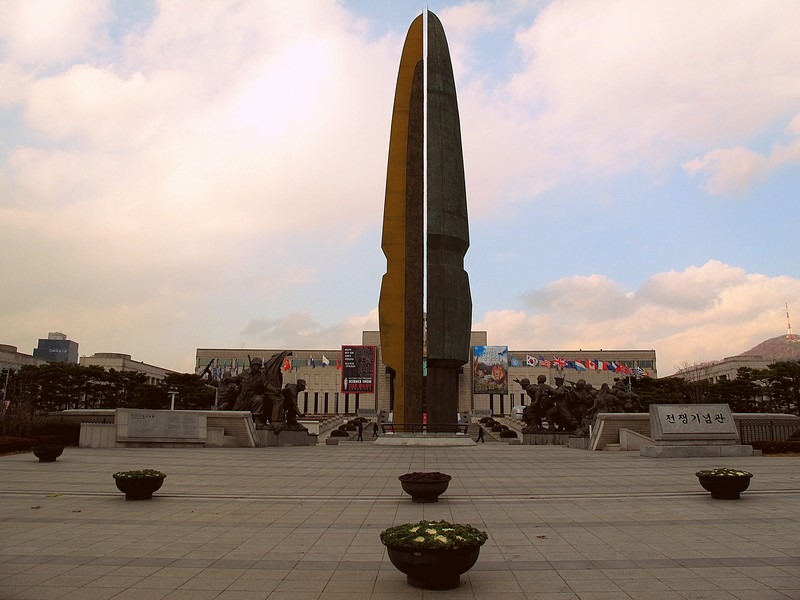
The War Memorial of Korea is a fantastic free museum in central Seoul, Korea. Don’t miss it:
- Basic Info
- Outdoor Exhibits
- Indoor Exhibitions: Seven Thematic Halls
- Unique Highlights You Shouldn’t Miss
- Key Historical Highlights Of The Museum
- What You Can Visit Nearby
- FAQ
(This post contains affiliate links, which means I receive a certain percentage of a sale if you purchase after clicking at no cost to you. Thank you for your support.)
Basic Info
Address: Yongsan-gu Itaewon-ro 29 (서울특별시 용산구 이태원로 29)
How to get there: Take Subway Line 4 or Line 6 to Samgakji Station and use Exit 11 or 12. It’s about a five-minute walk from there.
Admission: Free
Hours: Tuesday – Sunday: 9:30am ~ 6:00pm (Last entrance 5:40pm)
Amenities: Foreign language guides available in English, Chinese and Japanese
Website: https://www.warmemo.or.kr/
PRO TIPS: If you’ll be traveling via the Seoul City Hop On/Hop Off Bus, know that it also stops here. You can buy the ticket for this bus here. And to get more information about the bus, here is a guide to the Hop On/ Hop Off Bus In Seoul. Also look into getting the Discover Seoul Pass which is made specifically for tourists to help them see the top spots. Though you don’t need it to see this museum because it’s free, it will get you into some other awesome spots in the city.
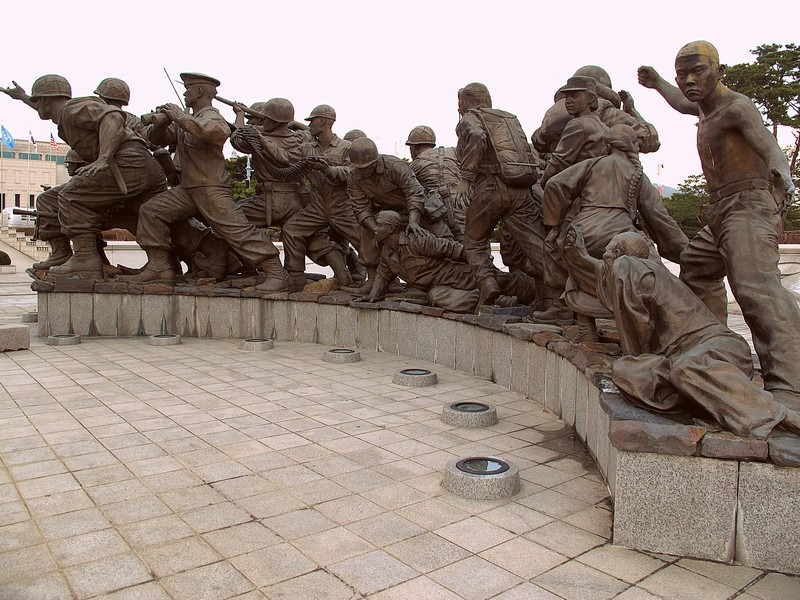
Outdoor Exhibits
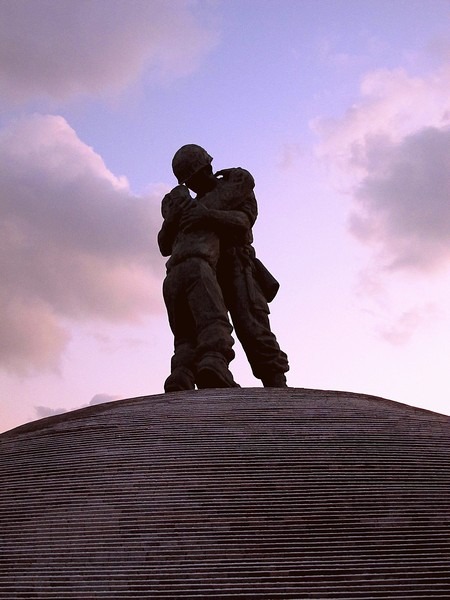
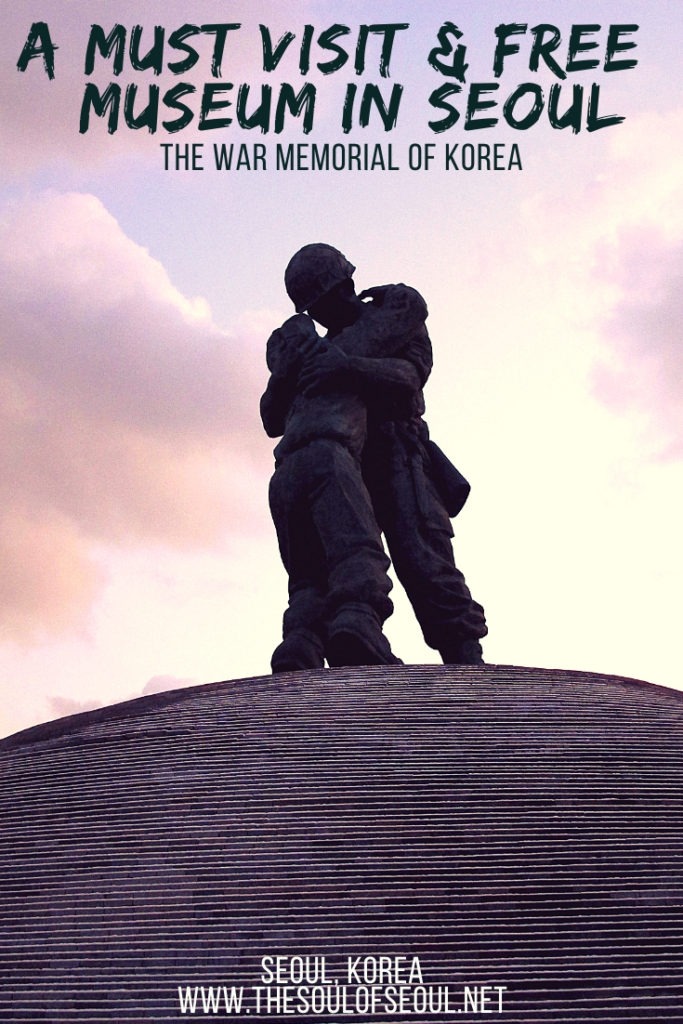
Statue of Brothers: A powerful bronze sculpture showing a South Korean officer and his North Korean brother embracing on a split dome, a symbol of reconciliation and unity that’s become one of the museum’s most photographed spots.
UN Forces Monuments: Flags and memorials honoring the 22 nations that supported South Korea during the Korean War.
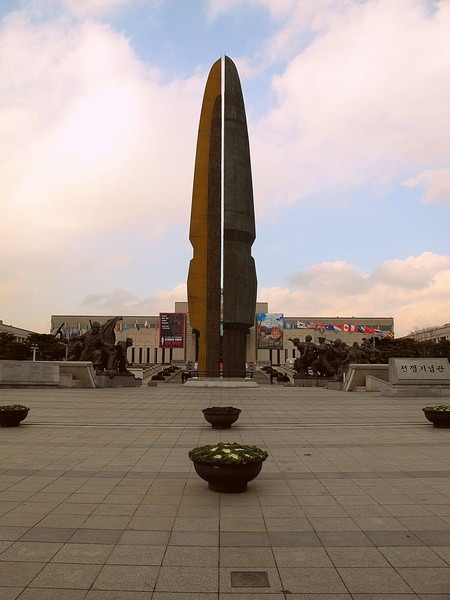
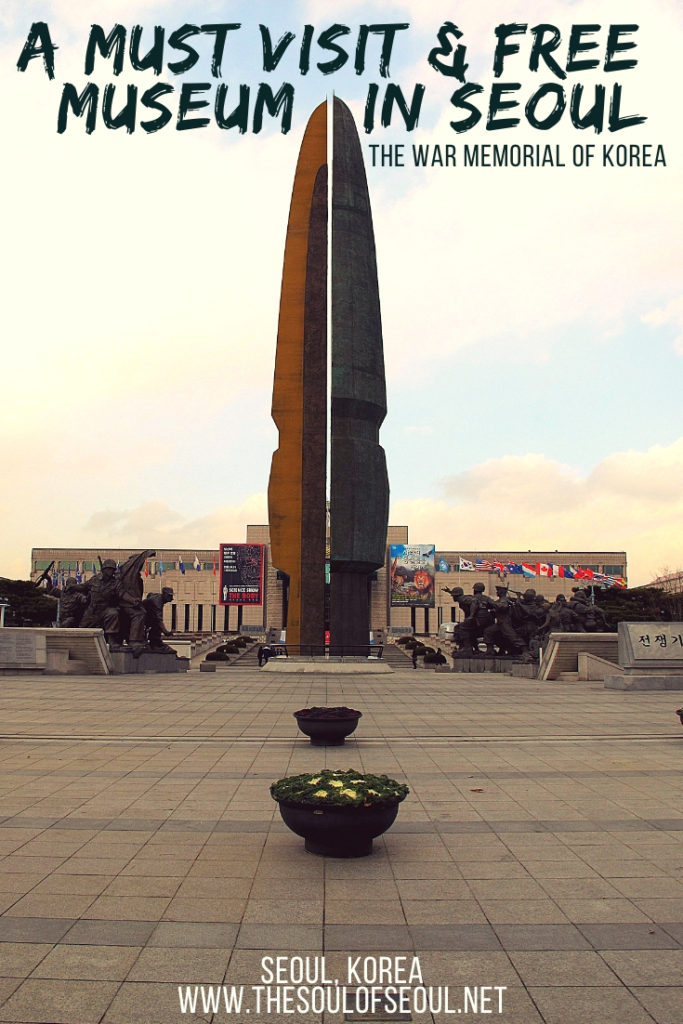
Peace Plaza & Korean War Monument: Grand sculptures mark the tragic history and hopes for future peace. Nearby, you’ll also find the Monument of King Gwanggaeto the Great, the Monument of KIA (Galleries), and the Monuments for the Participating Nations of the Korean War, all part of the open-air exhibition area dedicated to honoring devotion to the nation and the lessons of war.
Chamsuri Patrol Boat (PKM-357): Walk inside a real ROK Navy vessel damaged during the Second Yeonpyeong Battle in 2002. Bullet holes and multimedia exhibits bring history to life.
Open-Air Military Equipment Zone: Over 70 large-scale weapons, tanks, helicopters, and aircraft, and many of them are open for hands-on exploration. This is perfect for families with kids.
How long to plan for: Honestly? Anywhere from two hours to the better part of a day. This museum is enormous, and it covers so much ground, literally, thousands of years of it, that you could spend a full afternoon and still not see everything. If you’re short on time, two hours will get you through the highlights. If you’re a history person, block out more.
Indoor Exhibitions: Seven Thematic Halls
Visitors entering from the front are welcomed by The Korean War Monument, commemorating the 50th anniversary of the Korean War ceasefire. Placards throughout are posted in both Korean and English, and the sheer number of artifacts across these halls is a lot to take in, budget your time accordingly.
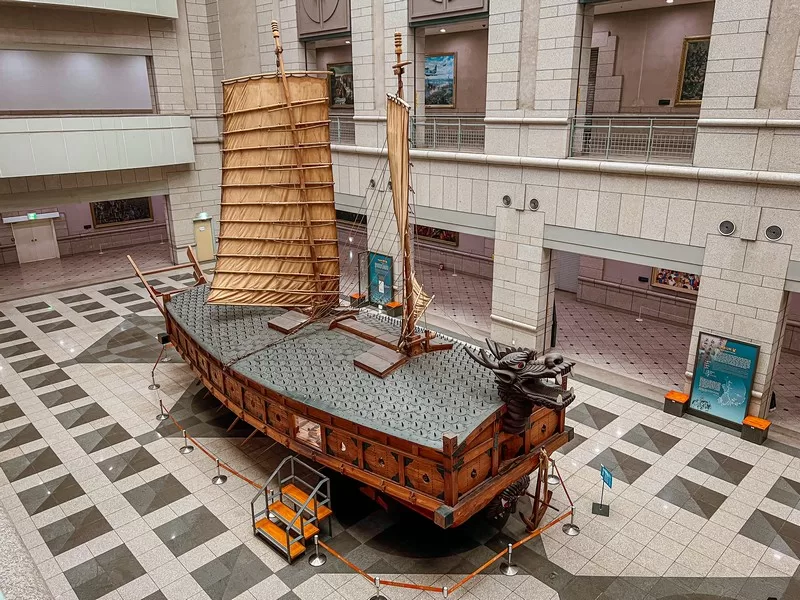
Geobukseon (Turtle Ship): The first place I like to take visitors is down to the Turtle Ship. From the entrance, you can head in and look down over the ledge and see it to the left down below. It is a precise, life-sized replica of Admiral Yi Sun-sin’s legendary armored warship, widely considered one of the first documented armored warships in the world, and a key reason Korea repelled Japanese naval invasions in the 1590s.
If you are interested in large vessels and military vehicles, definitely check out the Seoul Battleship Park with an awesome ship sitting in the Han River that you can visit. You can also visit the Jinpo Maritime Theme Park in Gunsan, Korea and see a large collection of vintage tanks, historical artillery, combat planes, and warships.
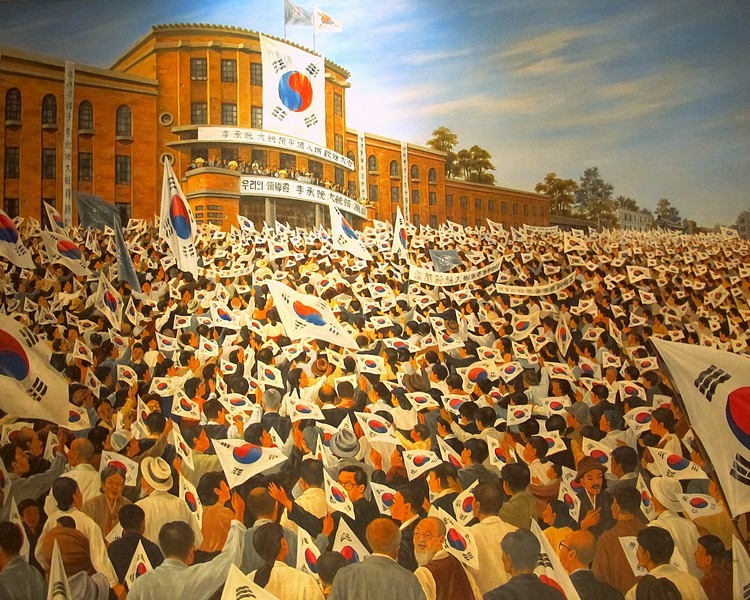
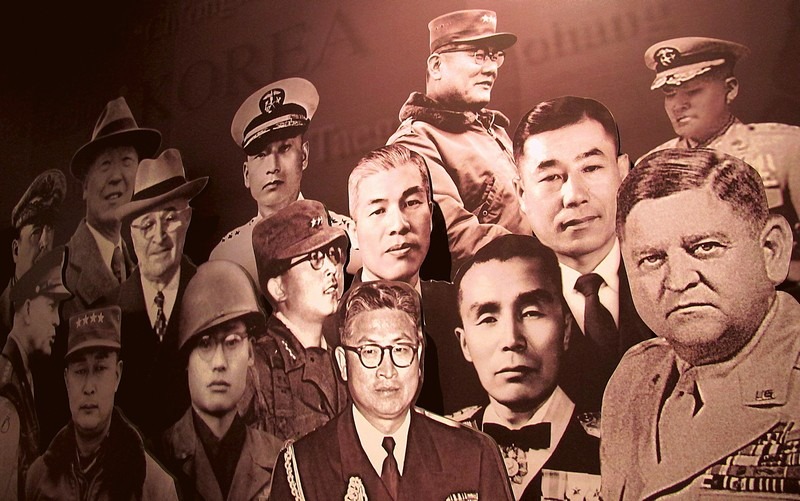
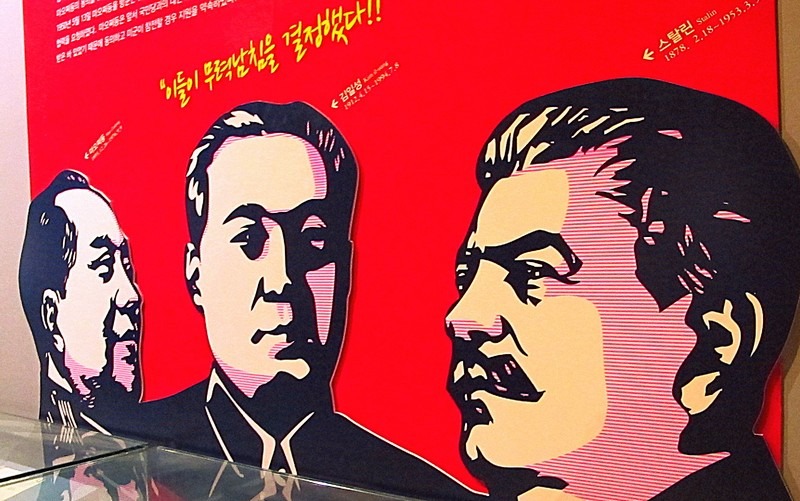
The indoor space of the museum is divided into seven halls and each room is full of real and replica artifacts, dioramas, records and videos sure to educate and slightly overwhelm any visitor. Placards are posted in both Korean and English.
- Memorial Hall: A solemn tribute to Korea’s fallen heroes, from the Three Kingdoms era to today, built around a colonnade and “patriotic star” passageway representing the souls of fallen and unknown soldiers.
- Exhibition Hall of Donated Artifacts: A quietly moving room, it displays 986 of the roughly 15,000 artifacts donated by 1,128 individuals since the museum opened, each one carrying its own personal story from the war.
- War History Room: Traces Korean military history all the way from the Paleolithic era through Gojoseon, the Three Kingdoms period, the Goryeo and Joseon dynasties, and into the Japanese colonial period, essentially a crash course in Korean history through the lens of conflict.
- Expeditionary Forces Room: Covers Korea’s overseas military deployments, starting with the Vietnam War, where Korea sent medical units, a Taekwondo instructor group, and a construction support group that built roads, schools, and hospitals for South Vietnamese communities, through to today’s UN peacekeeping and multinational operations.
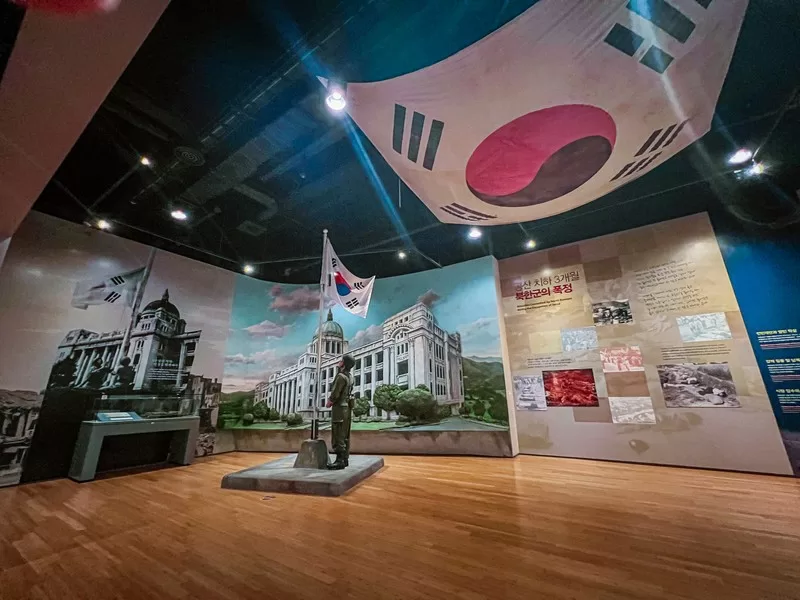
- Korean War Room (I, II & III): The heart of the museum, spread across three rooms in chronological order, from the outbreak of the war and the North’s surprise 1950 invasion, through the Incheon Landing and recapture of Seoul, the Chinese intervention and brutal winter withdrawal, the stalemated hilltop battles, and finally the 1953 armistice. Room III shifts focus to the international side of the war: the 16 nations that sent combat troops, the six that sent medical support, and Korea’s transformation since, from a nation once reliant on aid to a G20 economy and now a donor country in its own right.
- ROK Armed Forces Room: Traces the development of Korea’s military decade by decade from the 1950s to the 1990s, including a dedicated section on the history of ROK female soldiers, plus a “Weapons of the Armed Forces” exhibit tracing Korea’s evolution into one of the world’s top defense-technology producers.
- Exhibition of Large Military Equipment: Home to the big stuff, major combat weapons and aircraft used by both South and North Korea in the 1950s.
- War Memorial of Korea, Yongsan, Seoul, Korea The War Memorial of Korea, Seoul, Korea The War Memorial of Korea, Seoul, Korea
Unique Highlights You Shouldn’t Miss
This is the part most guides skip, and it’s honestly the best part. A few artifacts here have stories so specific and human that they’re worth seeking out on purpose:
Kim Il-Sung’s Limousine. Yes, really, North Korea’s founding leader’s own 1948 Soviet-made ZIS limousine sits in this museum. It was seized by ROK Army rangers in 1950, later gifted by President Syngman Rhee to the widow of a US Army general killed in the war, driven across the United States, sold off at a gas station when it broke down, lost for three decades, and finally tracked down in New Jersey by Korean War veterans in 1981 before making its way back to Korea in 1982. Syngman Rhee’s own presidential state car is on display nearby, too.
The Blood-Stained Taegeukgi. A Korean flag once carried by a wounded South Korean soldier, who gave it to the American medic treating him, Korean War veteran Robert Slote, as a token of gratitude. Slote spent years trying to track down the soldier’s family, visiting the Korean Embassy in the US in 2009, but the owner was never identified. The flag now lives here instead.
The Dog Tag of Second Lieutenant Lee Cheon-woo. Two brothers from the same family both volunteered for the Army within a month of each other in 1950. The older brother was killed in action in May 1951; the younger, Second Lieutenant Lee Cheon-woo, was killed four months later at just 20 years old. His remains weren’t recovered and identified until 2010, when he was finally laid to rest beside his brother at Seoul National Cemetery. His dog tag is on display.
The “Gyeolsa” Helmet. A rusted helmet inscribed with 決死 (gyeolsa, “do or die”), worn by a soldier during the Battle of Yongmunsan, one of the Korean War’s most decisive solo operations by the ROK Army.
T-34 Tanks. North Korea rolled Soviet-supplied T-34 tanks across the border in the surprise 1950 invasion. South Korea had zero tanks of its own at the time and couldn’t stop them, a huge part of why the North advanced so fast in the war’s opening weeks. Seeing one up close makes that imbalance click in a way a textbook never quite manages.
MiG-15 vs. F-86. The Korean War was where jet fighters saw combat against each other for the first time in history. The exhibits on the UN’s F-86 and the Communist forces’ MiG-15 cover this genuinely historic first.
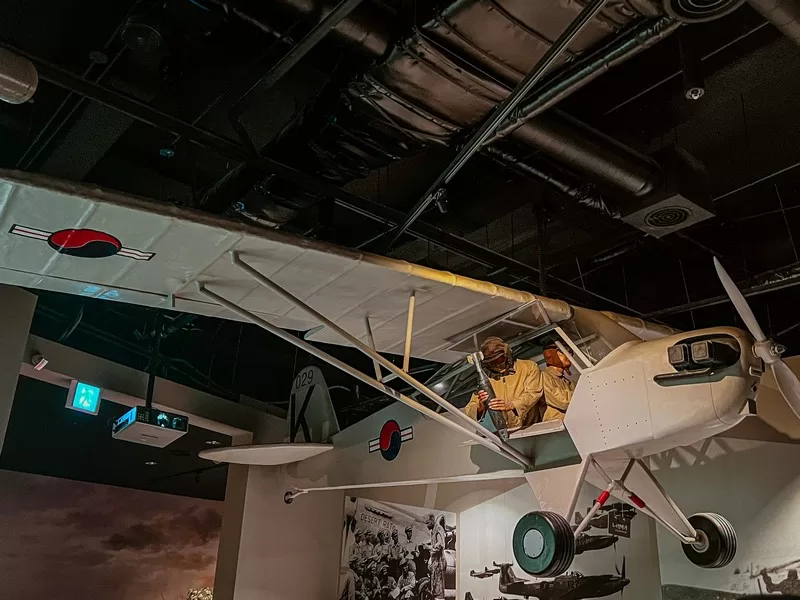
The F-51D Mustang. Before the war, the ROK Air Force had exactly zero fighter planes. Ten Korean pilots flew ten borrowed F-51D Mustangs from the US Air Force out of Daegu just after the invasion began, the country’s first-ever combat aircraft. The one on display, flown by General Kim Young-hwan, was officially designated Registered Cultural Artifact No. 666 in 2016.
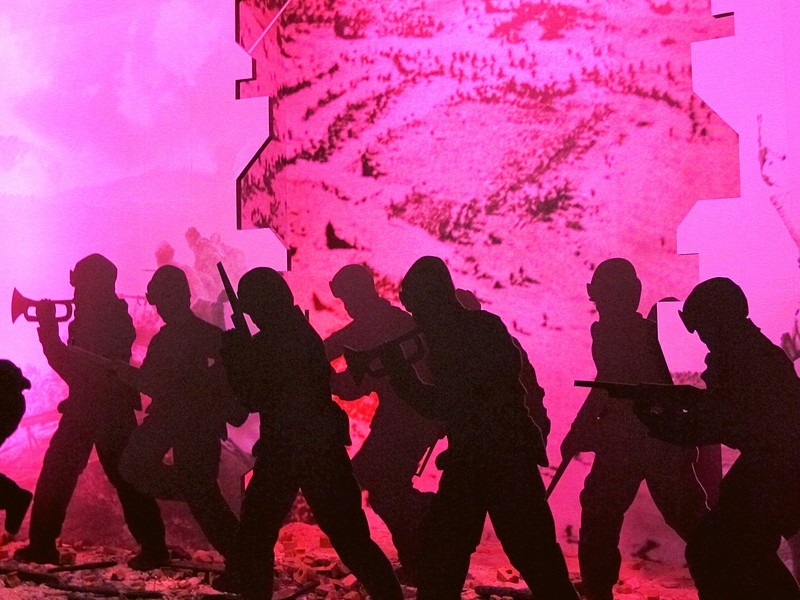
Combat Experience Room. An indoor simulation space using sound, light, and motion to put you inside a Korean War firefight, not for the faint of heart, but memorable.
Key Historical Highlights Of The Museum
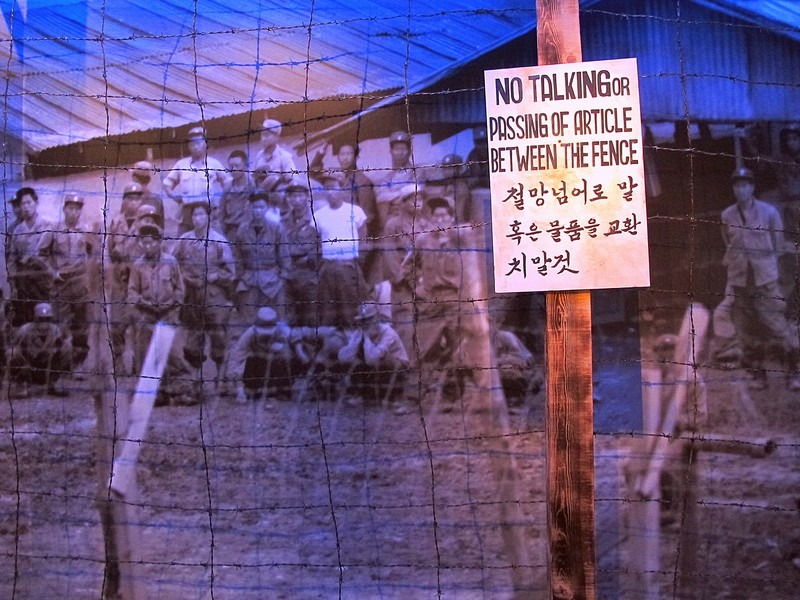
The Korean War (1950 – 1953): Learn about the outbreak of war, the UN’s intervention, major battles such as Operation Chromite (Incheon Landing), and the eventual armistice.
Vietnam War: See how Korean forces supported the US and learn about their role overseas.
Pre-Modern Conflicts: Discover Korea’s resistance against Mongol, Japanese, and Western invasions, including the legendary Turtle Ships of Admiral Yi Sun-sin.
US Korea Conflic (1871): Explore the first and only US-Korea war, also dramatized in the hit K-drama Mr. Sunshine.
Anyone that wishes to have a better understanding of the Korean War specifically should not miss this museum. It is a must visit for anyone staying in or visiting Korea. Guides, many of whom are retired Korean military personnel, will take visitors around on tours of the space at no charge and if unavailable there are audio tours available as well.
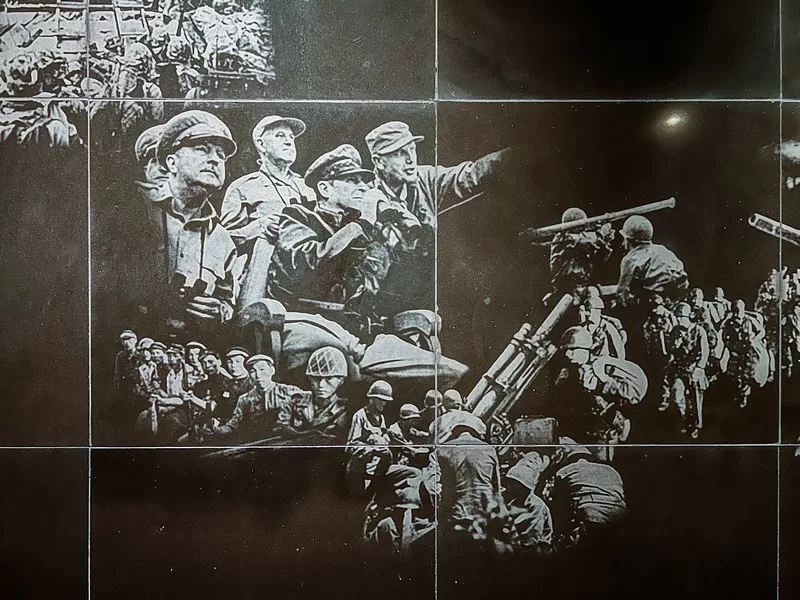
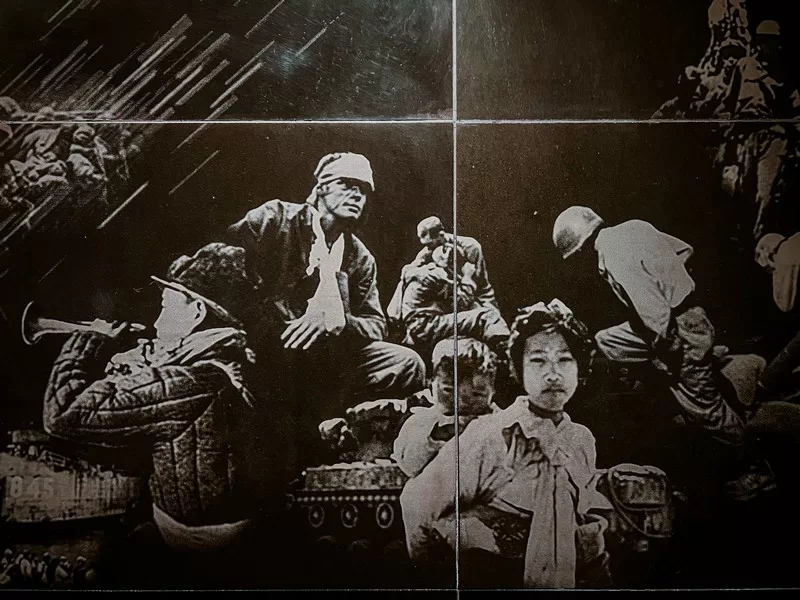
The information is overwhelming, but as history should never be forgotten so as it’s not repeated, this museum is a complete necessity and a hole in one as far as impact on visitors is concerned.
Another great place to go to get a different perspective on the wars and effects on Korea is the War and Women’s Human Rights Museum. It’s located near Hongdae and has a lot of information on the comfort women, or halmoni that are still fighting to educate the public today.
What You Can Visit Nearby
- Hannam-dong: This foreigner friendly district is home to numerous embassies, great cafes and restaurants as well as some beautiful art museums that are a must see. Find more information about Hannam-dong here.
- Seoullo: Visit the once busy overpass near Seoul Station that has now been converted into a pedestrian friendly walkway. There is a must see installation in Malli-dong that most people miss and the walkway is covered in beautiful plants too. Here is a guide to Seoullo.
- Gongdeok District: This often overlooked neighborhood is just up the road and is home to interesting cafes and restaurants and some local markets that have some great eats. Don’t miss this area if you’re so close.
- Noryangjin Fish Market: After visiting the museum, head to the most popular fish market in the city for dinner. You can walk through the market and then head upstairs to eat eat eat.
FAQ
Is the War Memorial of Korea really free?
Yes, general admission to all permanent exhibitions is free, and you don’t need to reserve anything in advance.
How do I get to the War Memorial of Korea?
Take Subway Line 4 or Line 6 to Samgakji Station and use Exit 11 or 12, it’s about a five-minute walk. Bus routes 110, 740, and 4211 also stop nearby.
How long should I plan to visit?
Anywhere from two hours to a full day, depending on how deep you want to go. It’s one of the largest war museums in the world, so pace yourself.
Is the War Memorial of Korea good for kids?
The outdoor equipment zone, with its tanks and planes you can climb into, is a big hit with kids. Some of the indoor Korean War exhibits are intense, including a sensory combat-simulation room, so use your judgment for younger children. There is also a Children’s Museum on site as well which you can take kids to.
Is it wheelchair or stroller accessible?
Yes, the museum is both stroller and wheelchair accessible.
Is there English information available?
Yes, English signage and audio guides are available throughout, along with Chinese and Japanese.
Is there food at the museum?
There’s a small cafe inside, and a restaurant just outside near the parking lot. For a bigger meal, Noryangjin Fish Market and the Gongdeok District are both a short trip away.
This is just one of the free museums in the city that are just stunning and great for visitors. If you’re interested in other budget friendly things to do in Seoul, check out this guide to the best free things to do in Seoul.
Did you like this post? Pin It!

6 Comments
Juan R
How can I get in touch with The War Memorial of Korea? I’m trying to send a request via e-mail, but I just can’t find any address
Hallie
Maybe you could try to send them a message via Facebook? https://www.facebook.com/warmemo.korea
Tadhg Williams
I visited it in August. Fascinating place both outdoor and indoor. I recommend it.
Hallie
Thanks for the comment Tadhg. Yes, it’s definitely a good stop in Seoul to learn more about history and war here on the Korean peninsula. I’m glad you found it as fascinating as I did. ^^
Shirl
Hi, do we need to pay for the admission fee?
Hallie
There is no fee. It’s free!