Haemultang: Korea’s Spicy Seafood Stew Explained
Last Updated on October 14, 2026
Living on a peninsula has meant the chance to try shellfish in every form, fish with no English name beyond their biological Latin, and everything in between. Haemultang (해물탕), Korean seafood stew, is the dish that brings all of it together into one deliciously spicy pot. This dish took a bit to grow on me. I found it overwhelming at first glance. As someone who did not grow up near an ocean, it was a lot to take in that first time.
You’ll find haemultang most often along Korea’s coasts. Headed to Busan, Jeju Island, or anywhere else along the water and craving something hot and spicy to warm up with? Seek this one out.
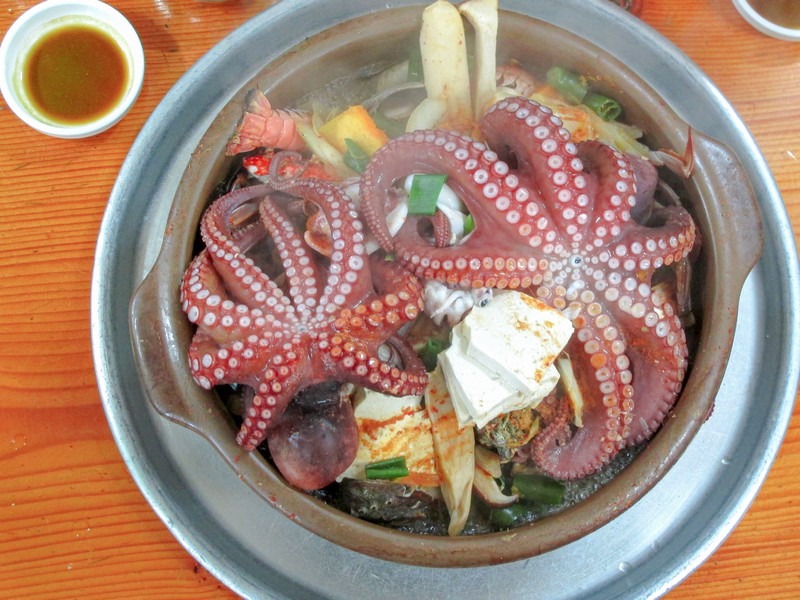
Haemultang is a seaside specialty in Korea that you’ll want to know about for your next coastal adventure:
- What Is In Haemultang?
- How To Eat Haemultang
- Regional Differences
- Haemultang vs. Maeuntang
- Finishing the Meal: Bokkeumbap
- FAQ
(This post contains affiliate links, which means I receive a certain percentage of a sale if you purchase after clicking at no cost to you. Thank you for your support.)
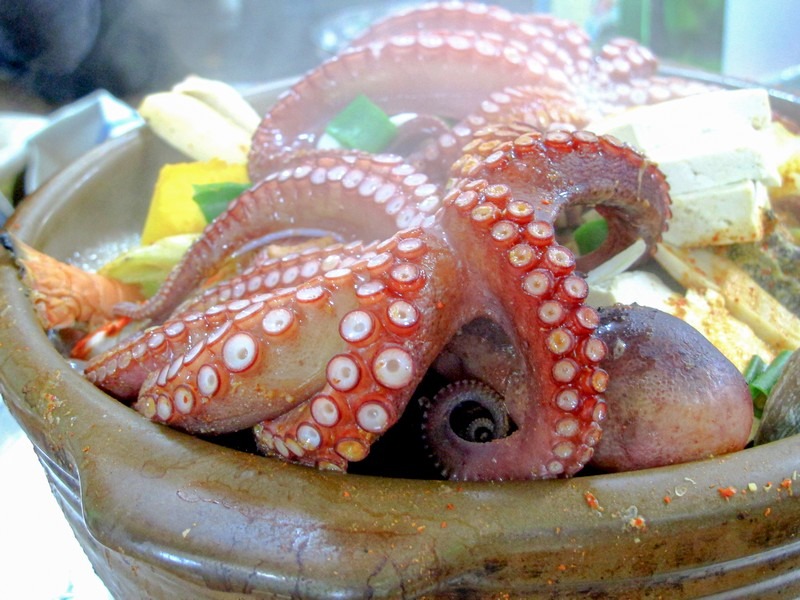
What Is In Haemultang?
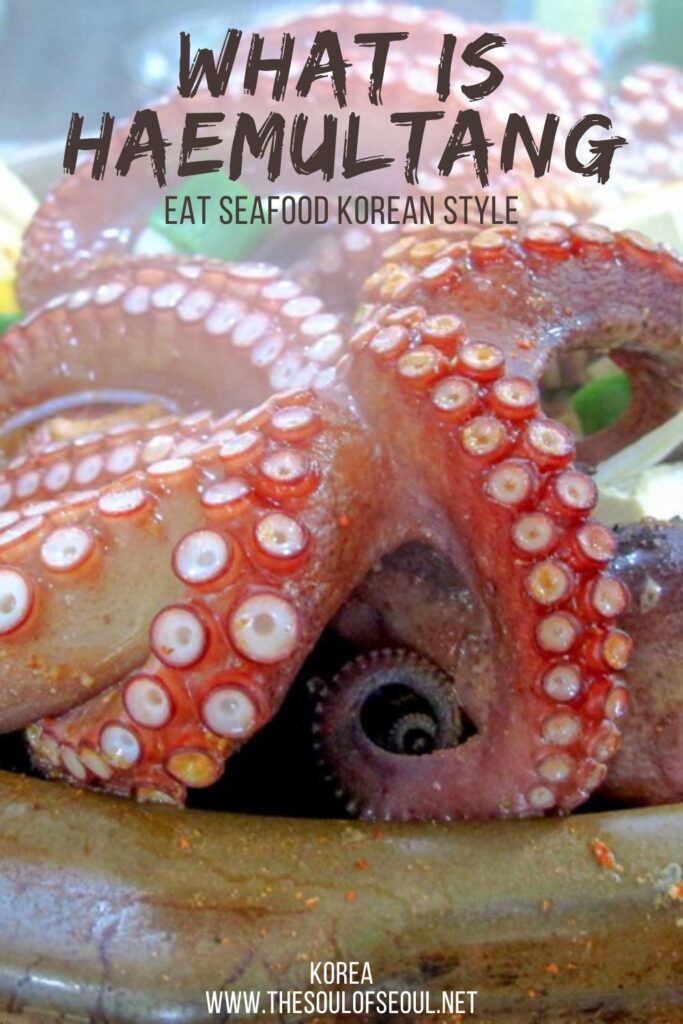
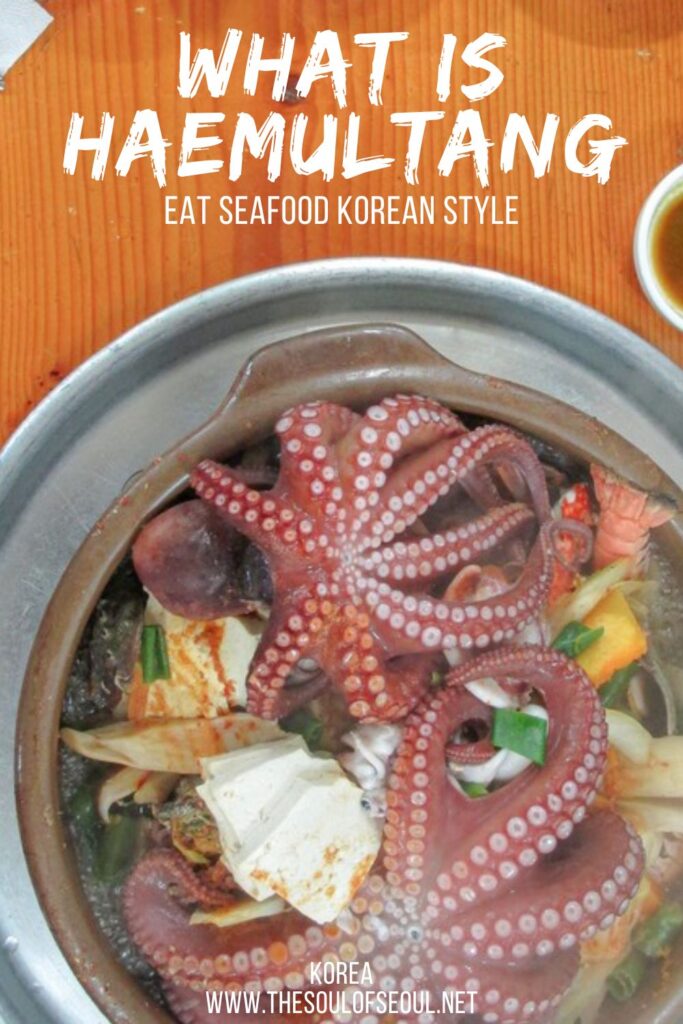
There’s something for everyone in the pot: prawns, squid, clams, crab, octopus, scallops, fish, and oysters, all simmered in a spicy broth carrying a hint of sweetness from gochujang (Korean red pepper paste). Not a fan of octopus tentacles? Grab the prawns. Not feeling the clams? Go for the fish. The sheer range of seafood in one pot means there’s almost always something for every palate at the table.
Vegetables round out the stew, commonly Korean radish, bean sprouts, mushrooms, peppers, onions, and tofu, soaking up the broth alongside everything else. The radish in particular does real work here, absorbing flavor while adding its own gentle sweetness as it softens.
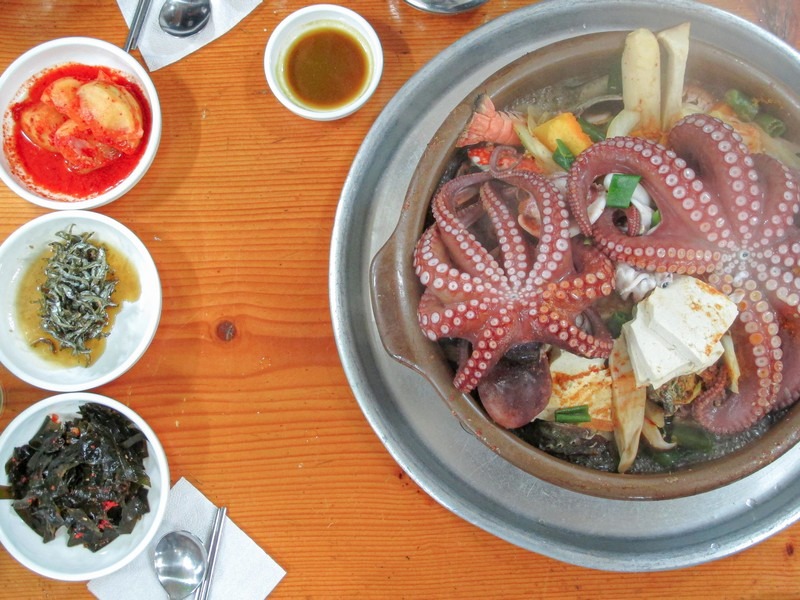
The exact mix varies by restaurant, region, and season, depending on what’s fresh that day. What stays consistent is the presentation: a hot pot overflowing with seafood, set in the center of the table, surrounded by banchan (vegetable side dishes) and, very often, a bottle or two of soju.
How To Eat Haemultang
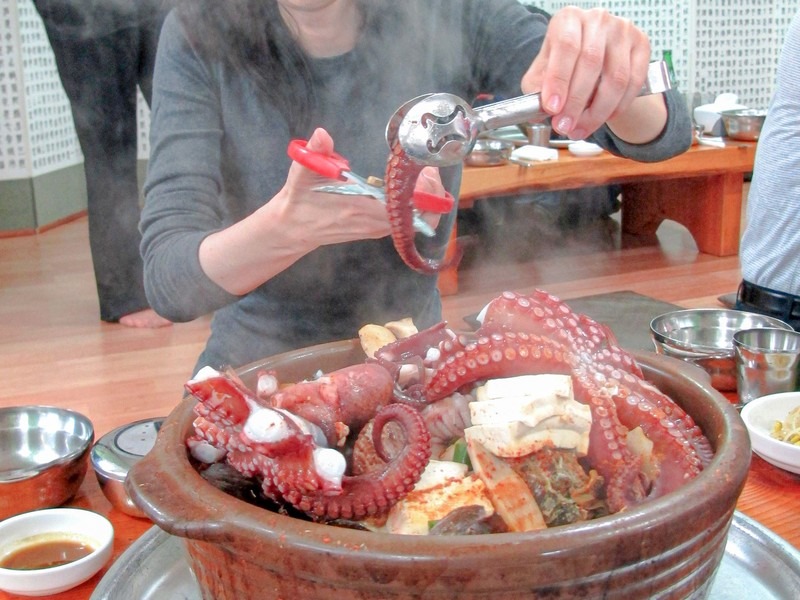
This is a hands-on, communal dish. If you’re not dining with someone experienced at cutting up octopus with kitchen scissors or extracting meat from shells, don’t hesitate to wave over your server. Korean restaurant staff are typically very attentive with haemultang specifically, they’ll often step in unprompted to portion the seafood, snip the octopus into manageable pieces, and let you know exactly when the pot is ready to eat.
The basic mechanics: chopsticks for pulling seafood pieces into your own bowl, the provided ladle for broth, though plenty of people, myself included, will happily go straight at the communal pot with a spoon for broth too. No one’s going to stop you. A bowl of rice on the side is standard.
Work through the seafood first. Once the initial abundance of shellfish and fish has been mostly cleared, the broth itself becomes the second act: rich, deeply flavored from everything that simmered in it.
Regional Differences
I’ve eaten haemultang in a number of seaside areas at this point and there are definitely some differences to look out for if you’re a foodie looking to know:
- Busan and the southern coast tend toward larger shellfish, like conch and abalone, with a broth that’s often a touch less aggressively spicy but built on a deeper, more complex anchovy stock.
- Jeolla Province, often considered Korea’s culinary heartland, tends to push the spice further than anywhere else, generous with gochugaru, and sometimes adds perilla leaves (kkaennip) for a distinctive herbal note.
- The east coast, particularly around Gangwon Province, leans into substantial fish pieces and snow crab specifically, with a clearer, cleaner-tasting broth than the richer southern versions.
- Seoul and urban areas have their own modern spin, occasionally veering into fusion territory with additions like cheese or ramen noodles, a sign of how far this dish has traveled from its fishing-village origins, for better or worse depending on how you feel about cheese in your seafood stew.
I’d treat these as general tendencies rather than hard rules, individual restaurants do their own thing regardless of region, but if you’re traveling the coast and eating haemultang in multiple cities, it’s worth noticing how differently it shows up from place to place.
Haemultang vs. Maeuntang
These two get confused constantly, understandably, since both are spicy Korean seafood-based stews. The difference: haemultang is built around variety, multiple types of shellfish, squid, and fish all in one pot, while maeuntang is fish-focused, typically centered on a single type of fish as the star ingredient. Both bring real heat. If you want maximum seafood variety, order haemultang. If you want a dish built around one specific fish done well, that’s maeuntang.
Finishing the Meal: Bokkeumbap
Once the seafood and most of the broth are gone, don’t rush to ask for the check. The traditional close to a haemultang meal is bokkeumbap, fried rice made directly in the leftover broth. Your server will typically ask if you’d like rice added once you’re winding down, then mix it with seaweed and sesame oil right in the same pot, cooking it until the bottom turns slightly crispy.
It’s a genuinely excellent way to use every last bit of flavor in that broth, and skipping it means leaving the best part of the meal on the table. If your server doesn’t offer it, ask.
FAQ
What does haemultang taste like?
Haemultang has a spicy, savory broth built on gochujang and gochugaru (Korean red pepper paste and flakes) with a subtle underlying sweetness, balanced against the natural brininess of the seafood. It’s hearty and warming rather than a light soup.
Is haemultang always very spicy?
Traditionally yes, but many restaurants will adjust on request. You can ask for “deol maepge” (덜 맵게) for less spicy, though don’t expect every restaurant to accommodate this equally well.
What’s the difference between haemultang and maeuntang?
Haemultang features a variety of seafood (shellfish, squid, prawns, fish) in one pot. Maeuntang is built around a single type of fish as the primary ingredient. Both are spicy, but haemultang offers more textural variety.
How do I eat haemultang properly at a restaurant?
Use chopsticks to pull seafood into your individual bowl, use the ladle (or just go straight in with your spoon) for broth, and eat alongside rice. At the end, ask about bokkeumbap, fried rice made in the leftover broth, the traditional way to finish the meal.
Is haemultang good for sharing?
Yes, it’s designed for it. The dish is almost always served in a large pot at the center of the table, meant for two or more people to share, with the final bokkeumbap stage being a communal moment in itself.
Where is the best place to try haemultang in Korea?
Coastal cities are the strongest bet for fresh, high-quality haemultang, particularly Busan (Jagalchi Market), Sokcho (snow crab versions), Yeosu (abalone-forward versions), and Jeju Island.
Few dishes capture the abundance of Korea’s coastline quite like a pot of haemultang, overflowing with seafood, gone fiery red with gochujang, and finished, if you do it right, with a pan of crispy fried rice scraped from the very last of that broth. If you see it on a menu near the coast, order it, and don’t skip the bokkeumbap.
Did you like this post? Pin IT!

One Comment
derekversuslonelyplanet
Not really a seafood guy, but if I was that looks like a culinary delight.