Yukhoe: What Is Korean Steak Tartare and Is It Safe To Eat?
Last Updated on June 16, 2026
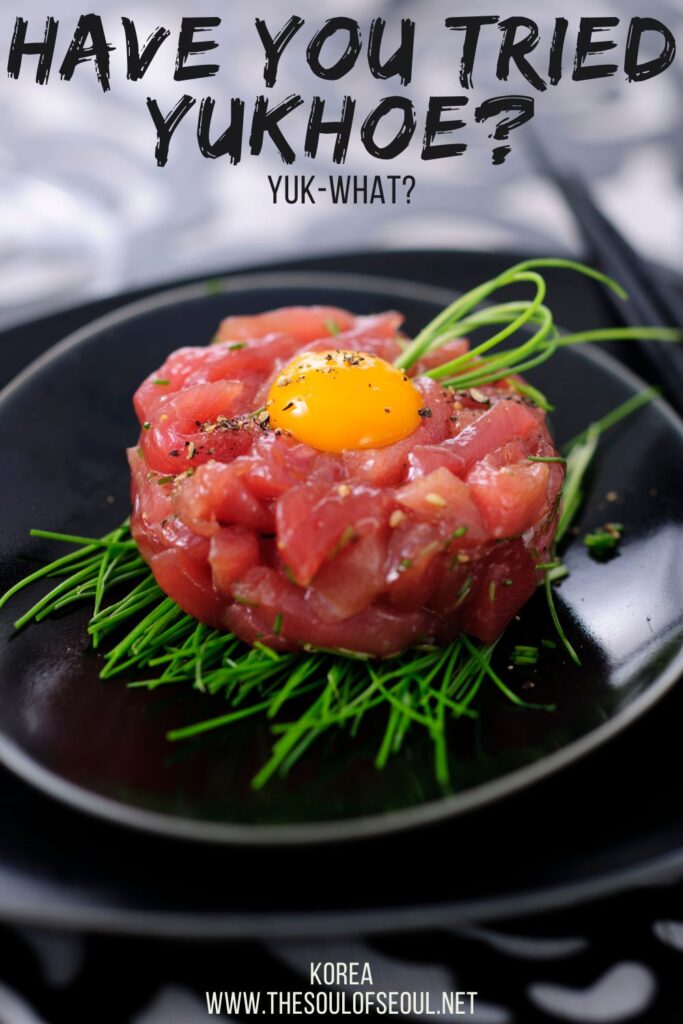
The first time I saw yukhoe (육회) on the table I thought they were going to stir fry it on the grill. In fairness, you often encounter yukhoe at Korean BBQ restaurants where there’s a large grill in the center of the table, the assumption is reasonable. For this dish, though, the grill stays cold. Yukhoe is best enjoyed raw, exactly as it comes.
Was I intent on eating raw beef and a raw egg the first time I saw it? I was not. I’m glad I did it anyway, because yukhoe is now one of my favorite Korean dishes, full of umami, genuinely distinctive from Western steak tartare, and worth seeking out specifically when visiting Korea.
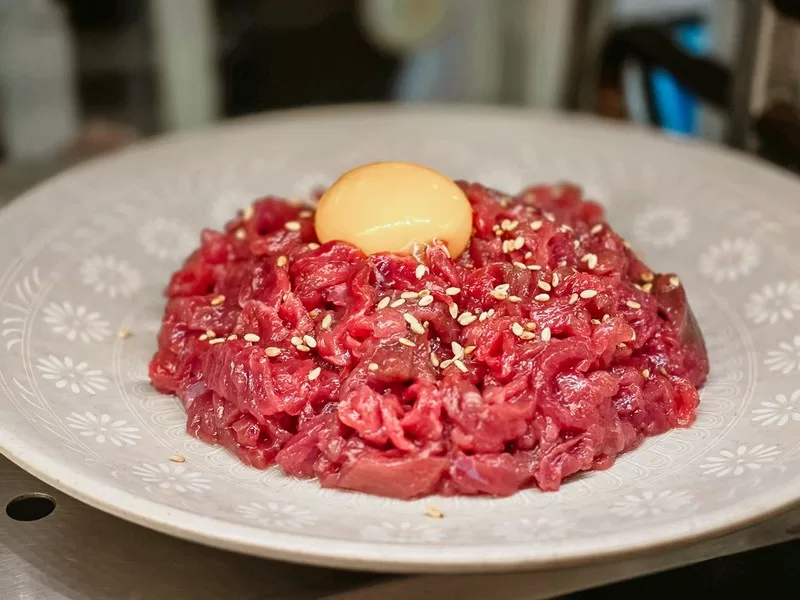
You won’t stumble upon yukhoe, but if you know where to look for it, you can definitely find and then enjoy this Korean beef dish:
- What Is Yukhoe?
- How Is Yukhoe Different From Western Steak Tartare?
- Is Yukhoe Safe To Eat?
- How To Eat Yukhoe
- Where To Eat Yukhoe in Seoul
- The History of Yukhoe in Korea
- Yukhoe Bibimbap
(This post contains affiliate links, which means I receive a certain percentage of a sale if you purchase after clicking. These funds go to maintain the site. Thank you for your support.)
What Is Yukhoe?
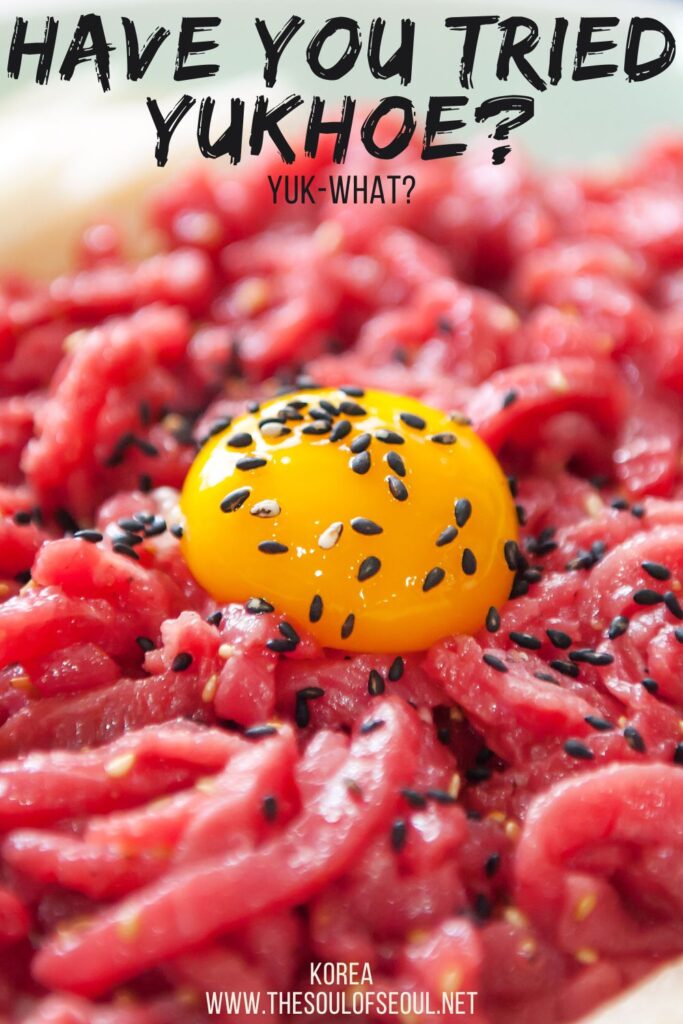
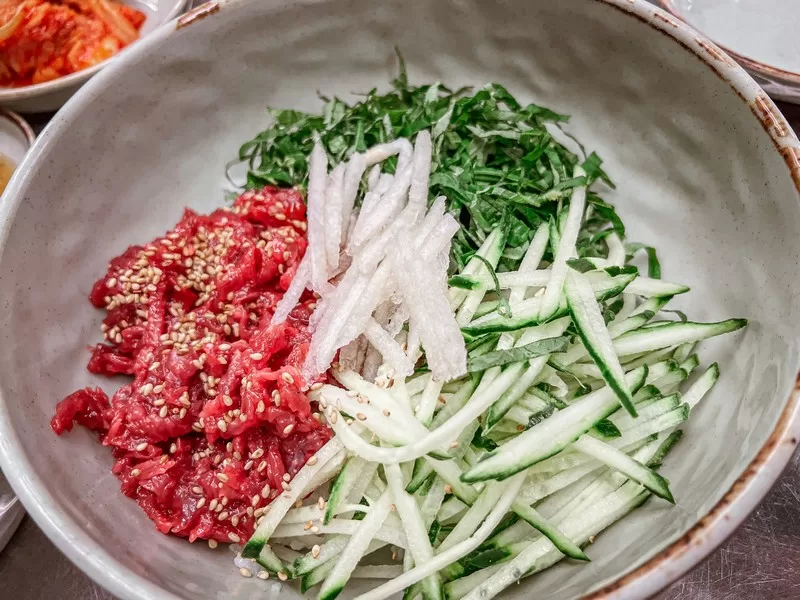
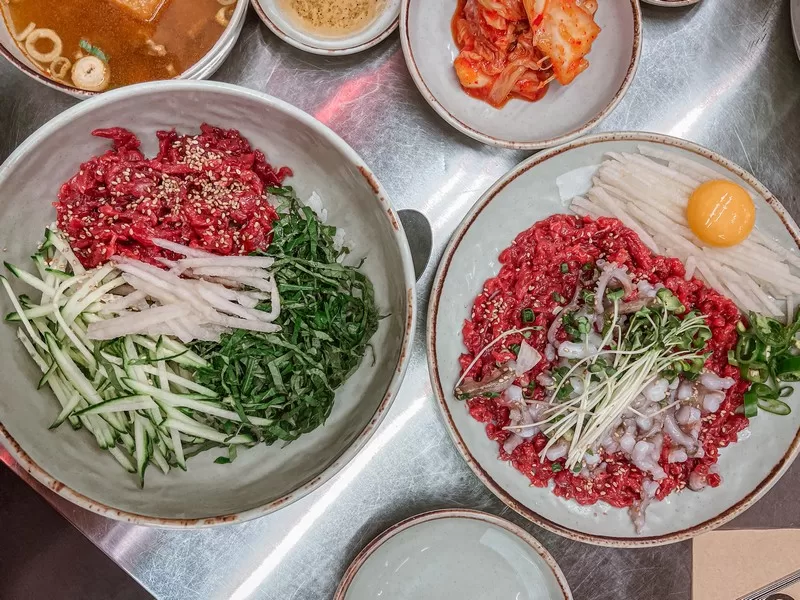
Yukhoe is the Korean version of steak tartare. The name breaks down simply: yuk (육) means meat and hoe (회) means sashimi or raw sliced food. A tender cut of beef is sliced very thin, not minced as in French tartare, and marinated in a mixture of soy sauce, garlic, sugar, sesame oil, salt, and pepper. It arrives on a platter with a raw egg on top and thin slices of Korean pear arranged alongside.
One person at the table does the mixing, combining everything into what is honestly a rather sloppy-looking mess. It looks considerably more elegant before the mixing begins. Once it’s mixed, everyone eats from the platter.
How Is Yukhoe Different From Western Steak Tartare?
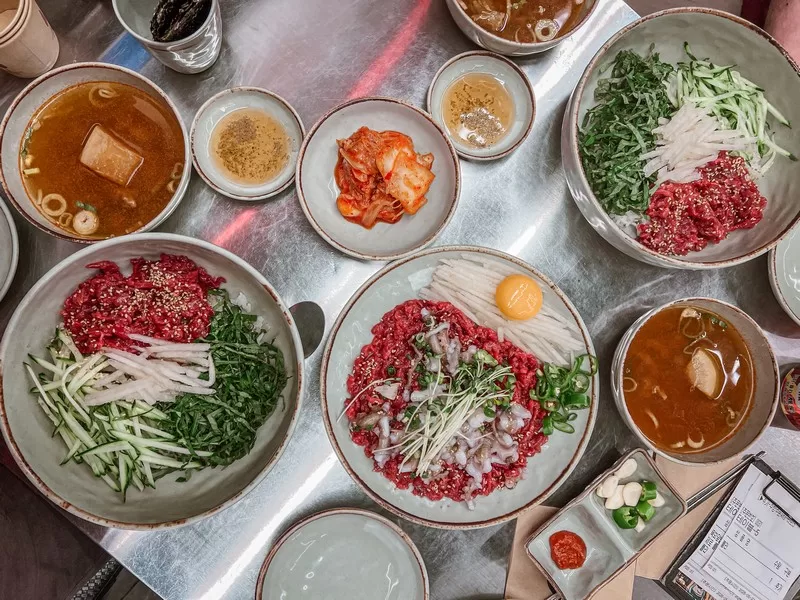
The comparison to steak tartare is the easiest introduction, but the two dishes are genuinely different experiences. The marinade here, soy sauce, sesame oil, garlic, sugar, gives yukhoe a distinctly sweet-savory character that European tartare doesn’t have. The Korean pear adds a clean, slightly floral sweetness and a textural lightness that cuts through the richness of the raw beef.
Having eaten steak tartare in other countries, the difference is immediately noticeable. Without the marinade and the pear, the dish is heavier and sharper. Korean steak tartare is a sweeter, more balanced version, one that consistently surprises people who expected something closer to the Western version.
Is Yukhoe Safe to Eat?
Koreans are particular about their beef, and this is visible at any serious beef restaurant: the country of origin will be listed next to the dish on the menu. These days it’s mostly Korean, Australian, and American cuts. For yukhoe specifically, quality and freshness are essential as the dish must be served fresh, within a day of defrosting, and the beef should not have been aged more than a day after slaughtering.
The Korean government implemented a Beef Traceability System in 2004. Every cut of beef sold in Korea is required to carry an ID number containing information on the age of the animal, the origin, the supplier, the distributor, the grade, the butchering date, and the butcher shop. This system means the supply chain for fresh beef in Korea is significantly more monitored than in most countries.
At good beef restaurants, look for a sign reading 소 들어오는 날 “the day the beef arrives.” This signals that fresh delivery has happened or is imminent, and is a useful indicator when deciding where to order yukhoe.
How To Eat Yukhoe
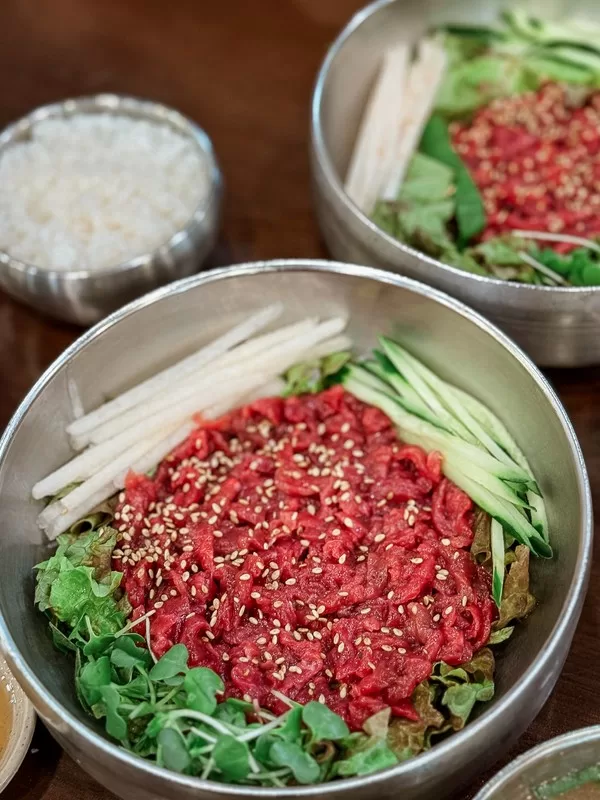
Yukhoe arrives at the table already marinated and arranged, beef in the center, raw egg on top, Korean pear slices fanned around the edges. It looks considerably more composed before anyone touches it.
One person at the table does the mixing. Use the chopsticks or spoon provided to break the egg yolk into the beef and work everything together: beef, egg, pear, any remaining marinade pooled at the bottom of the dish. The pear breaks down slightly as you mix, and the egg coats the beef strands. The result looks considerably less elegant than what arrived. This is correct. Mix until it’s fully combined.
Everyone eats from the shared platter. There’s no individual portioning, yukhoe is a communal dish, not a starter served per person.
A few practical notes:
- Don’t rush the mixing. Taking thirty seconds to combine everything properly makes a real difference to the texture and flavor balance in each bite. The pear needs to be distributed, not sitting in its own section.
- Eat it relatively quickly after mixing. The egg continues to cook the beef slightly as it sits, not dramatically, but the texture changes within ten or fifteen minutes. Yukhoe is at its best in the first few bites.
- The Korean pear is not garnish. It’s doing specific work: cutting through the richness of the raw beef and adding a clean, slightly floral sweetness that makes the dish feel lighter than it would otherwise. Don’t push it to the side.
- If sesame seeds are scattered on top, mix those in too.
Where To Eat Yukhoe in Seoul
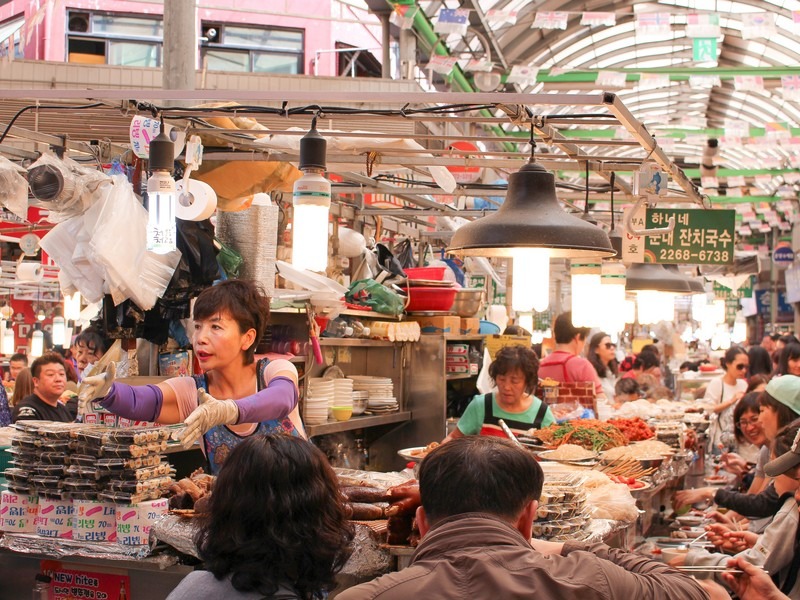
Gwangjang Traditional Market in downtown Seoul is my personal favorite for yukhoe in the city. There’s a small hidden alley of yukhoe stalls inside the market that most visitors walk past without noticing. The quality is consistently excellent and it’s one of the best-value places to try the dish in Seoul. Read the complete Gwangjang Market guide for what else to eat in the market.
Buchon Yukhoe (부촌육회)
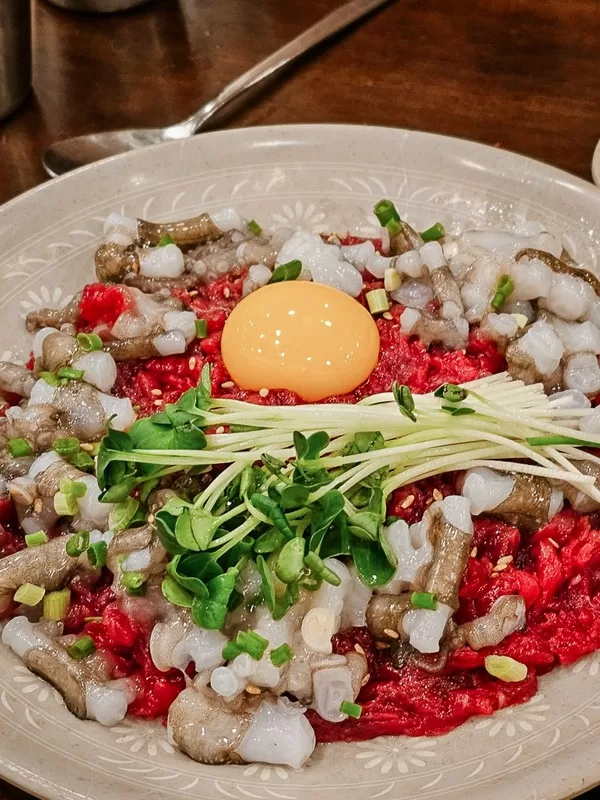
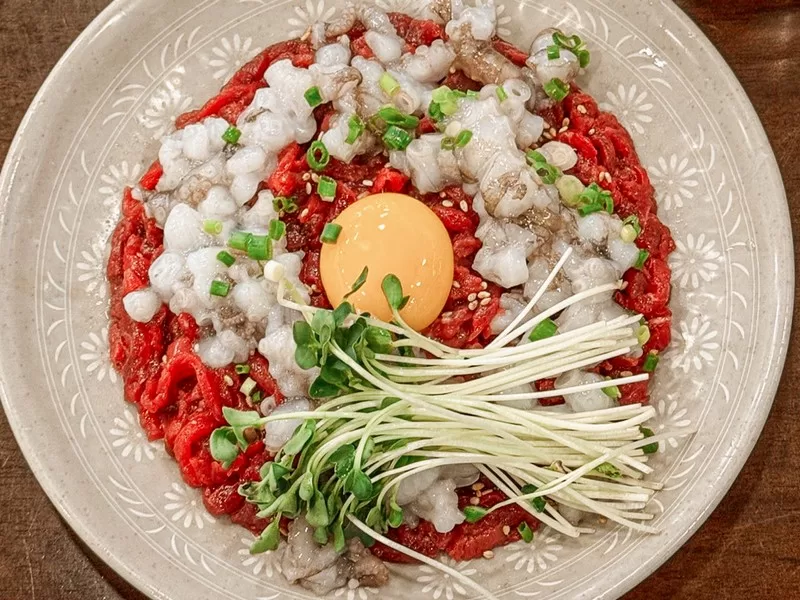
Buchon Yukhoe serves the standard yukhoe but also an unusual combination dish: yukhoe paired with sannakji, or diced fresh octopus. Both are raw, both are rich in umami, and together they create a different experience from either alone.
- Address: 200-12 Jongno, Jongno-gu, Seoul (서울 종로구 종로 200-12)
- Hours: Every day: 10:00am ~ 9:30pm
History of Yukhoe in Korea
Korea occupies an unusual position in the region when it comes to raw beef. In neighboring Japan and China, eating raw beef is not a common tradition. Korean yukhoe’s origins appear to trace back to the Three Kingdoms period and may reflect Mongolian culinary influence during the periods of Mongol contact with Korea.
The dish didn’t become widely accessible then, however. During the Joseon Dynasty (1392-1897), the butchering of cattle was strictly regulated, forbidden except in service to the royal family. Yukhoe was a dish of royal banquets, not ordinary tables.
This changed in the early 20th century, when the beef industry was no longer government-controlled and official beef markets opened across Korea. For the first time, ordinary people had access to fresh cuts of quality beef. This shift is one reason you’ll find yukhoe so deeply embedded in regional food cultures today, including, notably, Jeonju.
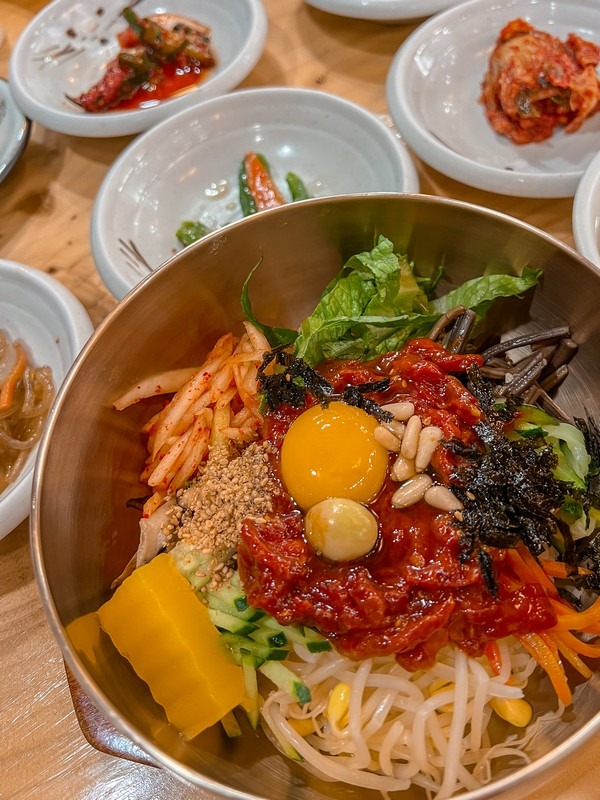
Yukhoe Bibimbap
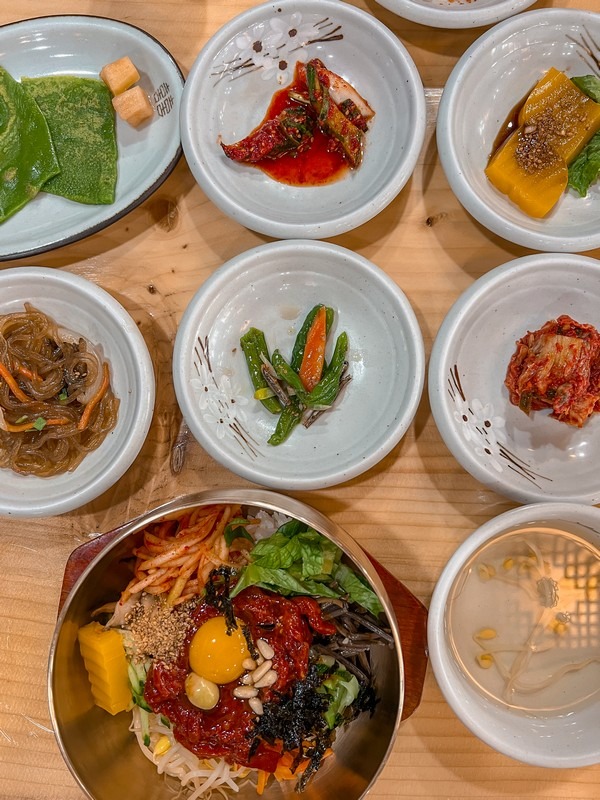
The regional dish worth knowing if you’re planning a trip to Jeonju: yukhoe bibimbap. Jeonju is famous throughout Korea for its bibimbap, and the yukhoe version places raw marinated beef on top of the standard bibimbap vegetables and rice, adding the sweet, savory raw beef flavor to an already complex dish. It’s a step up from the standard bibimbap and one of the things Jeonju is specifically proud of. If you visit Jeonju Hanok Village, this is on the shortlist.
Yukhoe is one of those Korean dishes that looks more intimidating than it tastes. The first bite addresses every concern the appearance raises. If you see it on a menu in Korea, order it.
Did you like this post? Pin IT!