Geoje POW Camp: Korea’s Largest Prison Camp, Then and Now
Last Updated on October 14, 2026
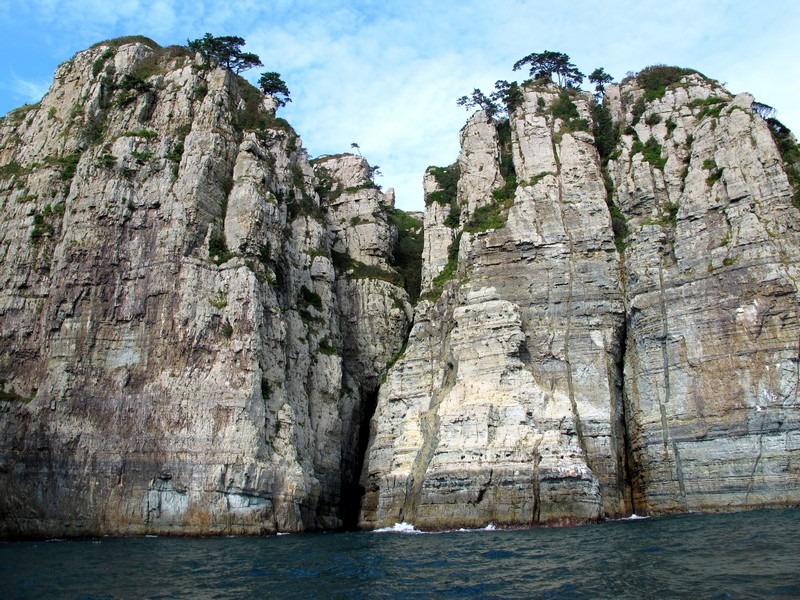
Geoje Island, off Korea’s southern coast, is a popular destination for visitors from Busan and well beyond, known for ocean views, dramatic rock formations jutting from the sea, and genuinely beautiful beaches. There’s also a far darker chapter here, the Korean War-era POW camp (거제도 포로수용소 유적공원), now preserved as a historic park. If you’re interested in the parts of Korean history that don’t make it into the highlight reel, this belongs on your list.
Here’s what to know:
(This post contains affiliate links, which means I receive a certain percentage of a sale if you purchase after clicking. Thank you for your support.)
Basic Info
Address: 61 Gyeryong-ro, Geoje-si, Gyeongsangnam-do (경상남도 거제시 계룡로 61 (고현동))
Hours: March ~ October: 9:00 – 18:00; November ~ February: 9:00 – 17:00
Days: Closed Tuesdays
Admission: Adults: W7,000; Teenagers: W5,000; Children: W3,000
Website: http://www.pow.or.kr/
Where To Stay
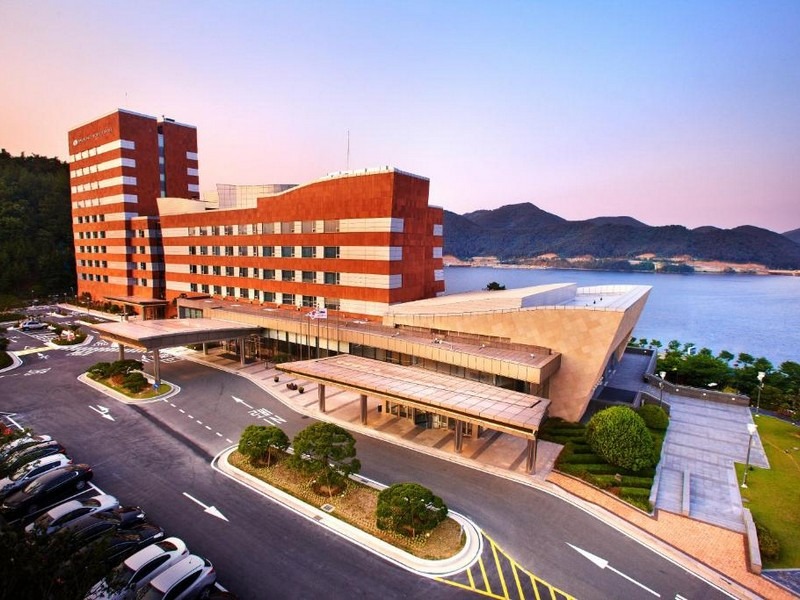
Samsung Hotel Geoje
If you’re headed down to the beautiful Geoje Island, check into staying at Samsung Hotel Geoje. The hotel is perfect with a great location and a great staff. Enjoy some quiet time in the hotel if you like, or head down the road to restaurants and cafes.
Book a stay here on Booking.com or on Agoda.com
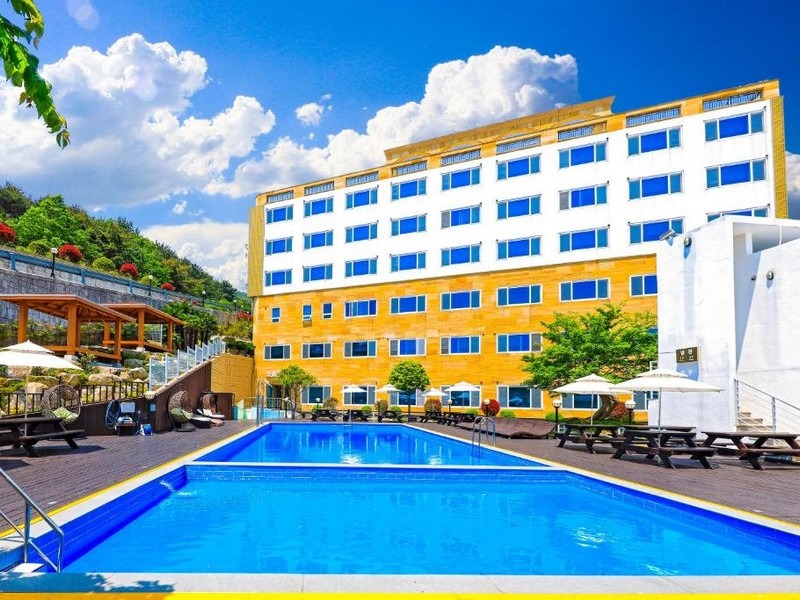
Doya Family Hotel
The Doya Family Hotel is another great spot to stay if you want a great outdoor swimming pool, BBQ-ing facilities on the grounds and comfort. It’s a great spot if you want to just get away but want everything at your fingertips.
Book a stay here on Booking.com or on Agoda.com
The History of Geoje POW Camp
In September 1950, the Incheon landings and the Eighth Army’s breakout from the Busan Perimeter sent North Korean forces retreating north, and UN troops took prisoners by the tens of thousands as they advanced. The numbers were staggering: under 1,000 prisoners in August 1950, over 130,000 by November. The UN had made almost no provision for housing, feeding, or guarding a force this size.
By January 1951, with the prisoner count past 137,000, the decision was made to isolate the entire population on Geoje Island. There was almost no fresh water on the island, so the first camp commander had to build dams and rainwater storage just to support 118,000 local residents, 100,000 refugees, and what would eventually become roughly 173,000 prisoners, all sharing the same small landmass. By the end of January, over 50,000 prisoners had already been transferred from the mainland into four newly built enclosures set in two rocky valleys on the island’s north coast. Compounds designed for 700 to 1,200 men were almost immediately packed to five times that capacity.
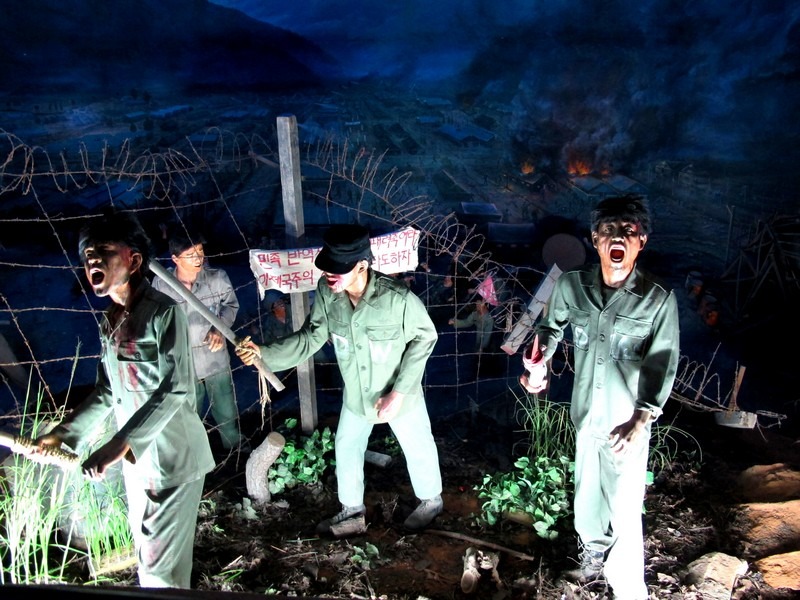
That overcrowding turned out to be the central problem of the entire camp’s existence. Packing tens of thousands of men into a small footprint, separated only by barbed wire, gave them constant contact, and constant opportunity to organize. Roughly 85 percent of the prisoner population was North Korean, the remainder Chinese, but the camp’s real issue among prisoners was ideology. Communist and anti-Communist factions inside the wire turned violently against each other almost immediately, and UN guards, undermanned and frequently unable to speak Korean, struggled to control either side.
What followed was nearly two years of escalating violence. In June 1951, the first deadly clash between guards and prisoners left three dead. Through the rest of that year, the toll climbed: 15 more killed by a “people’s court” of fellow prisoners in September, riots that required troop reinforcements to contain, and a steady drumbeat of murders between the rival factions that guards, who didn’t enter the compounds after dark, were largely unable to prevent or punish.
The screening process, introduced to determine which prisoners actually wanted repatriation to the North versus those who wished to remain in the South, became the flashpoint for the worst of it. On February 18, 1952, when troops moved into a compound of 6,500 internees who had refused to be screened, the standoff exploded into the deadliest single incident at the camp: prisoners attacked with pick handles, knives, axes, and tent poles, and when concussion grenades failed to stop the advance, soldiers opened fire. Fifty-five prisoners died immediately, 22 more later in hospital, against a single US soldier killed. It remains one of the bloodiest incidents on Korean soil involving prisoners of war anywhere in the conflict.
The Kidnapping of General Dodd
Brigadier General Francis Dodd, appointed camp commandant just after the February massacre to tighten discipline, became the centerpiece of the camp’s strangest episode. Dodd had a habit, born of good intentions, of going unarmed to compound gates to talk directly with prisoner leaders, hoping personal contact might lower the temperature. On May 7, 1952, prisoners from Compound 76 used exactly that habit against him. Mid-conversation through an open sally port gate, prisoners suddenly surged forward and dragged Dodd inside the compound.
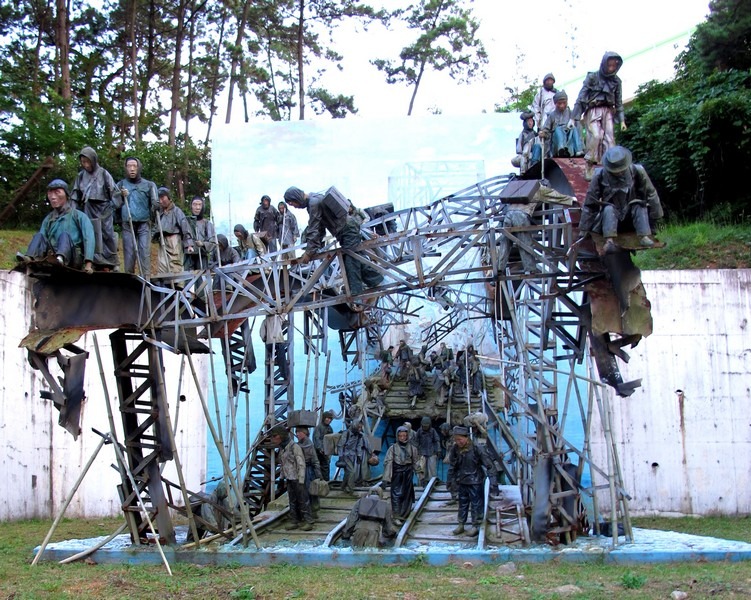
He wasn’t physically harmed. The Communist prisoners actually treated him reasonably well, providing medicine for his ulcers and basic comforts, while making it absolutely clear that any attempt to free him by force would cost him his life. What followed was one of the more surreal episodes in modern military history: an improvised “people’s court” inside the compound put Dodd on trial, presenting nineteen separate counts of alleged brutality against prisoners and demanding he answer each one personally, surrounded the entire time by armed captors.
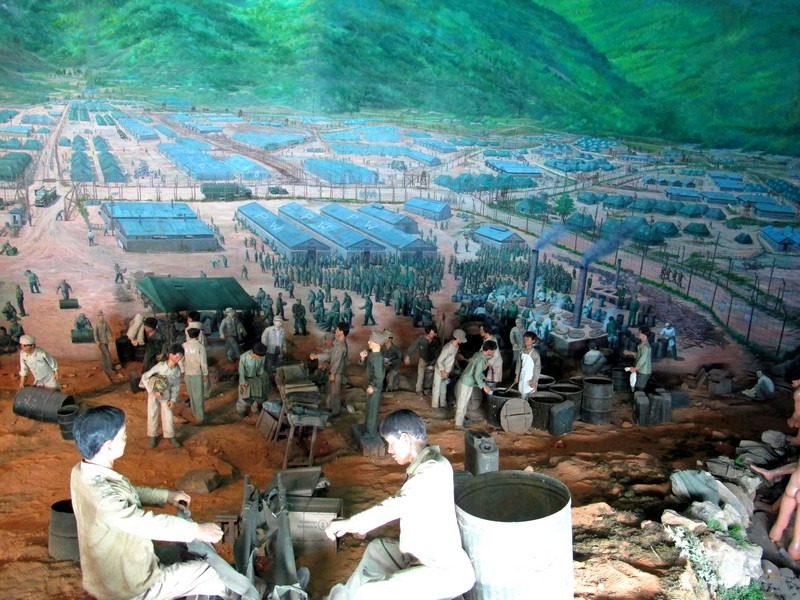
For three days, while over 11,000 UN troops, tanks, and flamethrower units assembled outside, negotiators worked to get Dodd released without triggering a bloodbath. The prisoners’ demands centered on recognition of a prisoner representative organization and an end to forced screening. Dodd’s eventual successor, Brigadier General Charles Colson, was pressured into signing a written statement that effectively admitted UN forces had used excessive violence against prisoners in the past, a document that Communist negotiators at the armistice talks in Panmunjom seized on immediately as propaganda. Dodd was finally released the evening of May 10, after roughly 80 hours in captivity.
The fallout was significant. Both Dodd and Colson were administratively demoted for their handling of the incident, and the affair damaged the UN’s negotiating position at Panmunjom. It also forced a hard reckoning: the camp was, by this point, functionally uncontrollable from the inside.
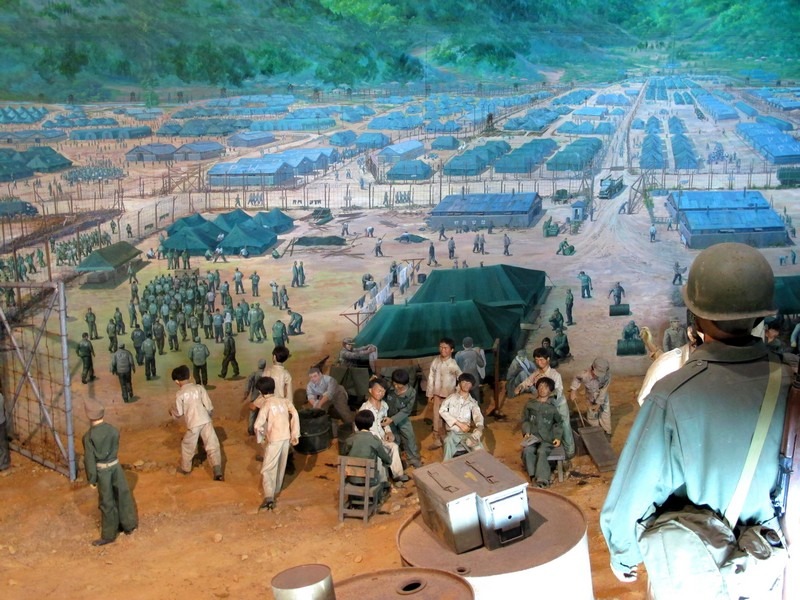
The response was Operation Breakup. Through June 1952, Brigadier General Haydon Boatner systematically dismantled the old mega-compounds, replacing them with smaller, more secure enclosures, by force when necessary. The worst single confrontation came on June 10, when paratroopers moved into Compound 76 itself to break the last major holdout. Prisoners fought with thousands of improvised spears and knives fashioned from scrap metal and tent poles, 3,000 spears and 4,500 knives were recovered afterward, but tanks and overwhelming force ended the resistance within hours. Thirty-one prisoners died, many at the hands of fellow prisoners rather than UN troops.
The camp closed with the signing of the Armistice Agreement on July 27, 1953. Operation Big Switch and Little Switch repatriated roughly 83,000 prisoners north and 22,000 south, while a small number, 76 North Koreans and 12 Chinese, refused both options entirely and chose to settle in India, Argentina, and Brazil instead.
What To See
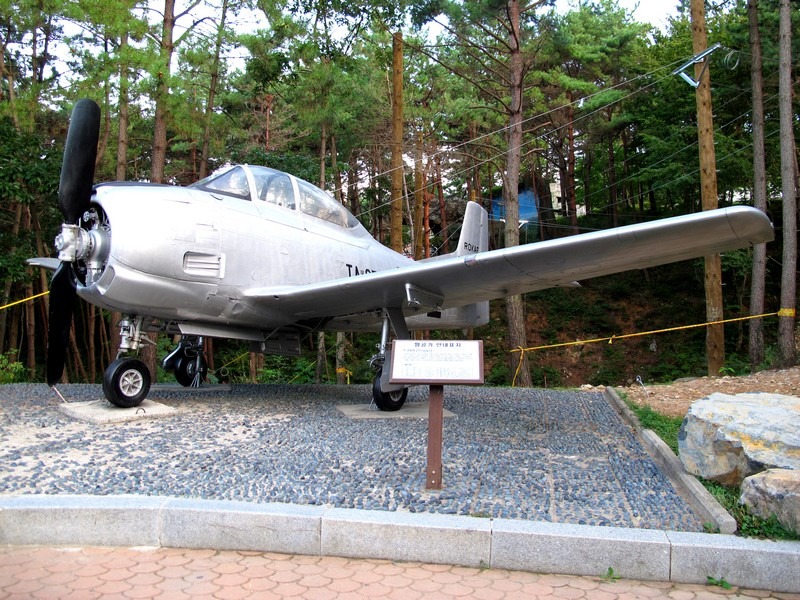
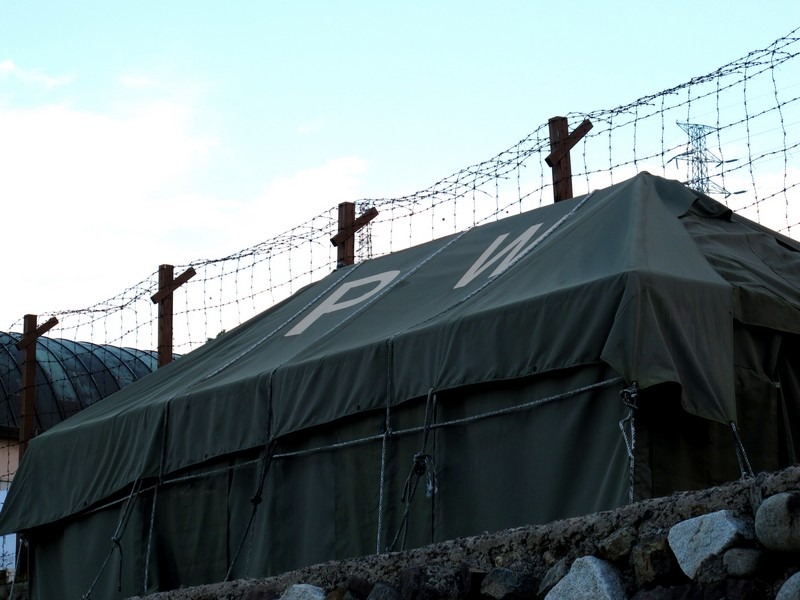
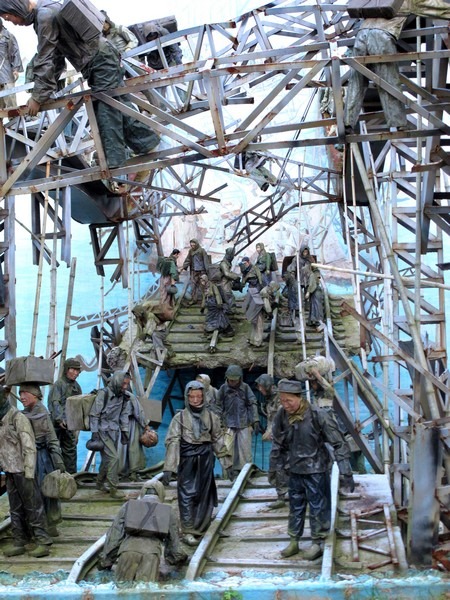
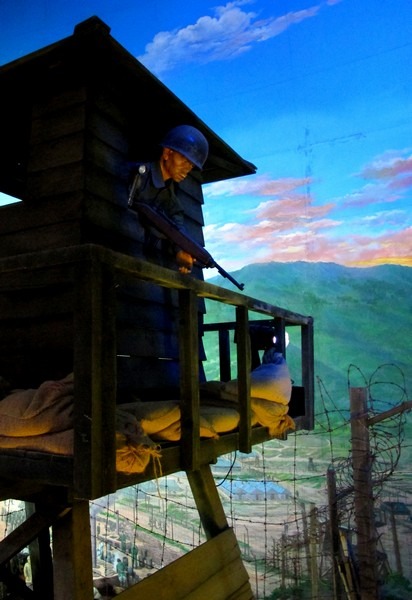
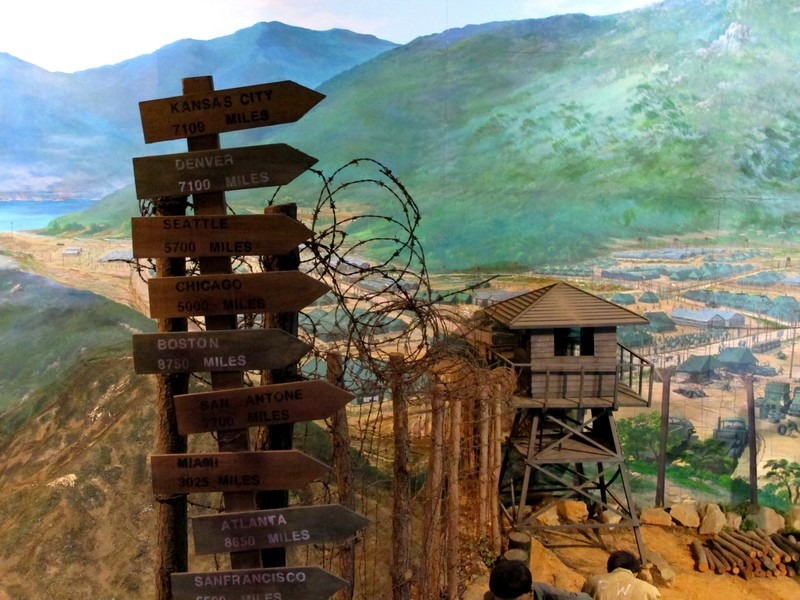
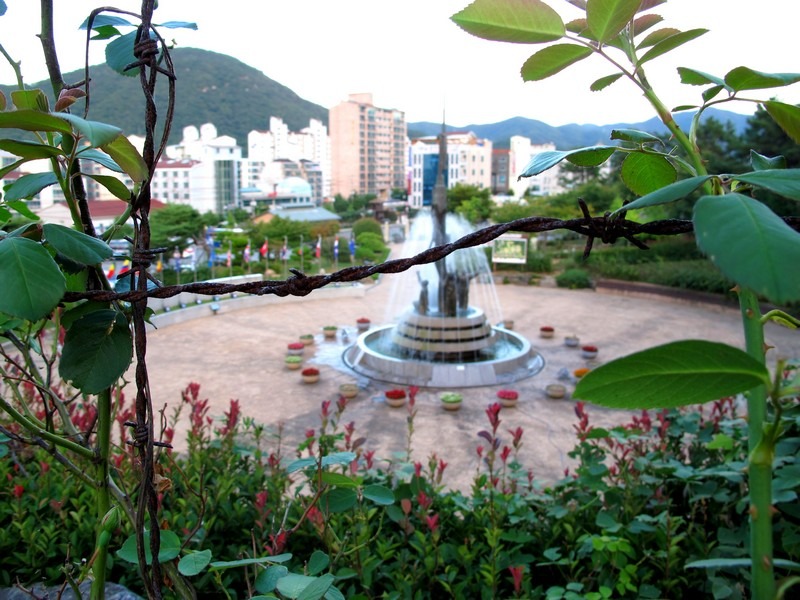
The site reopened to the public in 1997 as a memorial park and outdoor museum, built directly on part of the original camp grounds. The visit takes about an hour and moves through dioramas recreating prisoner barracks and daily camp life, along with the Dodd kidnapping told in detail, plus a collection of period military hardware, tanks, trucks, and other relics left behind when the camp closed in 1953.
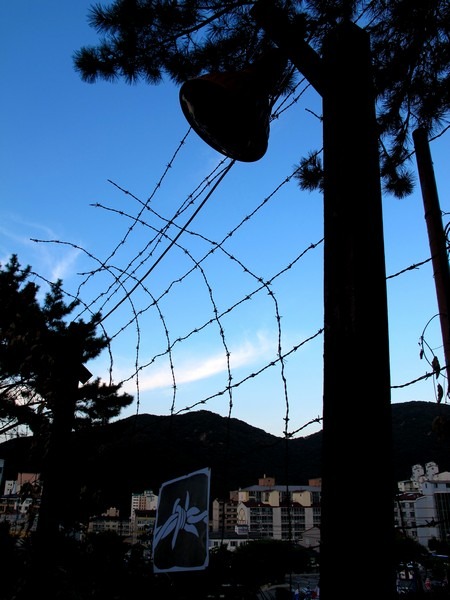
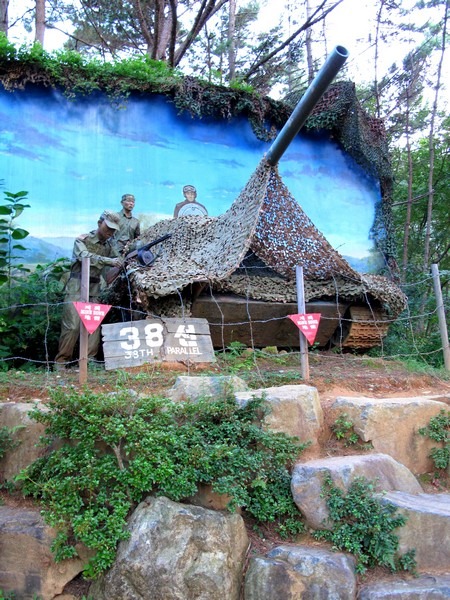
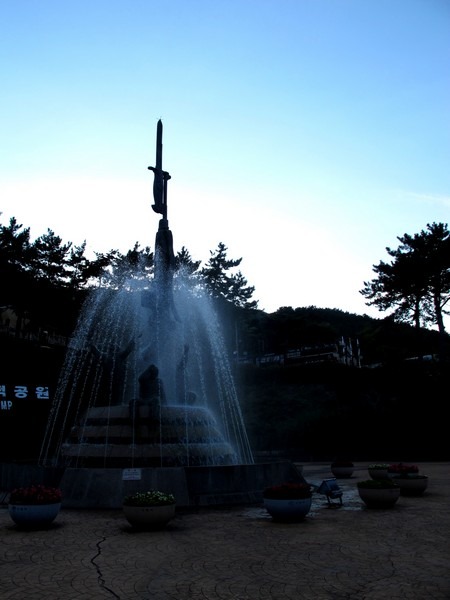
The museum doesn’t shy away from the camp’s internal violence, the bloody clashes between Communist and anti-Communist factions are documented directly, alongside material affirming that prisoners were, per official policy, treated according to Geneva Convention standards. Whether that policy matched the daily reality inside the wire, as the historical record and survivor testimony both suggest it often didn’t, is something the exhibits leave you to weigh for yourself.
One thing worth being upfront about: a few “photo zone” installations scattered through the park felt jarringly lighthearted given the subject matter, an odd note in a place built around a lot of suffering and wartime history. Even still, this belongs on the list for anyone trying to understand the Korean War beyond the front lines.
FAQ
How many prisoners were held at Geoje POW Camp?
At its peak, the camp held approximately 173,000 prisoners, around 85 percent North Korean and the remainder Chinese, making it the largest UN-established POW camp of the Korean War.
What happened to General Dodd?
Brigadier General Francis Dodd, the camp commandant, was captured by prisoners on May 7, 1952, and held for roughly 80 hours while held captors staged an improvised trial and negotiated demands with UN command. He was released unharmed on May 10, but was later administratively demoted over how the incident was handled.
Why was there so much violence inside the camp?
The camp held both Communist and anti-Communist prisoners in close, overcrowded quarters, and ideological rivalry between the two factions led to organized violence, executions by improvised “people’s courts,” and large-scale riots, compounded by a UN guard force that was often undermanned and unable to enter compounds at night.
When did Geoje POW Camp close?
The camp closed following the signing of the Korean Armistice Agreement on July 27, 1953, after which prisoners were repatriated through Operation Big Switch and Little Switch.
How long does it take to visit the Geoje POW Camp museum?
Plan for about an hour to see the dioramas, military relics, and exhibits covering the camp’s history and the Dodd incident.
Is the Geoje POW Camp appropriate for children?
The exhibits deal directly with violence, captivity, and war, and some content may be intense for younger children. It’s worth previewing the subject matter with kids beforehand, similar to a visit to any serious war memorial.
I found the “photo zones” scattered through the park a bit jarring, an odd, lighter note inside a place built on real suffering, but the visit as a whole was very insightful to a part of history I had no idea about going in. This is a site that belongs on the list for anyone hoping to understand the Korean War beyond the battle lines, alongside the other places worth seeing for that same reason.
Did you like this post? Pin It!
One Comment
Donbi Callahan-yeo
Hello, my grandparents home was located where a dam was built to feed water to the pow’s near the pow museum. I have family owns a coffee shop on top of the hill by mundong falls. Can you tell me the name of that lake/reservoir?