The National Museum of Korean Contemporary History: Great For Kids and Views
Last Updated on October 17, 2026
We love visiting the national museums of Korea, not only are they free but they offer so much access to information and fun. The National Museum of Korean Contemporary History (대한민국역사박물관), right downtown next to Gwanghwamun Square is one of the most overlooked museums in Seoul but it’s awesome. The museum offers a unique perspective on Korea’s journey from the late 19th century to the present day. This interactive museum is great for both adults and kids. Get ready for history and fun!
Learn more about this underrated museum in downtown Seoul:
- Basic Info
- A Glimpse into Modern Korean History
- The 4th Floor Hands-On Playground
- The History Hall
- Where to See Gyeongbokgung Palace from Above
- Don’t Confuse It With These Museums
- FAQ
(This post contains affiliate links, which means I receive a certain percentage of a sale if you purchase after clicking at no cost to you. Thank you for your support.)
Basic Info
Address: 198 Sejongdae-ro, Jongno-gu, Seoul (서울특별시 종로구 세종대로 198)
Directions: Take exit 2 of Gwanghwamun Station and walk straight to find the museum on the right.
Hours: Monday, Tuesday, Thursday, Friday, Sunday: 10:00am ~ 6:00pm; Wednesday & Saturday: 10:00am ~ 9:0pm
Admission: FREE
Tours: Free Wednesday Evening Tour: Since April 2026, the museum runs a free guided tour every Wednesday at 7pm. It takes about 50 minutes, starts in the 5th-floor History Hall and finishes on the rooftop, where the guide explains the buildings around Gwanghwamun Square. No reservation needed, just show up.
Website: https://www.much.go.kr
Unlike a lot of Seoul museums, it’s open on Mondays. It’s also open on Tuesdays when Gyeongbokgung Palace is closed, which makes it a great backup plan for a palace day.
A Glimpse into Modern Korean History
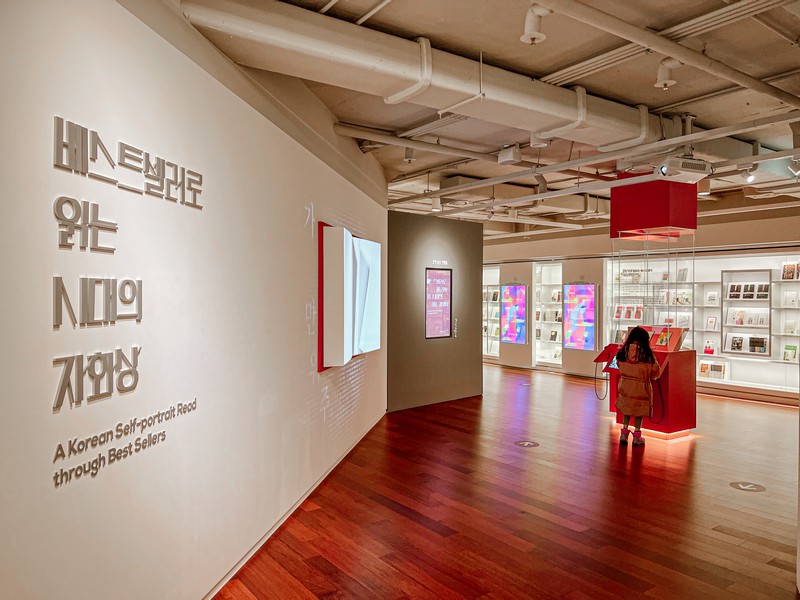
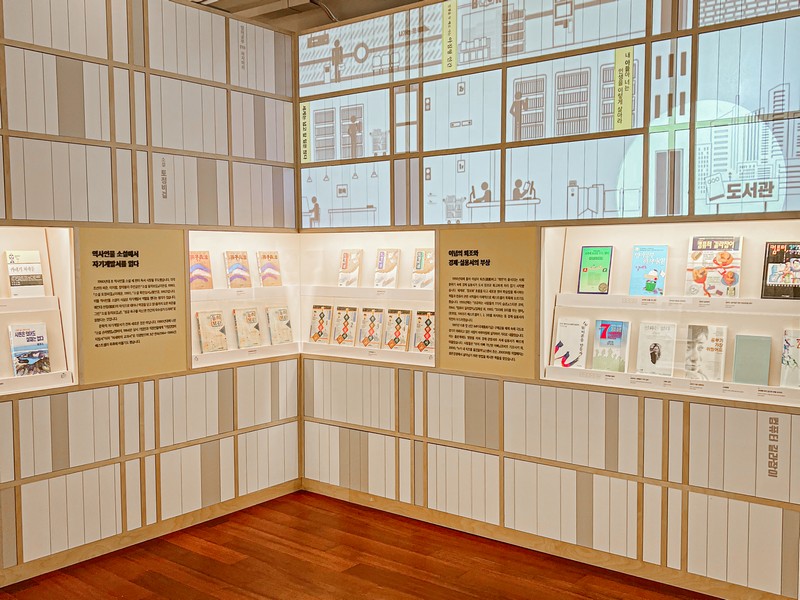
The National Museum of Korean Contemporary History stands as the first national museum dedicated to the country’s contemporary history. It opened on December 26, 2012, in the remodeled former building of the Ministry of Culture, Sports and Tourism, right next to Gwanghwamun Square.
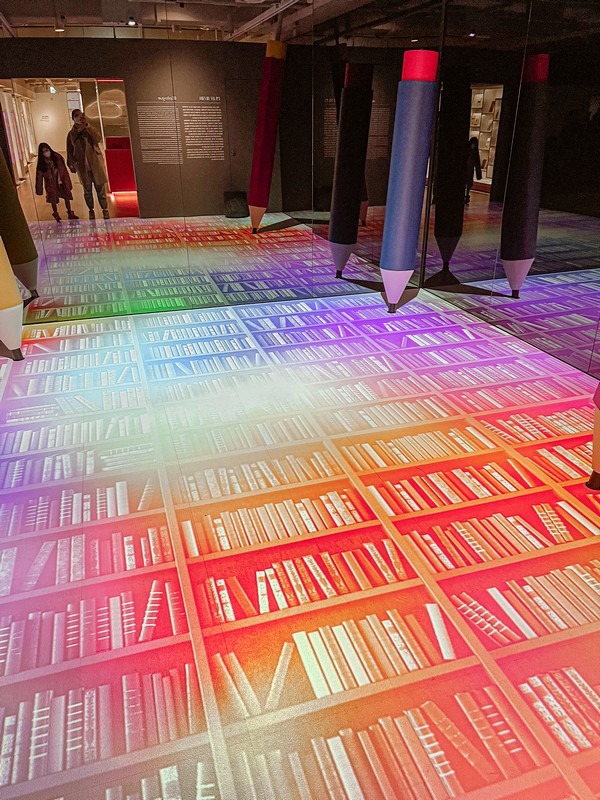
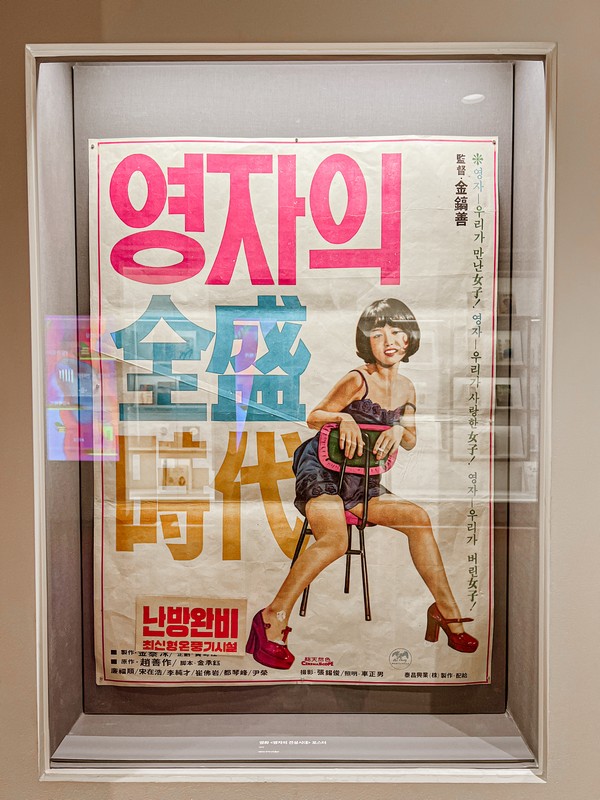
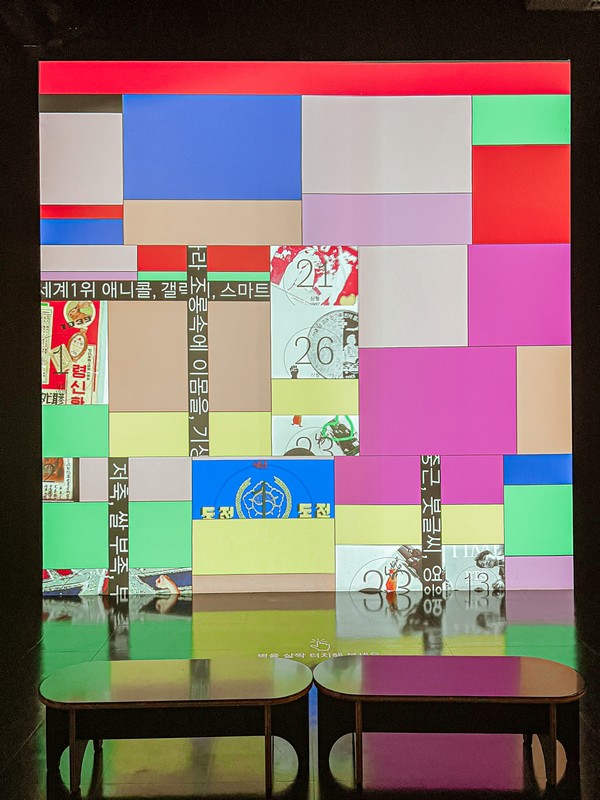
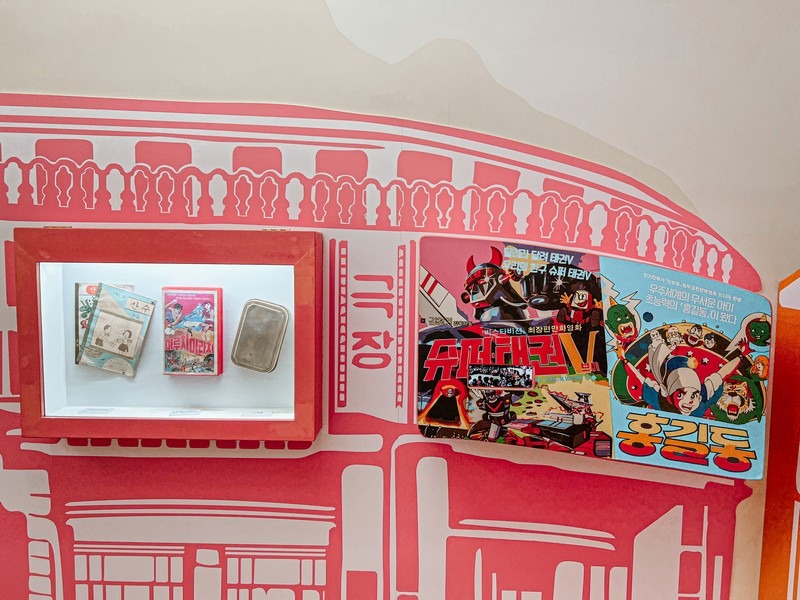
The main permanent exhibition is the History Hall, which you enter on the 3rd floor and which fills the entire 5th floor. The 3rd floor also has theme halls, a donation hall and a special exhibition hall, and the 4th floor is given over to hands-on exhibits. The museum first opened with about 1,500 objects on display, and its collection has since grown to more than 100,000 items that narrate Korea’s tumultuous journey.
The museum’s permanent exhibition focuses on “Independence and the Establishment of the ROK Government.” This theme offers a comprehensive account of the events leading up to the founding of the Korean government on August 15, 1948.
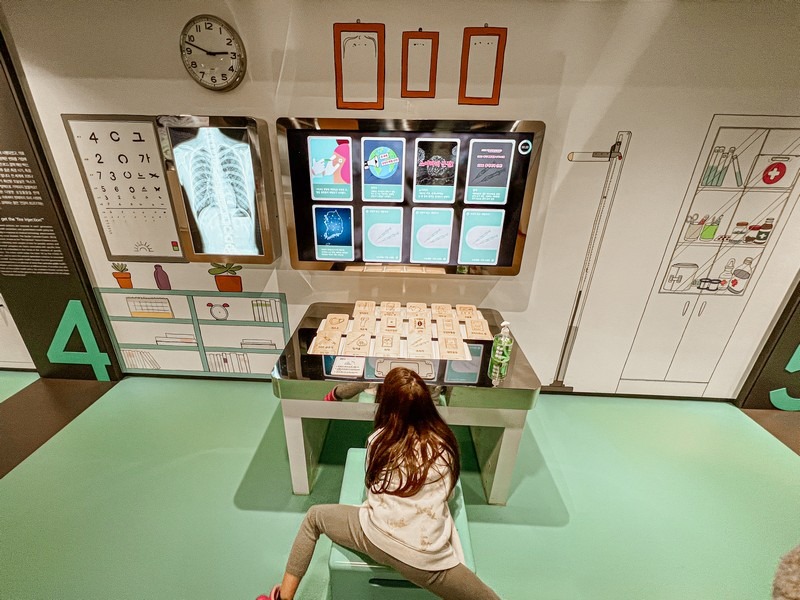
The 4th Floor Hands-On Playground (말랑말랑 현대사 놀이터)
The floor’s official name is “말랑말랑 현대사 놀이터”, which roughly translates to the “Squishy Contemporary History Playground,” and it really does feel more like play than a history lesson.
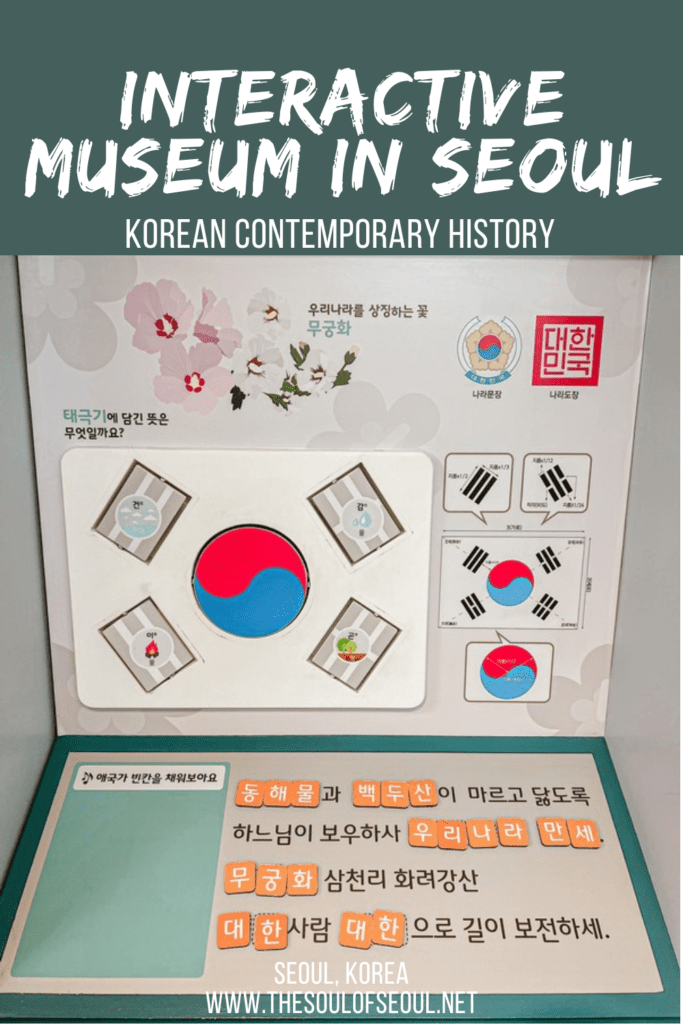
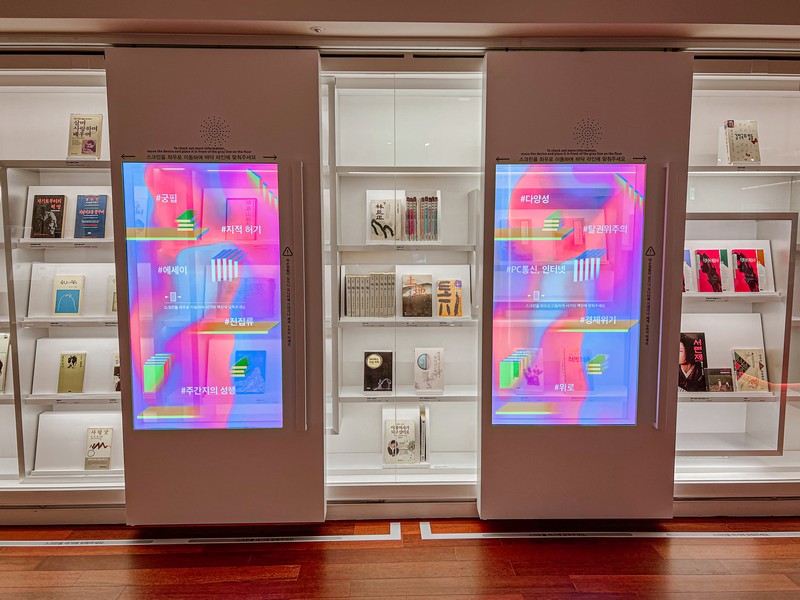
One of the museum’s highlights is its Interactive Gallery, designed to foster intergenerational communication. This was probably our favorite floor of them all. Here, visitors can engage with hands-on exhibits that bring to life the experiences of different generations in modern Korean history. If you have kids, this is the floor to head to first.
The Interactive Gallery is huge and has so many stations on the floor to check out and enjoy. Some are better than others for kids, but all of them are very fun to explore. Upon entering, you grab a card from the desk that can be used at the various stations. There’s a cool station called “Generational slogans” with titles and sayings from newspapers. You can grab your own copy of a retro sign too.
My daughter loved the “Eating in yesteryear” station where you can move food around creating various dinner scenarios. Different time periods in Korea have seen meals look slightly different and you can see that here.
Use the old school rotary phones, and if you have kids introduce them to the world of phones that were connected to the wall. There are two public telephones, which provide a link to some time in Korea’s past.
If you like the Korean noraebong, or karaoke room, there’s even a Dance Dance Revolution style room that plays grassroots activist songs full of generational sentiments. Along with the rhythmic game, even if you don’t understand the songs, some of which I’m sure you’ll recognize if you’ve been in Korea for awhile, it’s still fun to hop into and dance.
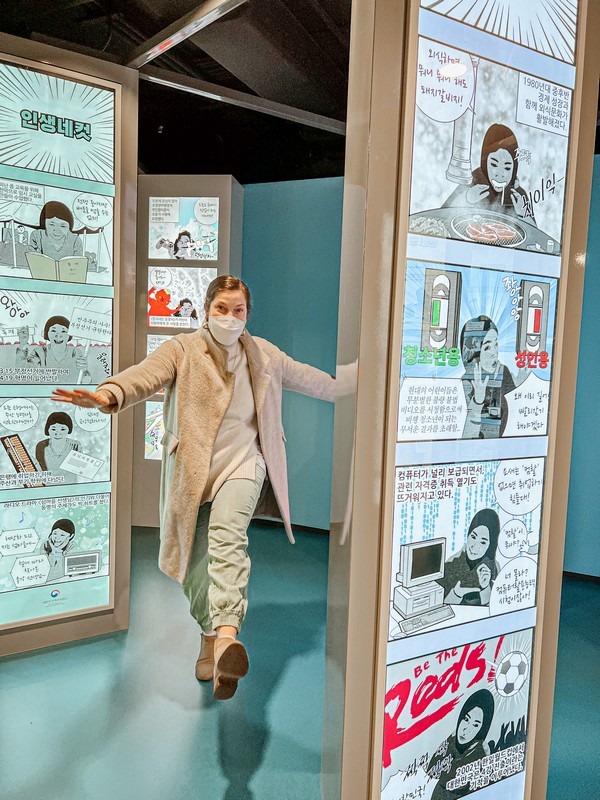
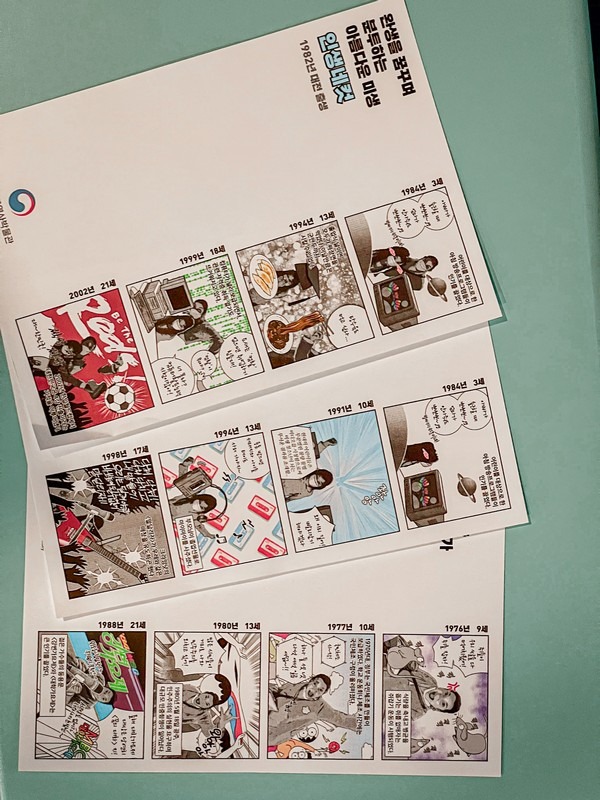
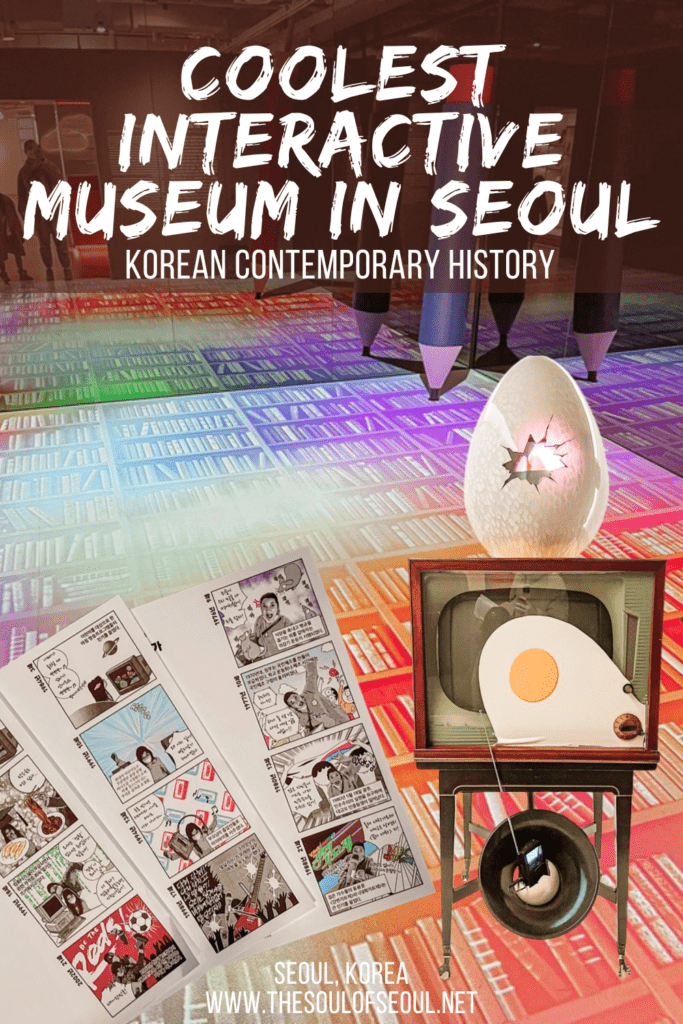
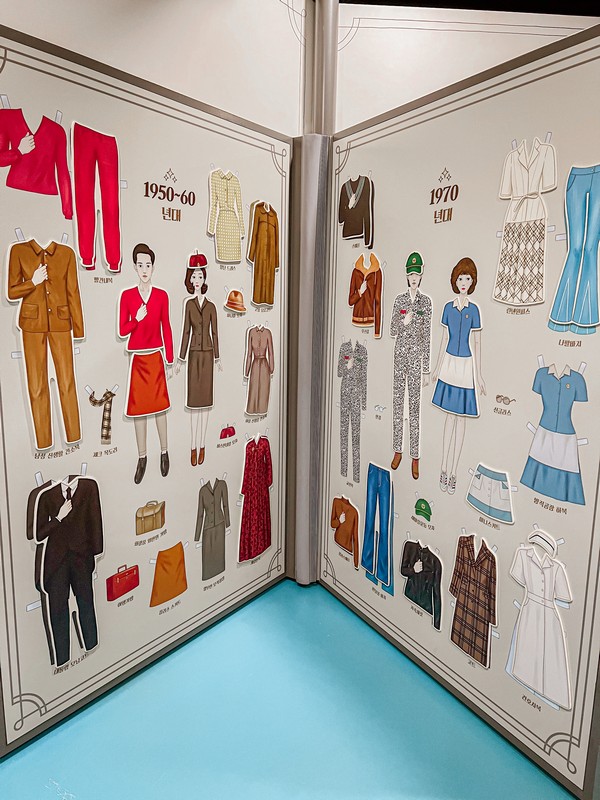
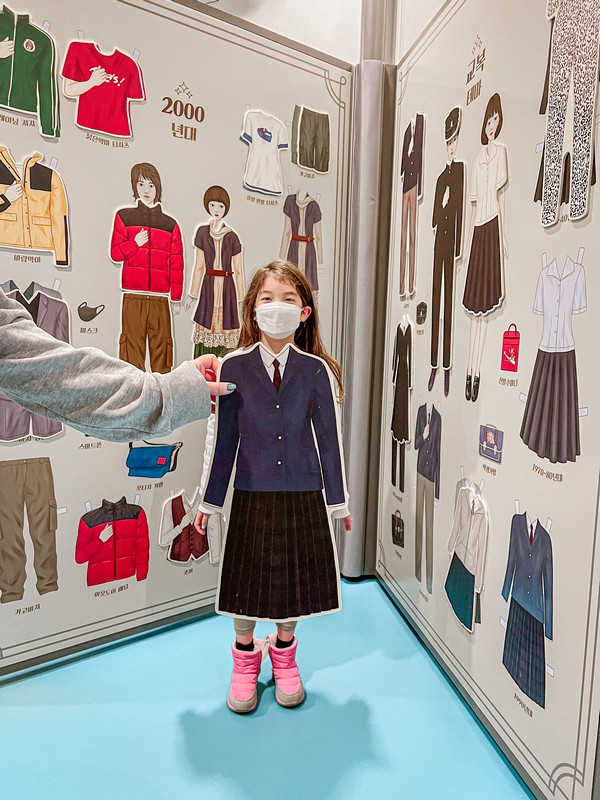
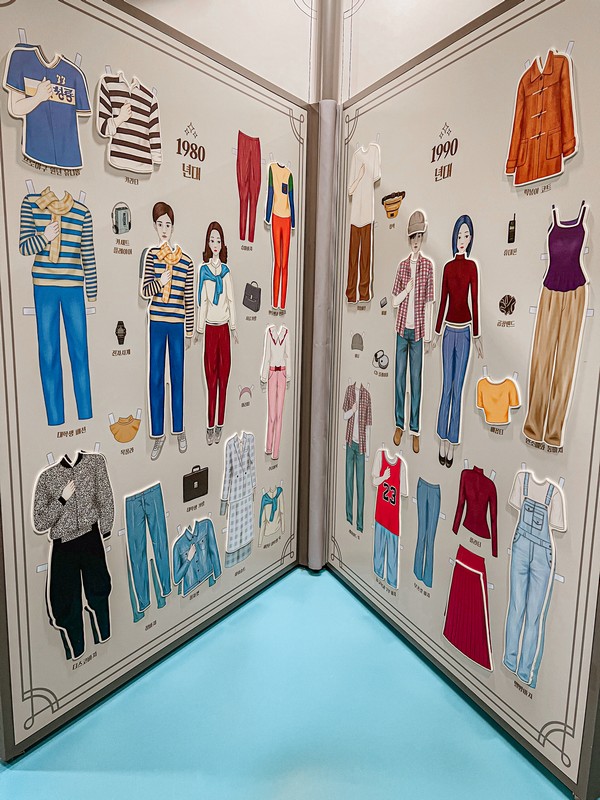
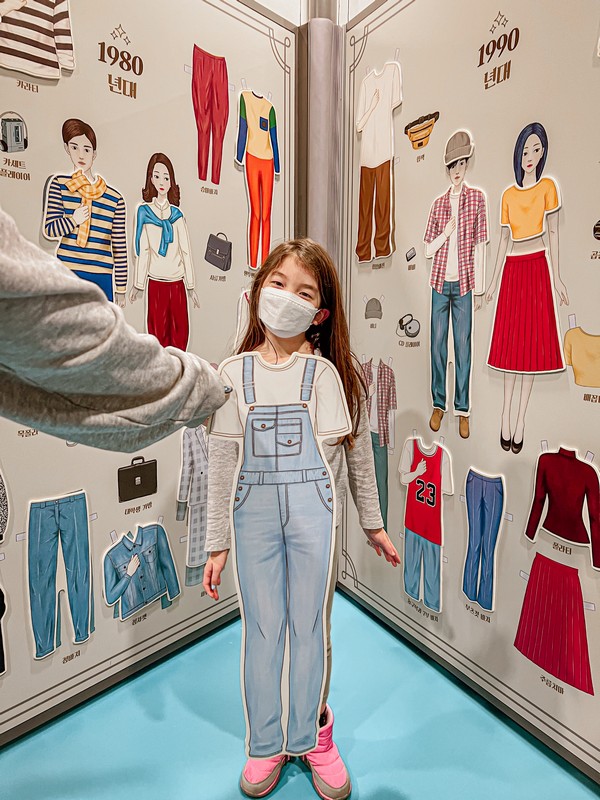
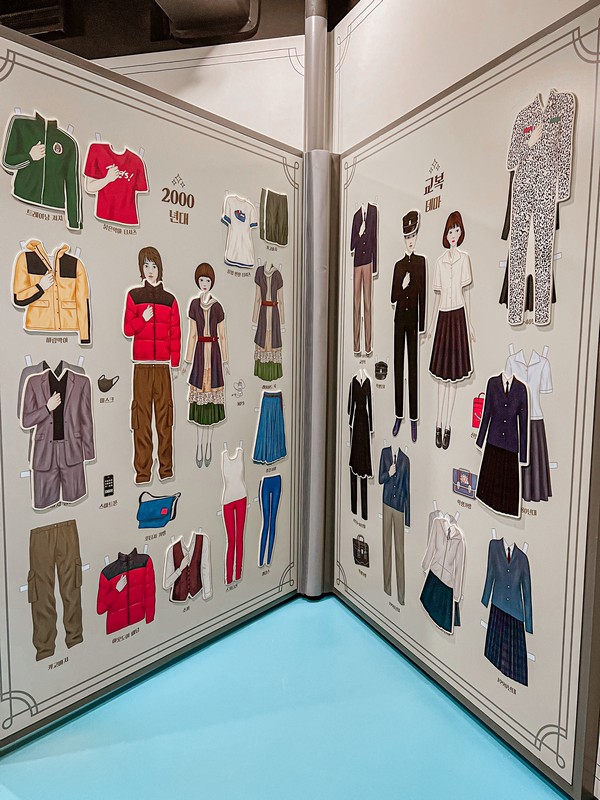
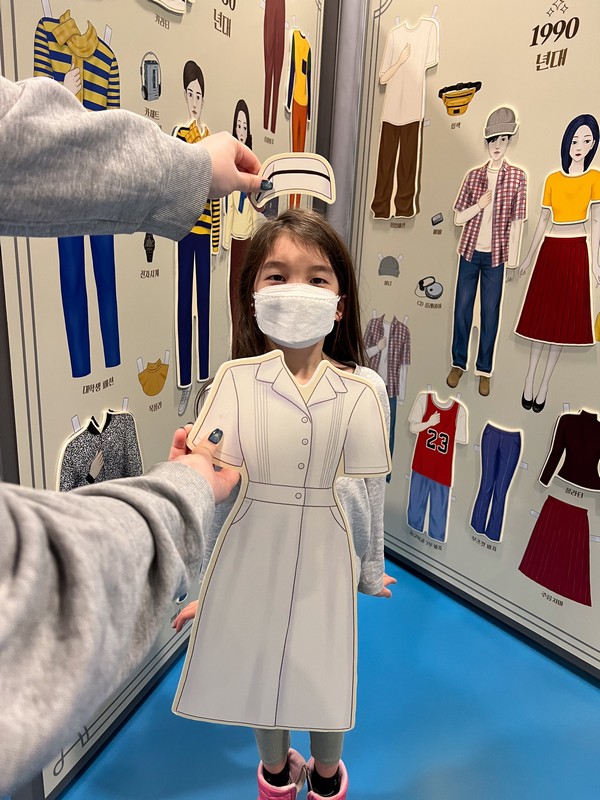
Ending the round up of stations were two of our favorites, “Fashionistas” which is like a paper doll game. Remove Korean illustrated fashion pieces from the life-size book and see what you can dress up as. And then there was the “Personal Snapshot of Life” where you can pose for some pics and make your own comic strip which will be on the wall and printed out for you to take home.
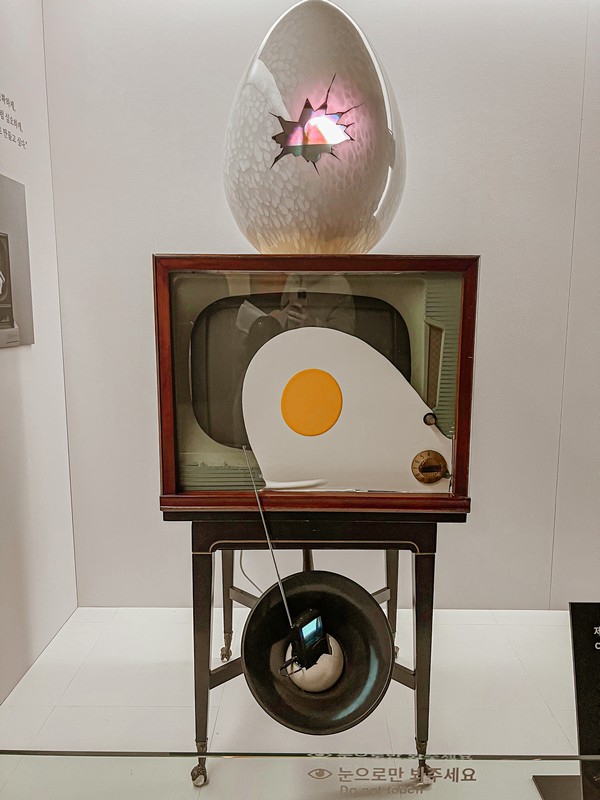
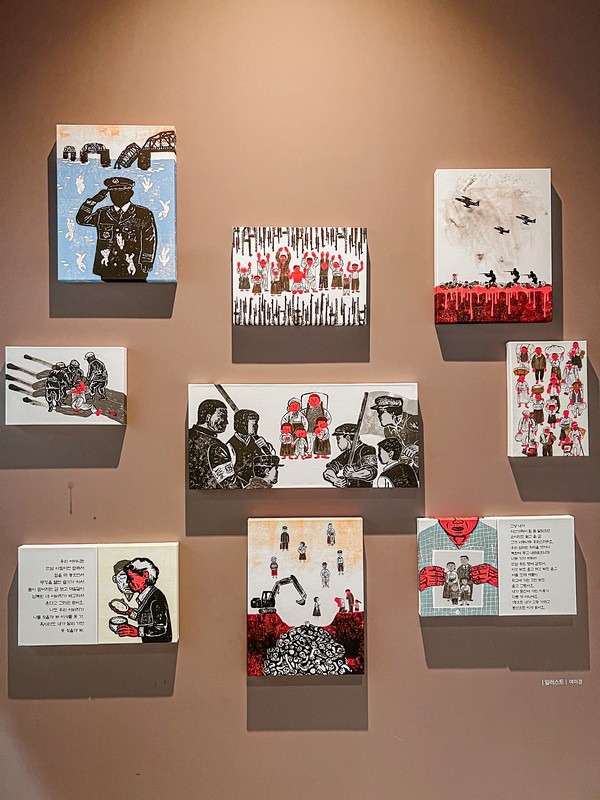
The History Hall
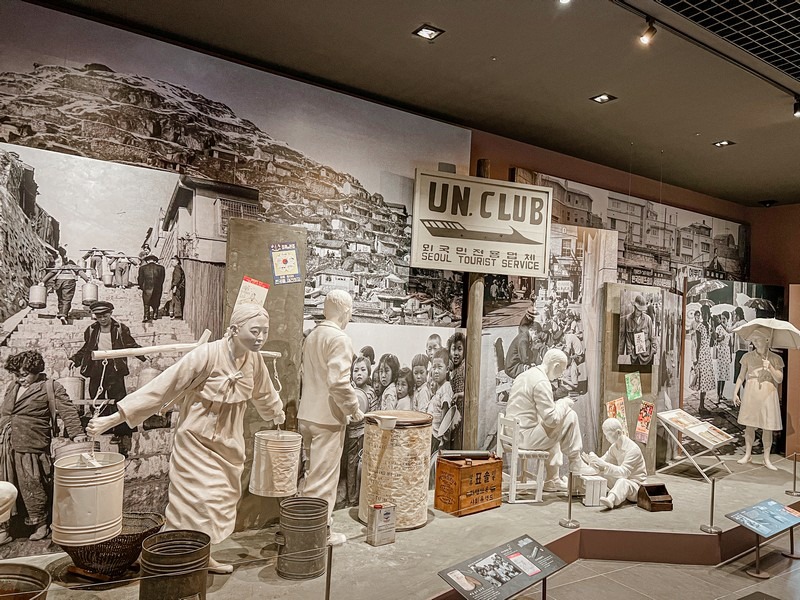
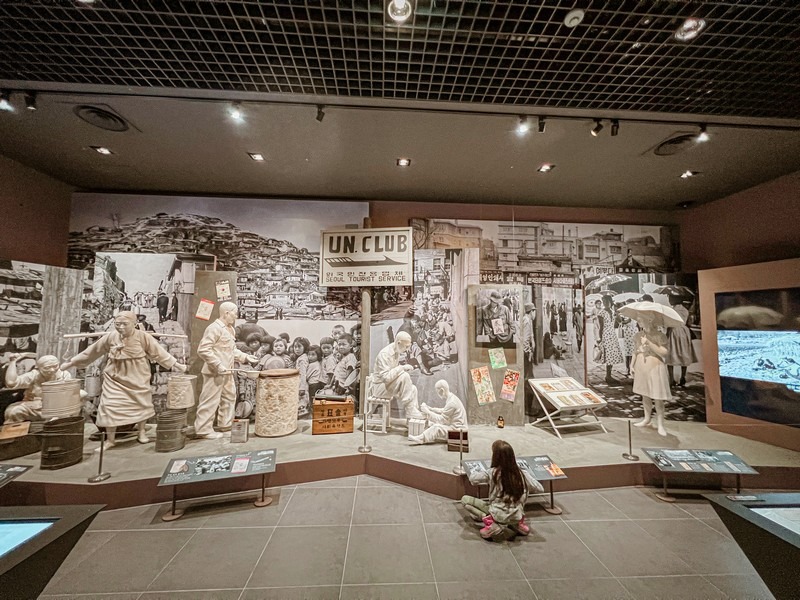
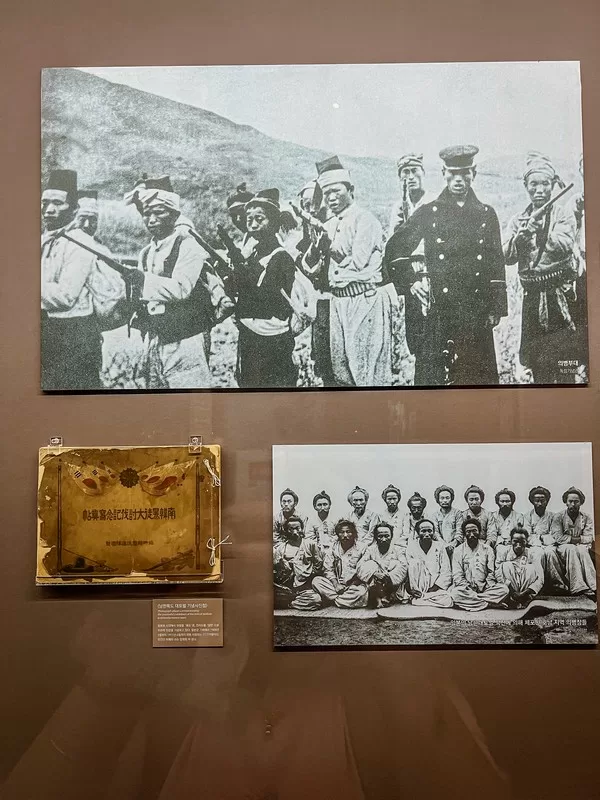
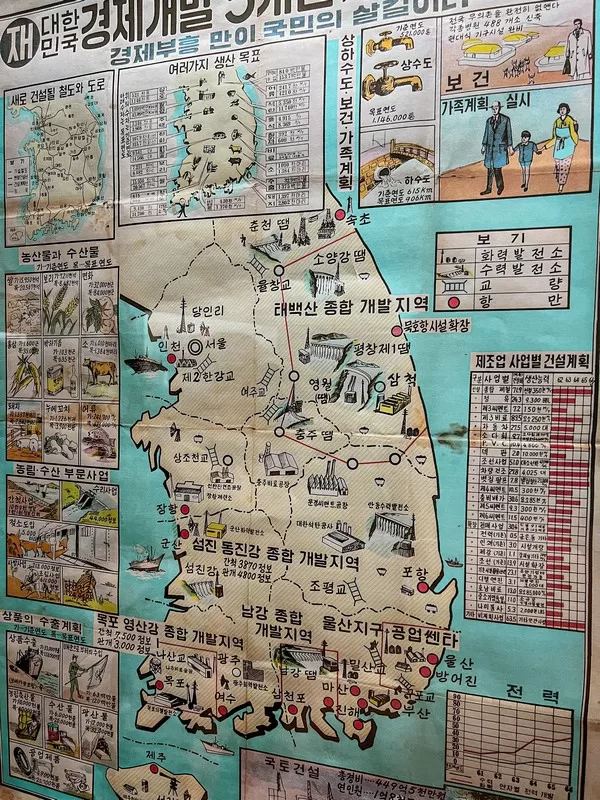
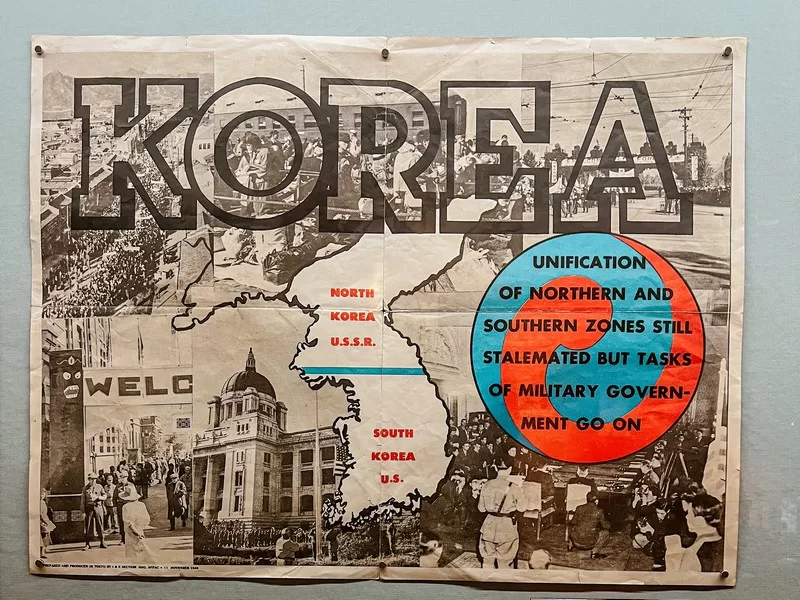
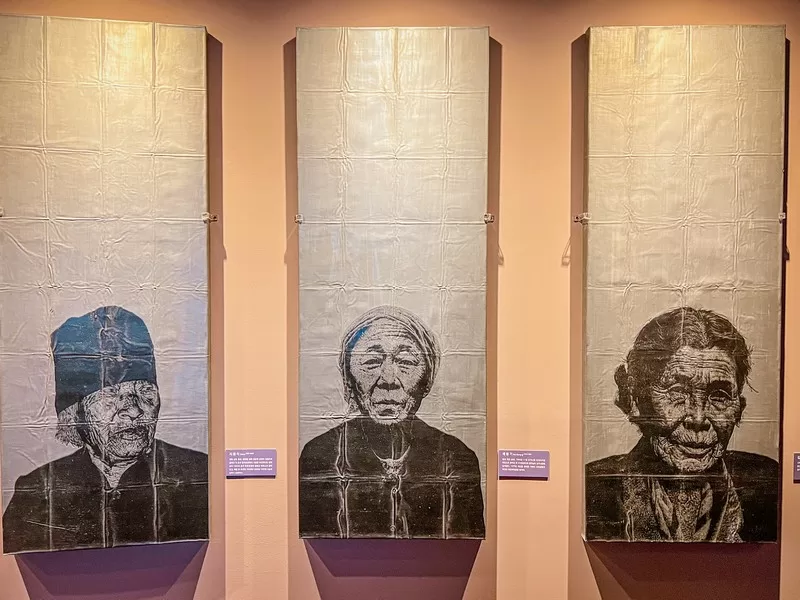
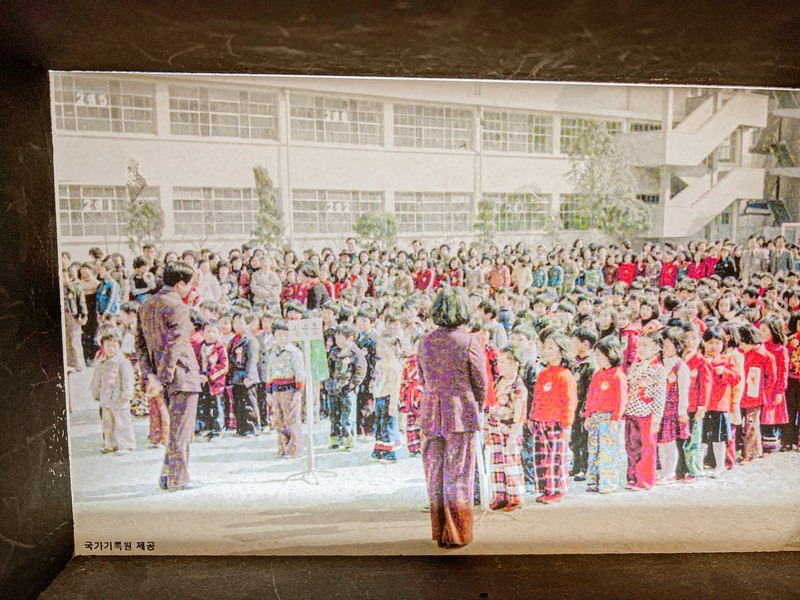
The main History Hall takes up the entire 5th floor and is split into three parts: the push for freedom, equality and independence from 1894 to 1945, the road to peace, democracy and prosperity from 1945 to 1987, and Korea and the world from 1987 to today.
There are three galleries making up this exhibition and feature information on the push for freedom, equality, and independence. It continues through colonization and into liberation and the Korean War and then even gets into arts and culture of contemporary times that pushed for democracy and the globalization of Korean culture.
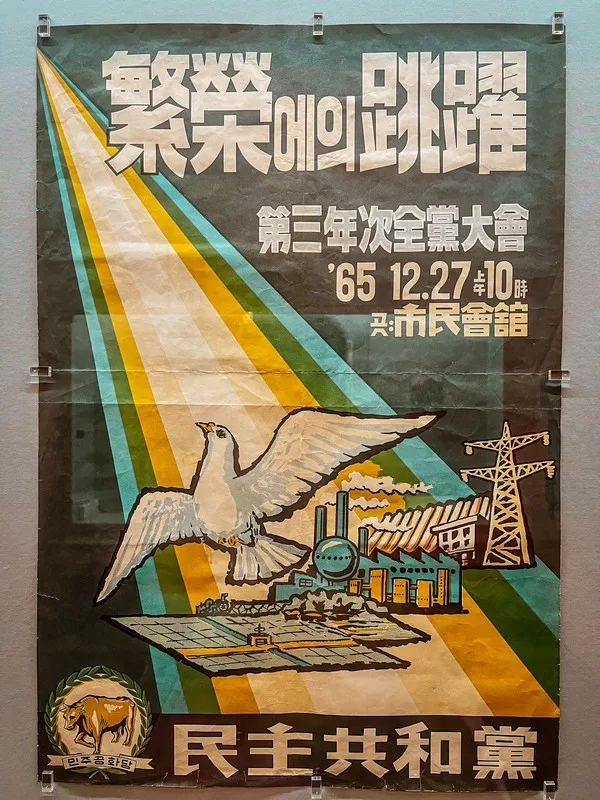
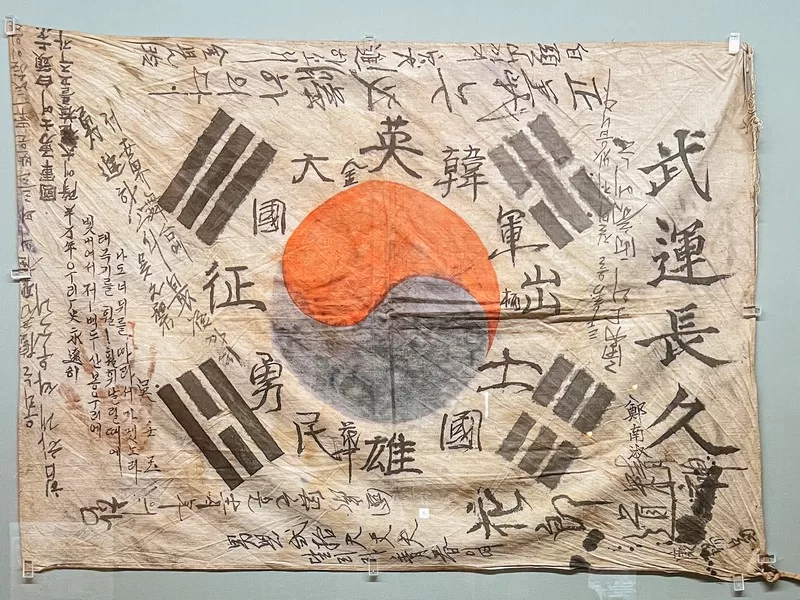
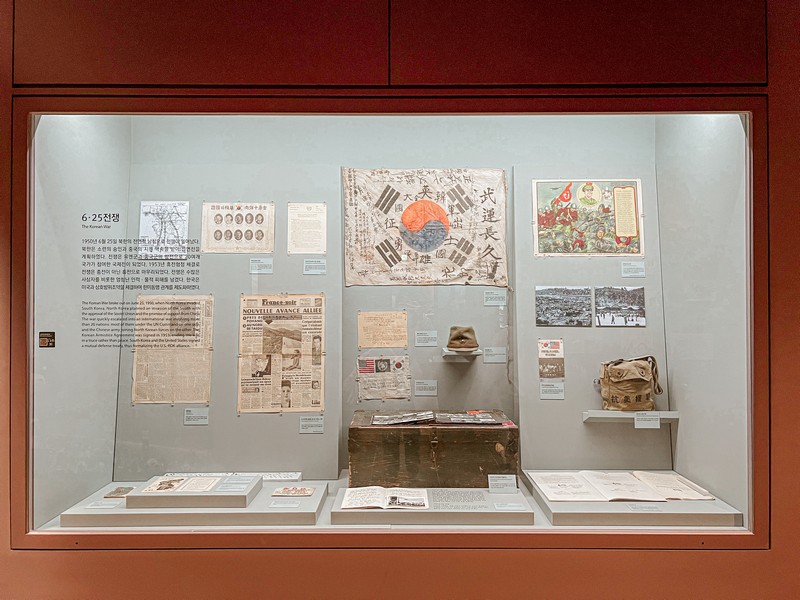
One piece worth looking for is a Taegeukgi (태극기, the Korean national flag) covered in handwritten wishes for soldiers heading off to war. The messages include “Good luck in war,” “Military heroes of the Republic of Korea at the front,” and “We soldiers shall fight for the lives of 30 million.”
Where to See Gyeongbokgung Palace from Above
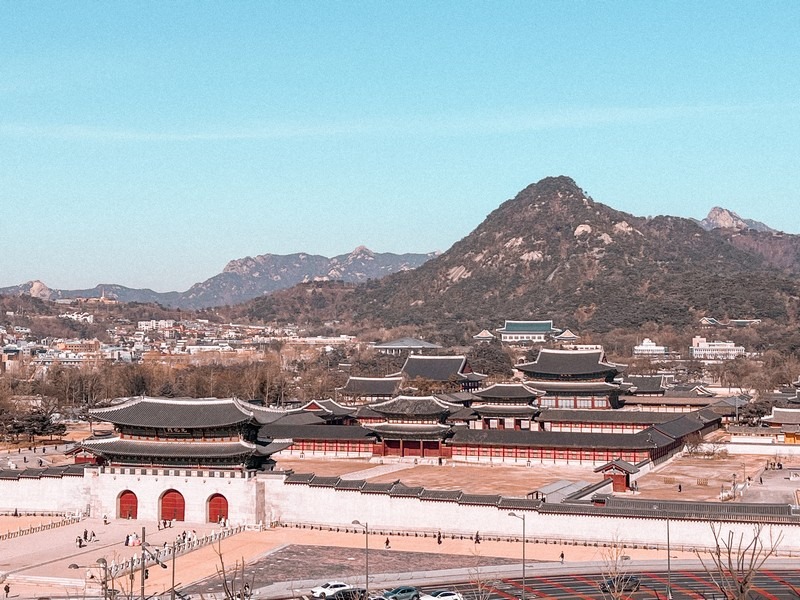
The museum not only has some great interactive exhibitions and information to share, but it also hosts a rooftop observatory which is the perfect place to get a view of Gyeongbokgung Palace and Gwanghwamun Square from above. If you’re wondering where those photographers go, this is one of the spots. If you want to go straight there, head into the museum, go to the elevators to the left and take the elevator straight up to the 8th floor to find access to the rooftop.
Because the museum stays open until 9pm on Wednesdays and Saturdays, those are the nights to go up for sunset and watch the palace and the square light up.
Don’t Confuse It With These Museums
| Museum | Where | What it covers |
|---|---|---|
| National Museum of Korean Contemporary History | Gwanghwamun Square | Late 1800s to today, hands-on floor, rooftop |
| Seoul Museum of History | West of Gwanghwamun, near Gyeonghuigung | The history of Seoul the city |
| National Museum of Korea | Yongsan | Prehistory through the Joseon era; Korea’s largest museum |
| National Folk Museum of Korea | Inside the Gyeongbokgung grounds | Traditional Korean daily life |
| War Memorial of Korea | Yongsan | Military history and the Korean War |
FAQ
Is the National Museum of Korean Contemporary History free?
Yes. Admission to the permanent exhibitions, the hands-on floor, special exhibitions and the rooftop is free.
Is the museum open on Mondays?
Yes. It only closes on January 1, Seollal and Chuseok.
How do I get to the rooftop for the Gyeongbokgung view?
Take the elevator from the 1st floor straight to the 8th floor. The rooftop garden is free and open during museum hours.
Can I just visit the rooftop without seeing the museum?
Yes. Admission is free, so you can walk in and go straight up.
Where is the best free view of Gyeongbokgung Palace?
The 8th-floor rooftop garden here is one of the best, looking over Gwanghwamun Gate, the palace and Bugaksan Mountain behind it.
What’s the difference between this museum and the Seoul Museum of History?
This museum covers the history of the country from the late 1800s to today. The Seoul Museum of History focuses on the city of Seoul and is a separate museum a short walk west.
Visitors to Gwanghwamun Square can easily include the National Museum of Korean Contemporary History in their Seoul itinerary, making it a perfect addition to a day spent exploring one of Seoul’s most iconic areas. For those wondering what to do at Gwanghwamun Square, the National Museum of Korean Contemporary History is a must see. It’s super fun and interactive and free and is one of the most underrated museums in downtown Seoul.
Did you like this post? Pin It!