National Museum of Korea: Complete Visitor Guide: Hours, Tickets & What to See in 2026
Last Updated on August 29, 2026
Since it’s establishment in Yongsan in 2005, the National Museum of Korea has had more than 20 million visitors. You should be one too! Come spring and summer in Seoul the rain will inevitably start to fall and when it does people start to look for things to do inside. Or maybe it’s winter in Korea and you’d rather have some indoor time. The National Museum of Korea (국립중앙박물관) is not only a great thing to do when it’s too cold or too wet to venture out, but it’s also one of the FREE things to do in Seoul.
These days, we’ve also got a major issue with fine dust levels in Seoul and again, great spot to spend the day right here! If the weather does happen to be good, note that this museum has a beautiful park area in the front and is also very close to the Ichon Han River Parkside. The museum is GIGANCTIC. Visitors could easily spend an entire day enjoying the relics in and around the huge building. We’ve gone multiple times and there is still more to see!
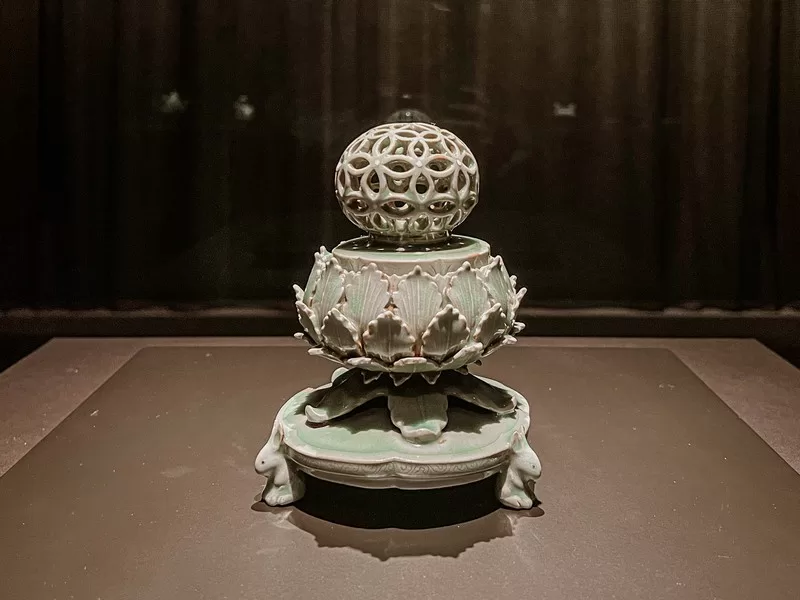
Here’s what you need to know to visit the National Museum of Korea:
- Basic Info
- The Room of Quiet Contemplation
- How Much Time You Need
- Best Time To Visit
- What To See
- Good To Know For Parents
- National Museum of Korea Children’s Museum
- Special Exhibitions
- Should You Book a Guided Tour?
- Where To Eat
- FAQ
(This post contains affiliate links, which means I receive a certain percentage of a sale if you purchase after clicking. Thank you for your support.)
Basic Info
Address: 137 Seobinggo-ro Yongsan-gu, Seoul, Korea (서울특별시 용산구 서빙고로 137 (용산동6가))
By Subway: Ichon Subway Station exit 2
Admission: Free, special exhibits are charged separately (recent special exhibitions have run in the W5,000–W17,500 range depending on the show
Hours of Operation: Monday, Tuesday, Thursday, Friday, Sunday: 9:30am ~ 5:30pm; Wednesday, Saturday: 9:30am ~ 9:00pm;
Tours: Guided tours are available on weekdays at 10:30am and 1:00pm for English, Japanese, and Chinse speakers. On Saturdays and Sundays, Japanese and English speakers have guided tours at 10:30am and 1:00pm and Chinese speakers have a guided tour available at 1:00pm
Amenities: Handicap Accessible Services, Baby Strollers, Parking Facilities, Audio guides available in Korean, English, Chinese, Japanese, and Vietnamese
Website: http://www.museum.go.kr
The Room of Quiet Contemplation (사유의 방)
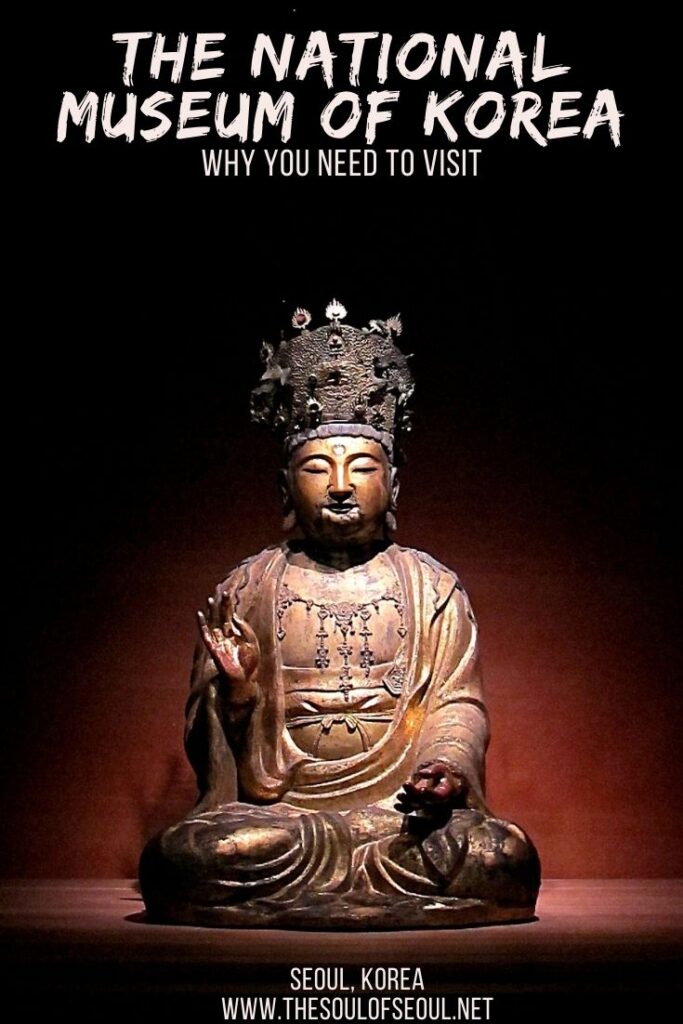
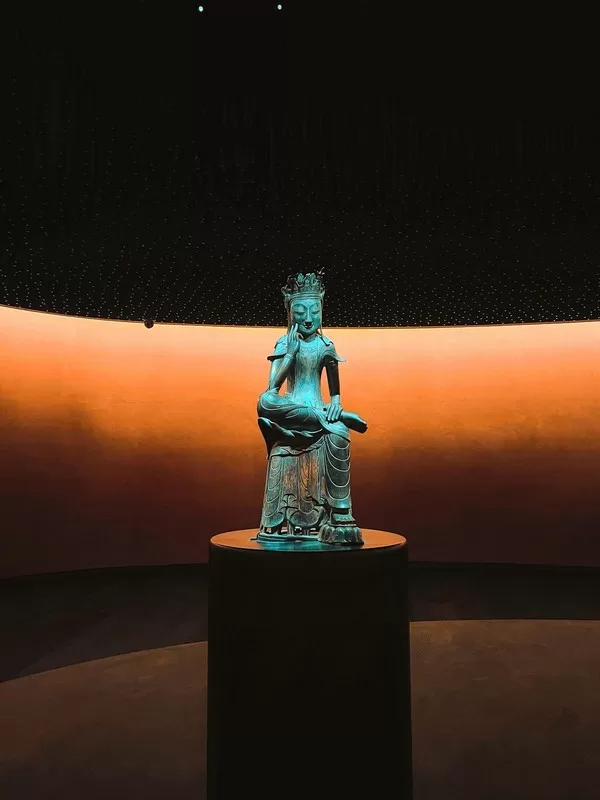
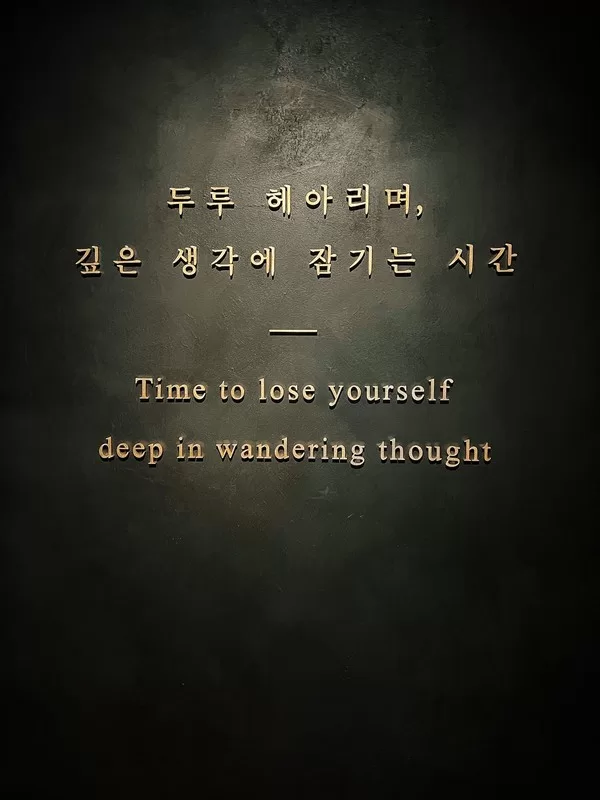
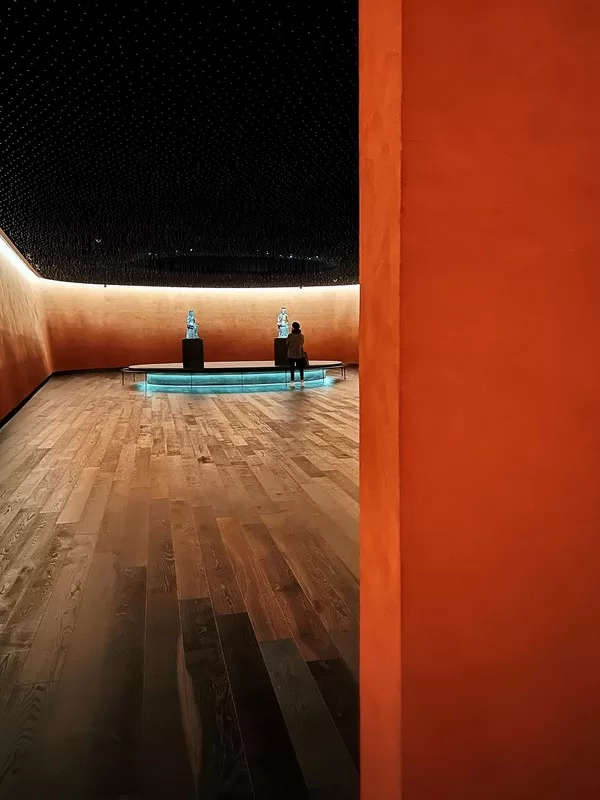
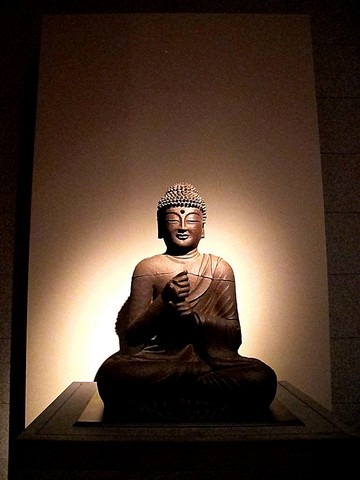
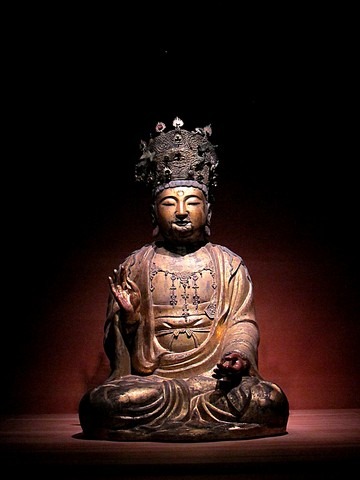
If you only remember one room from this museum, it will likely be this one. I remember when this was first opened, I walked in, turned the corner, and the wide open space with this quiet, dark, and deliberately minimalist space was striking. The room is built specifically around two National Treasures: the Pensive Bodhisattva statues. The room itself is part of the experience. It’s designed to slow you down and make you actually look, rather than snap a photo and move on.
How Much Time You Need
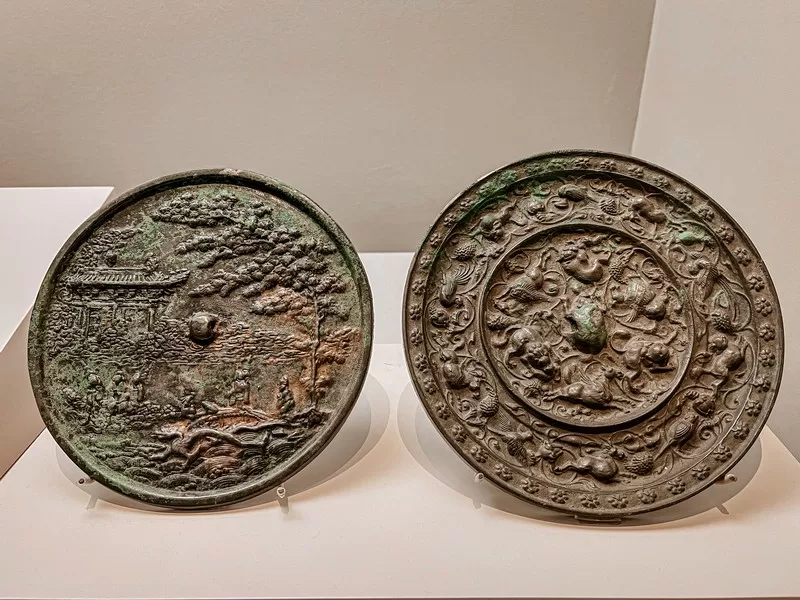
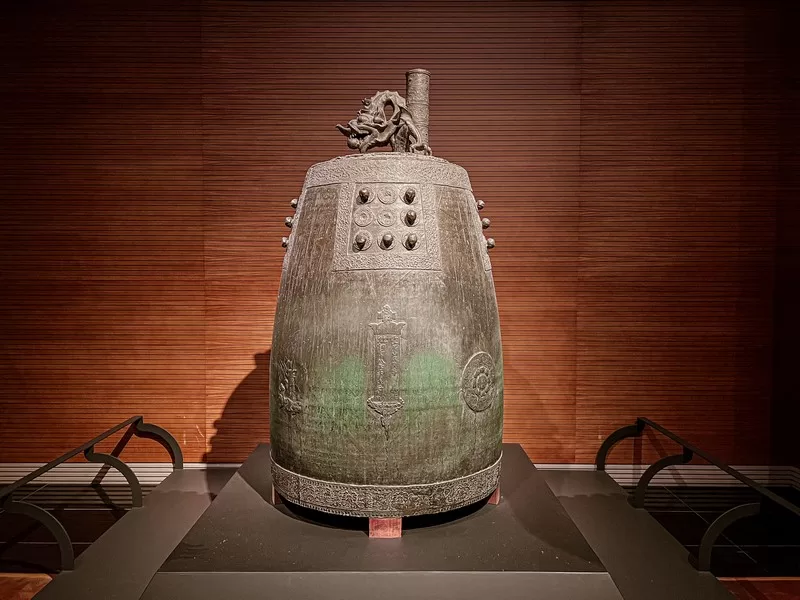
This museum is fantastic, one of the best museums in Korea for sure, but it is far too large for one visit and that’s difficult for most tourists to hear. Don’t try to see it all in one go. You just won’t be able to really appreciate everything if you do. Take your time. Budget at least a half day if it’s your first visit, there are cafes and restaurants on premises so you can spend time perusing the relics and artifacts while also taking the time to sit in between taking everything in. But know that even after multiple trips, I’m still finding things I haven’t seen. If you’re the type who likes to actually read the placards and sit with the pieces, and this museum is a great opportunity for that, there are benches in front of the major works for exactly this reason, don’t feel like you need to rush to cover every floor. Pick a wing, go deep, and come back another day for the rest if you can.
Best Time To Visit
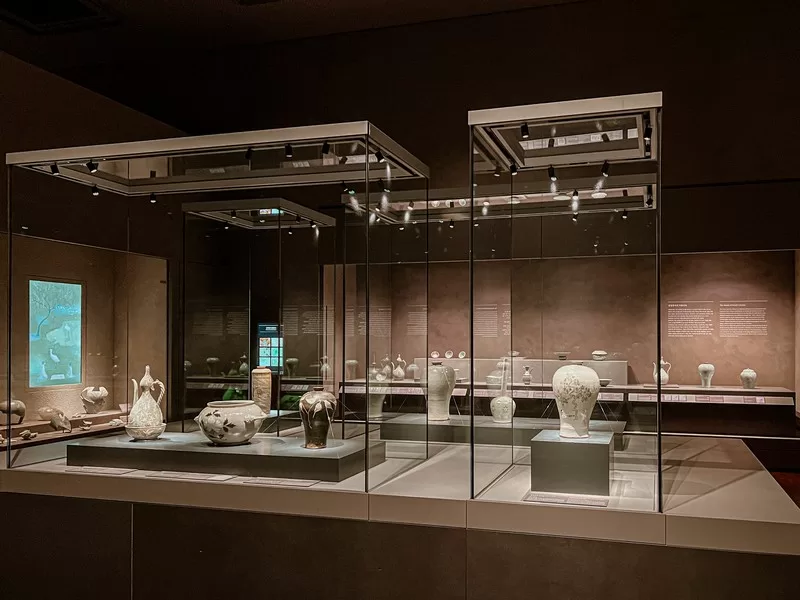
The National Museum of Korea has become one of the most popular museums in the country with tourists, and walking into the main entrance will definitely make you feel that. I used to come here and have the place almost empty for years, and I think it’s great that more people are taking advantage of the collection now, but it is a noticeably busier museum than it used to be.
That said, don’t let a crowded lobby throw you off. There are still wings and wings that are mostly empty once you actually walk into them. The crowds tend to cluster near the entrance, the pagoda, and a handful of headline pieces, venture a little further into the side galleries and you’ll often find yourself with a room to yourself, the same way we used to have the whole museum to ourselves.
What To See
From The Entrance To The Main Event
Walk up through the garden and see a beautiful pond. You should spend time just enjoying the outdoor space because it is immense and if you’ve got children, it’s a great way to let them get some energy out. There are pavilions to sit in and there’s a stone sculpture area as well where they can learn and have fun outside. While you’re outside, just take in the immensity of the museum building itself. It is one of the largest museums in Asia.
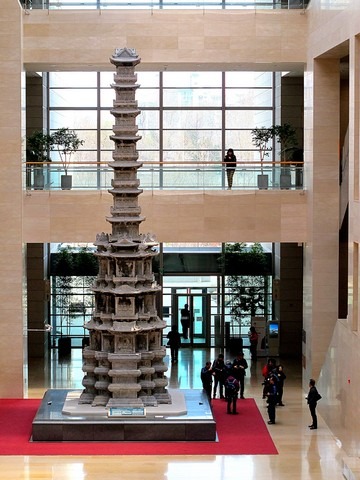
After walking through the glass doors, the main marbled hallway that is open up to the ceiling welcomes those entering into the galleries that flank the main walking space. There are three floors to peruse. While the galleries in the sides of the main hall have much to see, you’ll also want to make your way down to the end of walkway to see the ten-story pagoda. Originally from Gyeongcheonsa Temple in Gaepung, Gyeonggido, the pagoda, which is the center photo just above, is blend of traditional Goryeo styles. The first to the fourth sections are carved with scenes from Buddhist assemblies. It is so intricate. Be sure to walk all around it looking at the engravings. This pagoda was stolen away to Japan in 1907 but was returned to Korea in 1918.
Quick Reference: What’s on each floor
| Floor | What You’ll Find |
|---|---|
| 1F | Prehistory, Ancient History, Medieval & Early Modern History; Room of Quiet Contemplation |
| 2F | Donated Works Gallery; Calligraphy and Painting Gallery |
| 3F | Sculpture and Crafts Gallery; Asia Gallery |
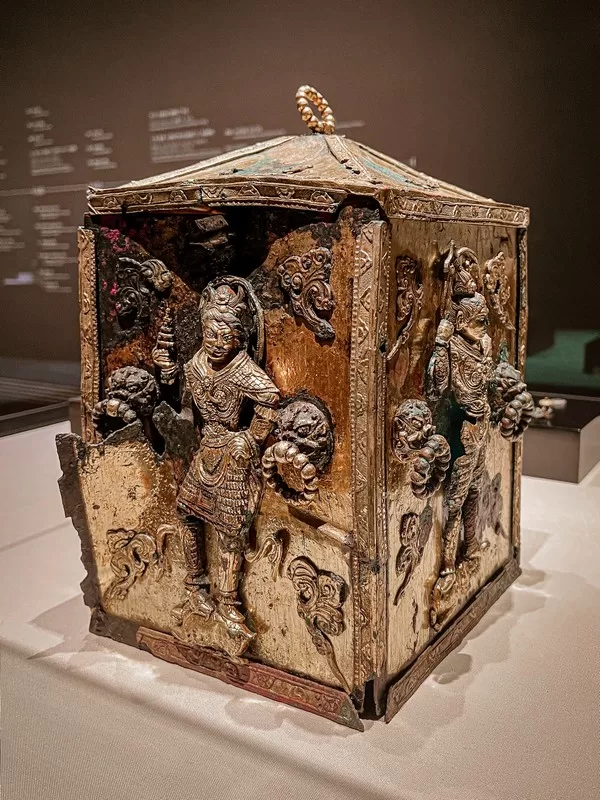
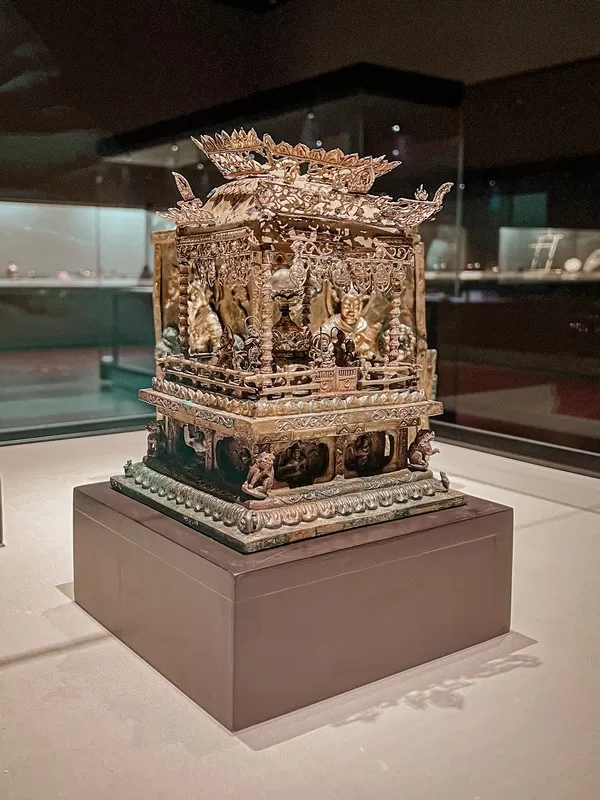
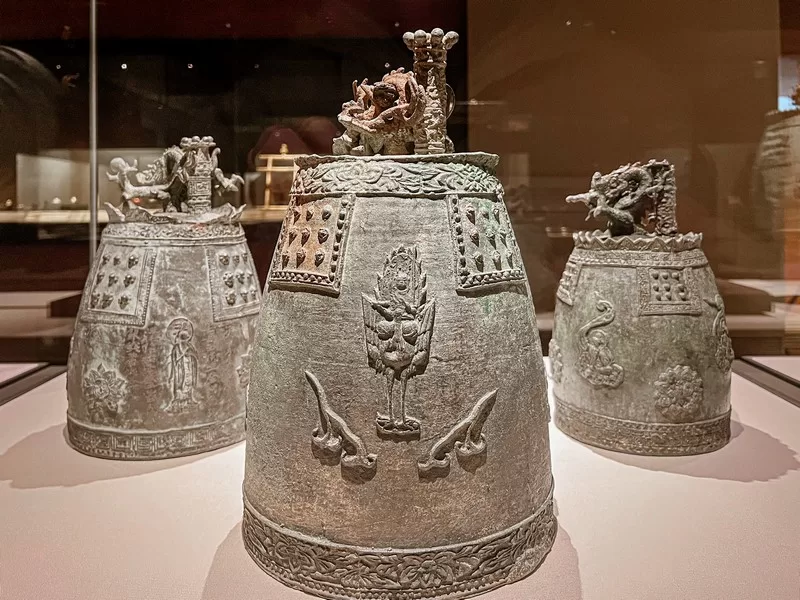
The intricate statues from the past require more than just a glance and the Buddhist paintings even have benches in front of them so that visitors can take a seat and really take them all in. They are that substantial and worthy of quite a sit. The National Museum of Korea has 220,000 relics so be prepared to have a really good and long look around. You could really spend days here.
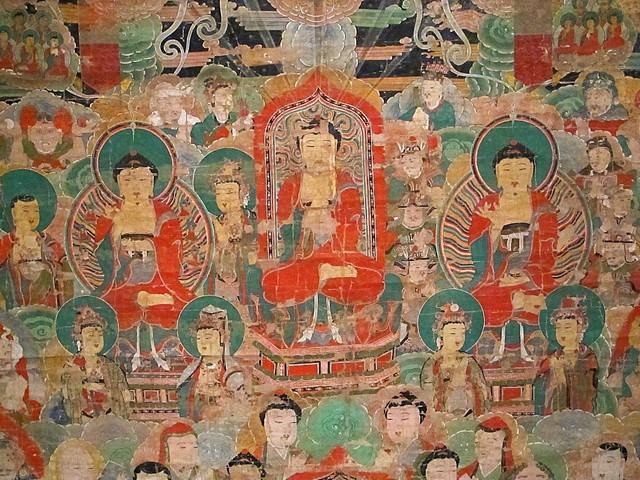
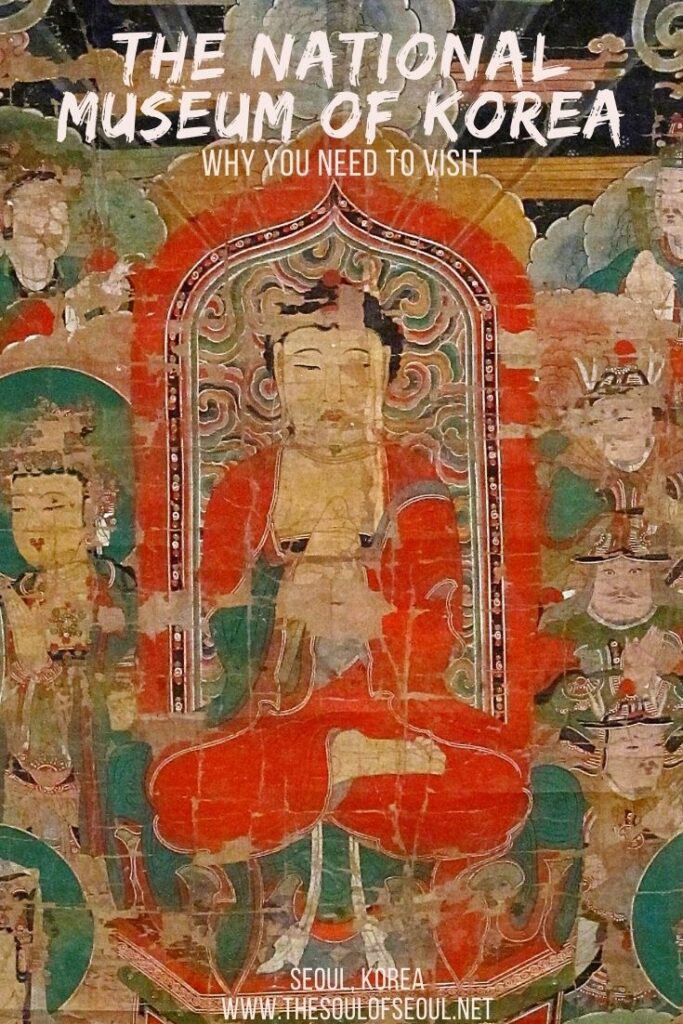
A Buddhist Hanging Scroll from Budeoksa is what you can see below. It was painted in 1684 and depicts Sakyamuni Buddha preaching the Lotus Sutra on the Vulture Peak. Sakyamuni is surrounded by his disciples, bodhisattvas, the Four Heavenly Kings and other audiences. This is my favorite painting in the museum and it’s so huge that it hangs on a wall and you can see it on the first floor AND from a balcony on the second. The colors have somehow stood the tests of time and it truly is spectacular and left me with my mouth agape at its magnitude. Each time we visit the museum, we always save some time to go and see this work of art.
The galleries are quiet and benches are sporadically placed for visitors to take a seat and take it all in. The old paintings and sculptures of Buddha somehow saved throughout Korea’s tumultuous history are beautifully exhibited and the overall atmosphere is calm and serene making the museum a perfect respite away from the busy city sites just outside.
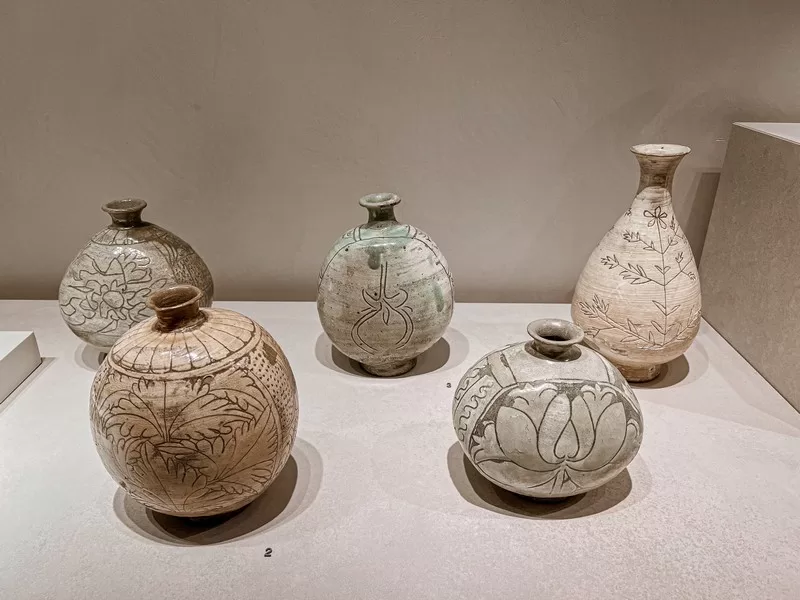
Most visitors are walking around with earphones and are listening to information about each exhibit while there is a member of the staff stationed in each gallery to maintain the quiet atmosphere while making sure no one is taking pictures with flash. Don’t do that folks. Just don’t do that.
“In addition to Korean and foreign exhibitions, the museum is an educational, comprehensive cultural space for collection and preservation of relics, research study, social learning activities, scholarly publications, international cultural exchange activities, and opportunities for various performances. The museum also offers an environment-friendly green space and resting area, along with high-quality cultural programs that are welcomed by visitors of all ages,” from their own website.
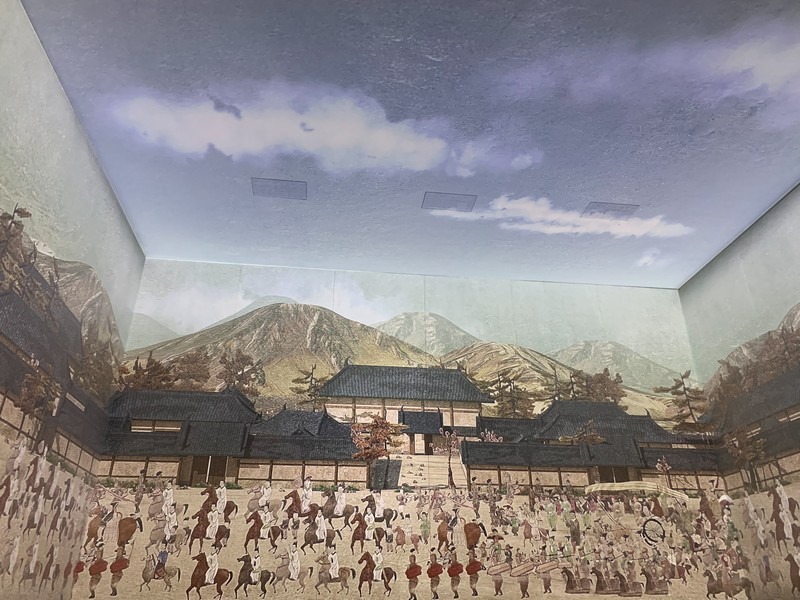
Must SEE: Immersive Digital Galleries
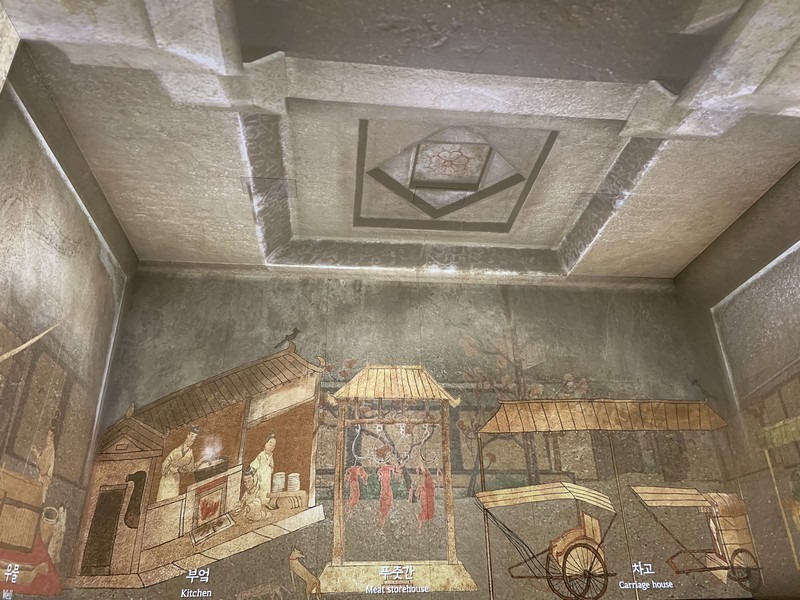
If you haven’t been to the National Museum of Korea in awhile, you definitely need to go to check out the new Immersive Digital Galleries at the very least. Throughout the museum, there are multiple digital contents spaces that take visitors through various spaces and share Korean cultural heritage.
The pictures above are the Immersive Digital Gallery 3 and takes visitors through the renowned Goguryeo tomb showcasing the murals and bringing them to life. It’s an amazing way to understand what the pictures were depicting. The entire program from start to finish is 14 minutes long so you’ll want to take a seat on one of the benches inside to enjoy.
The largest one is the Immersive Digital Gallery 1 and it changes throughout the week. Each day there are different programs which center on bringing Korea’s most famous paintings to life. It’s just stunning, colorful, and, you guessed it, immersive. You’ll want to check the National Museum of Korea website to learn more about what digital contents are currently on display. Each gallery is a must visit though.
Good To Know For Parents
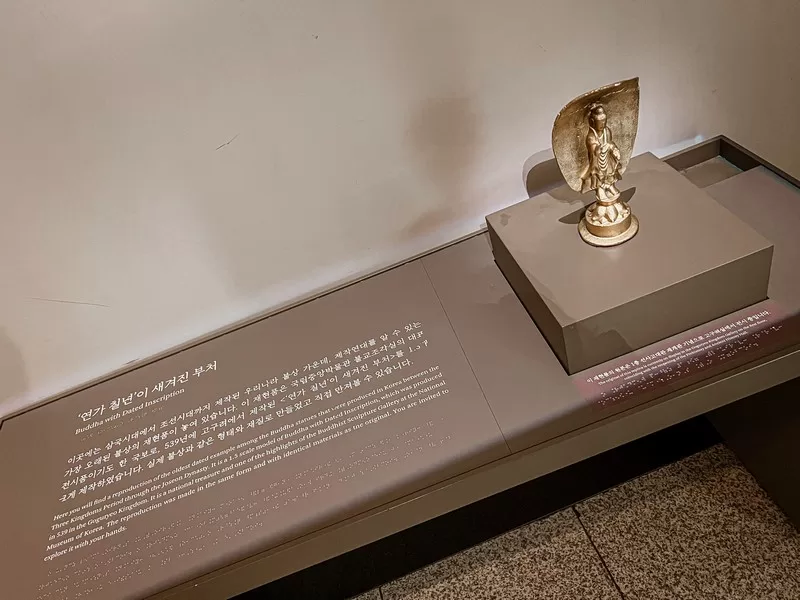
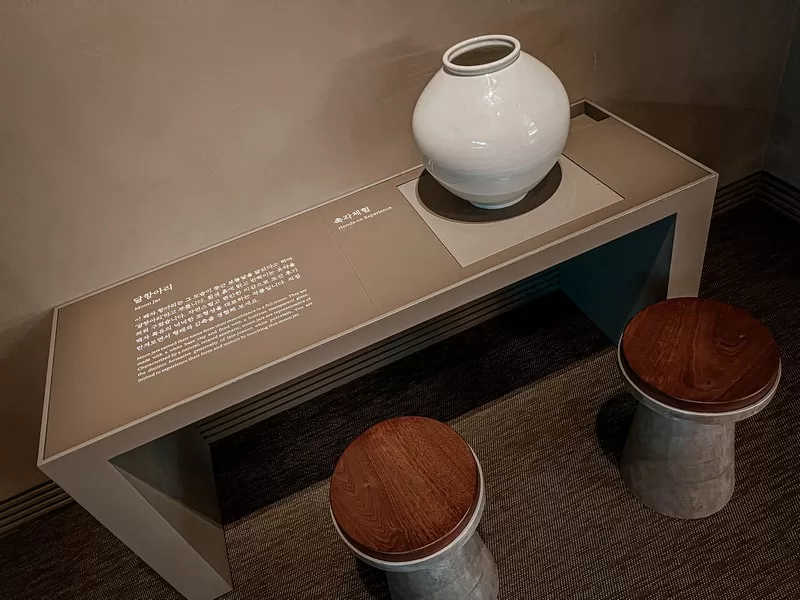
Beyond the dedicated Children’s Museum (more on that below), there are touch-friendly stations set up among the main artifacts in the main building itself, you’ll find them near the entrances to the various wings generally. The pieces are made to look and feel like the real thing that kids can actually handle. If your child needs to touch things and get that particular kind of energy out of their system, you don’t have to wait until you reach the Children’s Museum wing to let them do it.
National Museum of Korea Children’s Museum
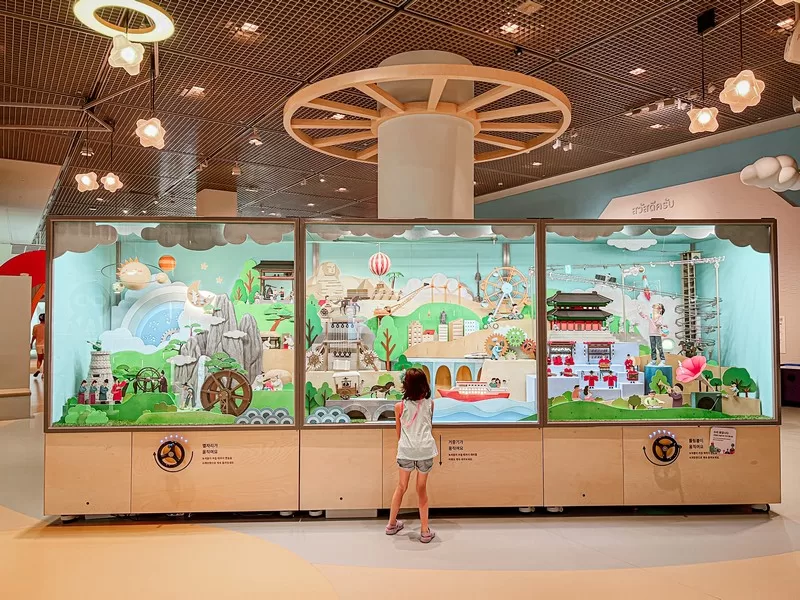
After checking out the amazing galleries for a bit, if you have children, you’ll probably want to take them to the Childrens Museum of the National Museum of Korea (국립중앙박물관 어린이박물관) at the other end of the museum where they can touch and move things to their heart’s content.
Also a FREE place to take kids in Seoul, there are some great educational opportunities here. Check the National Museum of Korea Children’s Museum website so you know what they’re teaching and showcasing at a time as it changes and they have a rotating exhibition gallery as well. There are also various programs throughout the week so if you have children and want them to get a bit more out of the museum, definitely don’t miss this.
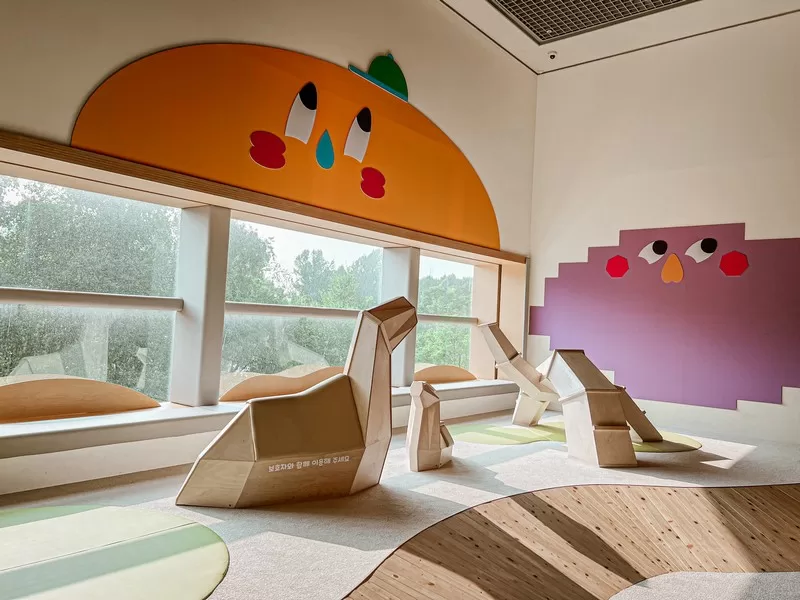
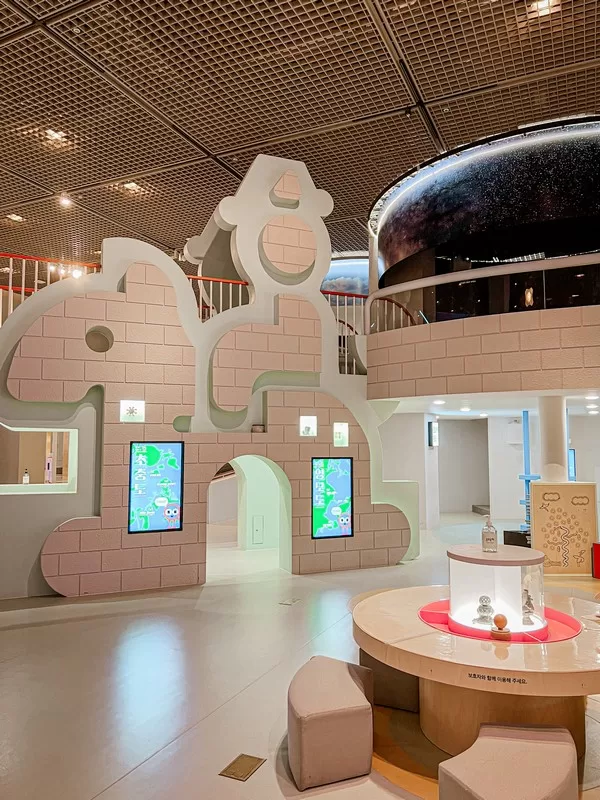
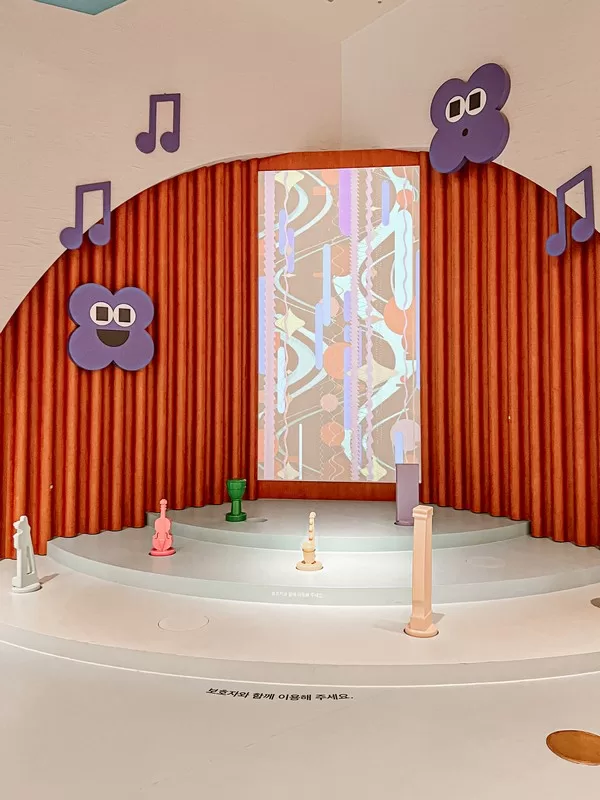
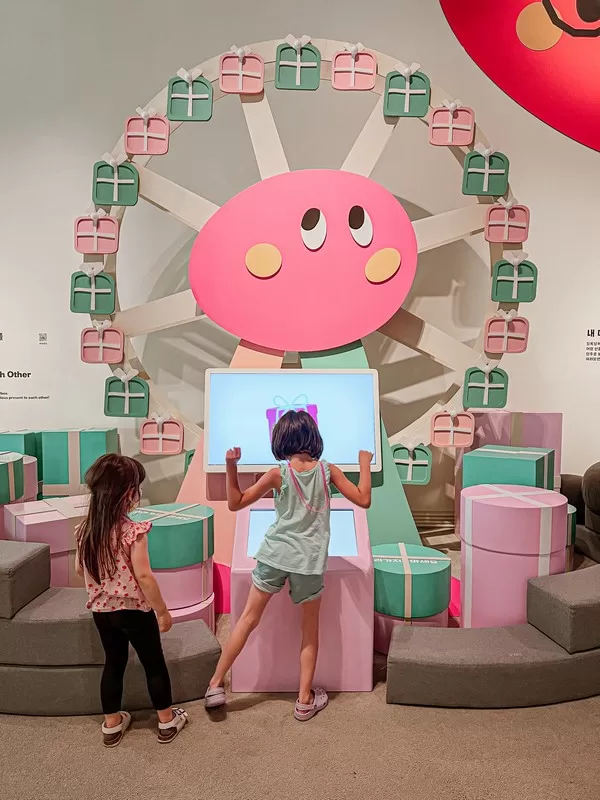
Make a reservation in advance: Entry to the Children’s Museum requires a free timed-entry ticket booked online in advance, and daily capacity is limited. Reservations can be made up to two weeks in advance easily via the the museum’s website.
Special Exhibitions
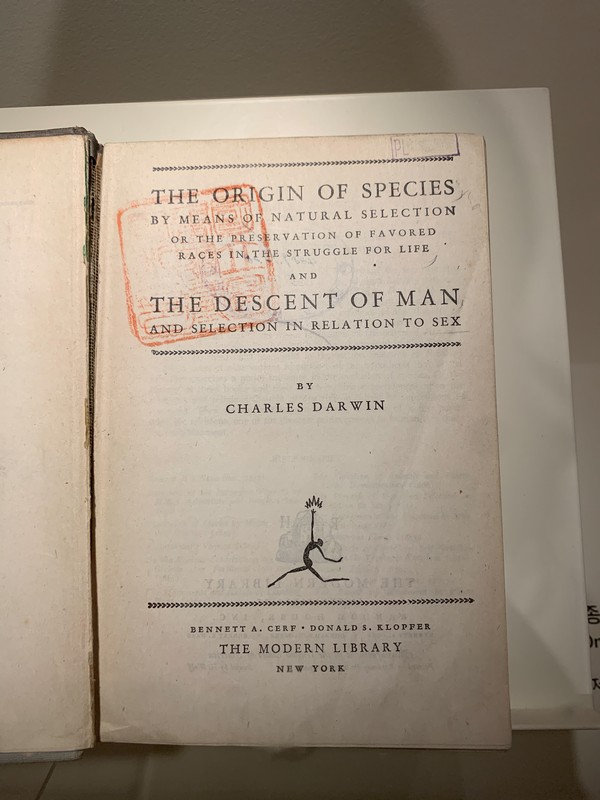
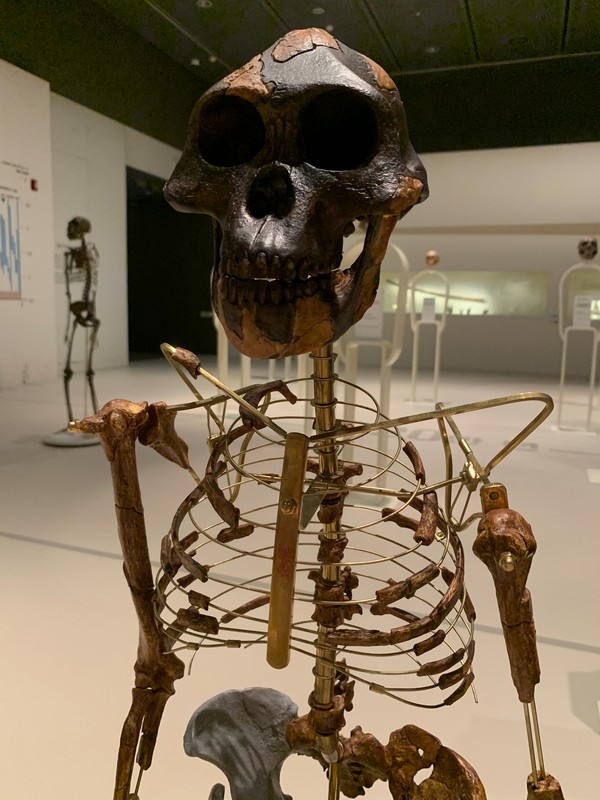
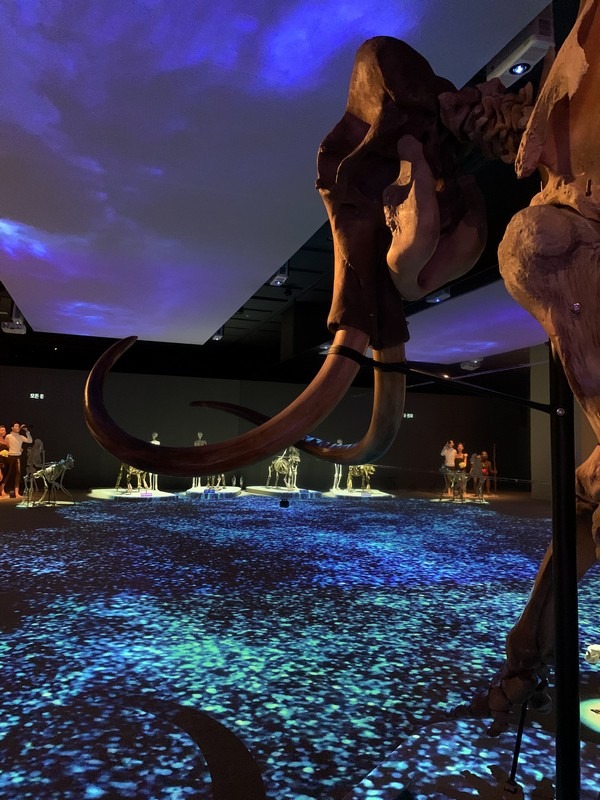
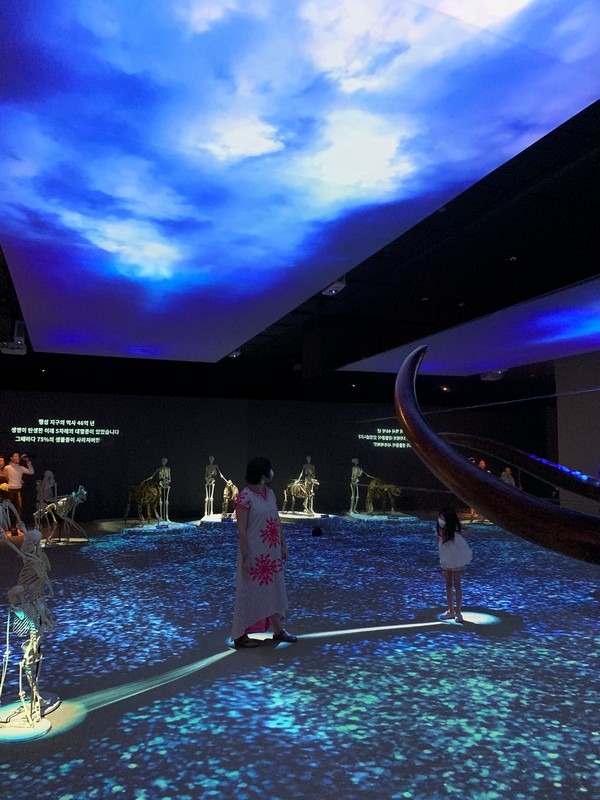
The special exhibitions which in the left wing of the building when you walk up are pretty fantastic. While they do cost some money and it’s different depending on the exhibition, they are worth the fees. We recently went to the ‘Homosapiens: Evolution Relationship & Future’ and it was fantastic. We also had the place quite to ourselves.
Be sure to check what special exhibitions are on at the museum before you go.
Should You Book a Guided Tour?
We’ve done this museum both ways, with the free docent-led tour and with the rented audio guides, and for a museum this size, we recommend the audio guide over the docent tour for most visitors. Visitors in groups that may want to see different things anyway. A docent tour moves at one fixed pace and covers one fixed route, which works fine if that’s what you want, but the museum is so large that the real advantage of the audio guide is letting your group spread out and actually follow their own interests, someone who wants to linger in the calligraphy gallery isn’t held to the same clock as someone who wants to get straight to the Goguryeo murals.
Where to Eat
The grounds that surround the massive building are also well kept and paths take visitors around a lake and past statues and a pagoda garden. There is a cafeteria and café on the grounds and convenience stores and restaurants just outside which means this is a perfect place to spend an entire day when the weather is just not cooperating. We’ve eaten inside and the food is just fine, quick, and super easy to order.
FAQ
Is the National Museum of Korea free?
Yes, the permanent collection, including the Children’s Museum, is completely free. Only special exhibitions charge separate admission.
How much time do you need at the National Museum of Korea?
Plan for at least a half day. The museum is genuinely too large to see in one visit, so don’t feel pressure to cover everything, pick a few floors or galleries and go back another time for the rest.
What’s the most famous thing to see at the National Museum of Korea?
The Room of Quiet Contemplation, home to two National Treasure Pensive Bodhisattva statues, is the single most talked-about exhibit in the museum right now. The ten-story pagoda near the main hall, which was taken to Japan in 1907 and returned to Korea in 1918, is another highlight with a genuinely dramatic backstory.
Do I need to book tickets in advance?
Not for the main museum. The Children’s Museum, however, now requires a free timed-entry ticket booked online ahead of time, and daily slots are limited.
Is the museum busy?
It’s become considerably busier with tourists in recent years compared to a decade ago. That said, most of the crowding is concentrated near the entrance and the headline pieces, walk a little further into the side galleries and you’ll often find them nearly empty.
Should I get a docent tour or an audio guide?
We recommend the audio guide for most visitors, since it lets your group split up and move at their own pace through a museum this large. The free English docent tour is a nice option too if you’d rather stick together and follow one route.
How do I get to the National Museum of Korea by subway?
Take Line 4 or the Gyeongui-Jungang Line to Ichon Station, exit 2. A covered underpass with a moving walkway leads directly to the museum, about a 5-minute walk.
Is it good for kids or a rainy day?
Yes to both. The dedicated Children’s Museum plus touch-friendly stations in the main building give kids hands-on options, and the sheer size of the museum makes it one of the best full-day indoor options in Seoul for bad weather or high fine dust days.
This is a great museum to spend a morning or afternoon in. After walking in the museum, if the weather is good, head out to the massive park on the grounds. After you’ve finished here, head just up to Hannam District and enjoy lunchor a cafe stop.
Did you like this post? Pin It!