Sundubu Jjigae In Seoul: Where To Eat This Korean Tofu Stew
Last Updated on October 12, 2026
My first few years in Korea, I had a friend who loved sundubu jjigae (순두부찌개) with a passion that I simply didn’t share yet. It became her comfort food and she ordered it meal after meal. While she had committed to the soft tofu stew immediately, it took me years to appreciate it as much as she did. Now it’s one of my favorites, the kind of dish I start craving and then have to go get immediately.
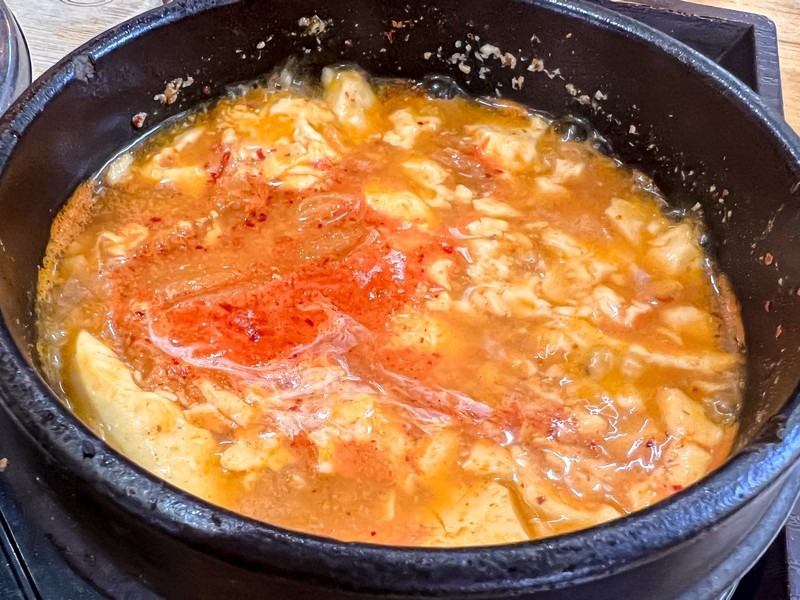
A lot of international visitors are put off by sundubu jjigae on first sight because the bright red color suggests something extremely spicy. It isn’t. The red comes from the gochugaru pepper in the broth, which adds warmth and depth rather than a burning heat. Once you know that, the intimidation mostly dissolves.
Have you tried Korean sundubu jjigae yet?
(This post contains affiliate links, which means I receive a certain percentage of a sale if you purchase after clicking at no cost to you. Thank you for your support.)
What Is Sundubu Jjigae?
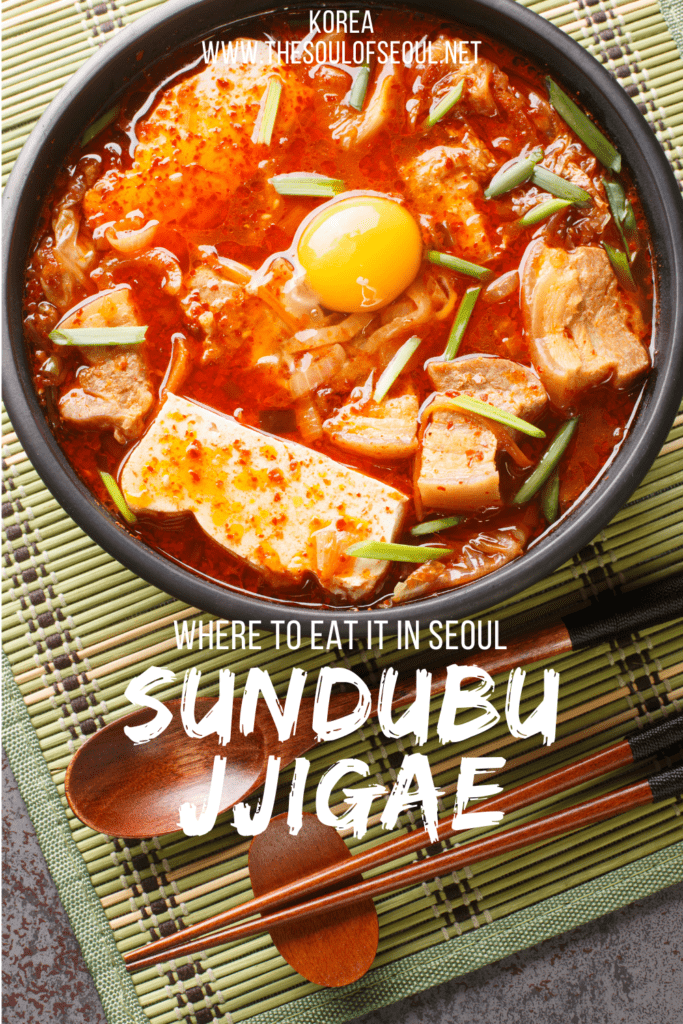
Sundubu jjigae (순두부찌개) is a traditional Korean stew that is both hearty and comforting. The dish is named after its primary ingredient, “sundubu,” which translates to “soft tofu.” This uncurdled, silky tofu is the star of the stew with a delicate texture that contrasts with the robust flavors of the broth. Plainly, it’s delicious, hearty, but delicate at the same time.
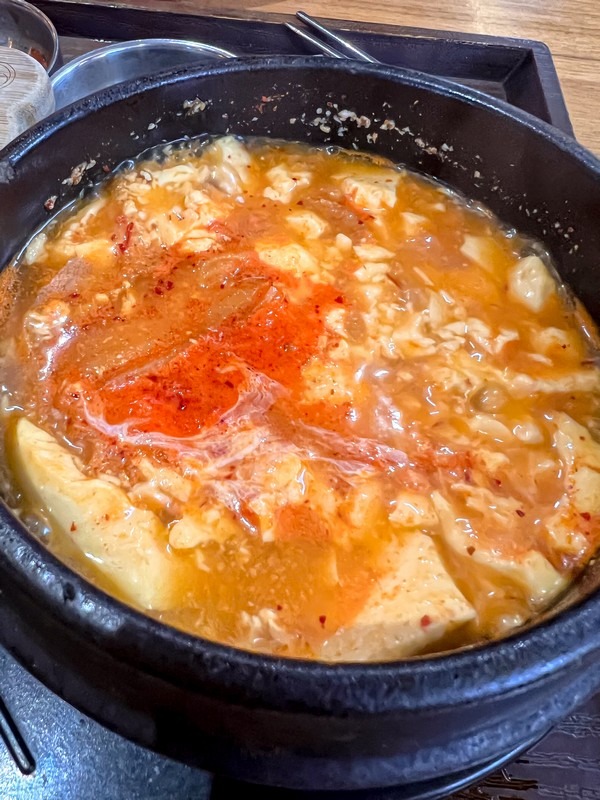
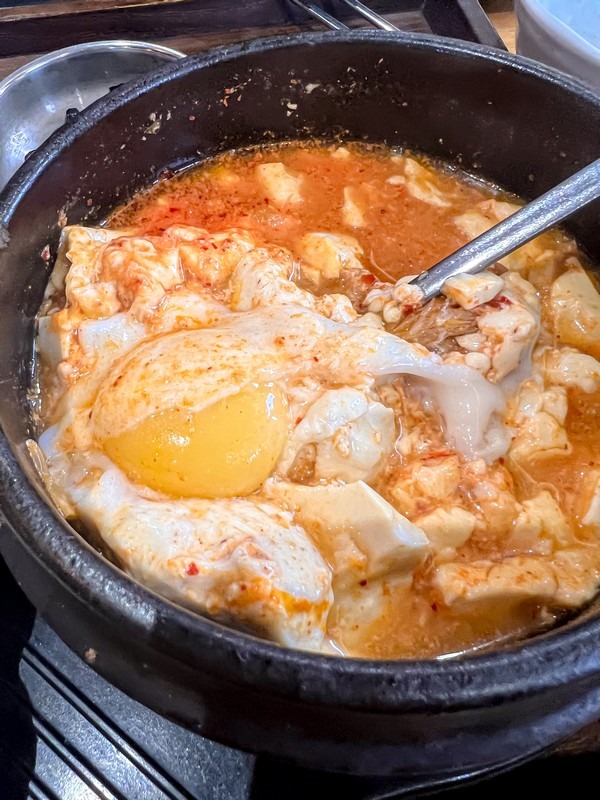
The broth is made with anchovy or kelp stock, then pork or beef is added, and often seafood, clams, shrimp, to finish it. The stew is served in a dolsot (hot stone pot) still actively boiling when it reaches the table. It arrives looking more intense than it tastes. The red color is gochugaru chili pepper, which adds warmth and color but not the aggressive spice most people expect.
One important note on dietary restrictions: Sundubu jjigae is not vegetarian in its traditional form. The base stock is typically anchovy-based, and most versions contain meat or seafood. The presence of tofu as the main ingredient leads some visitors to assume it’s vegetarian, it usually isn’t. If this matters to you, ask the restaurant specifically before ordering.
How To Eat Sundubu Jiggae
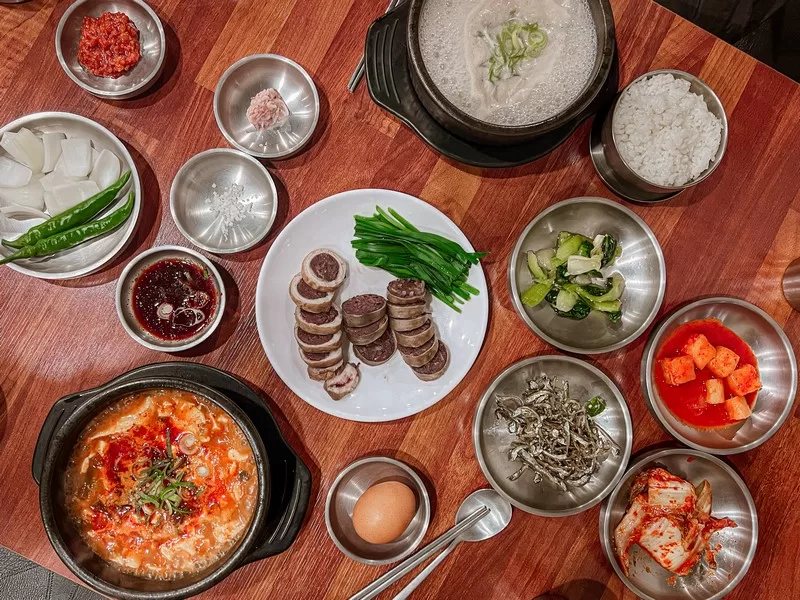
The stew arrives in the dolsot still boiling. Take it slow, the pot retains heat for a long time and the first few spoonfuls will be very hot. Yes my Korean husband will dive right in, but trust me, you don’t want to do that unless you’re used to it like Koreans are.
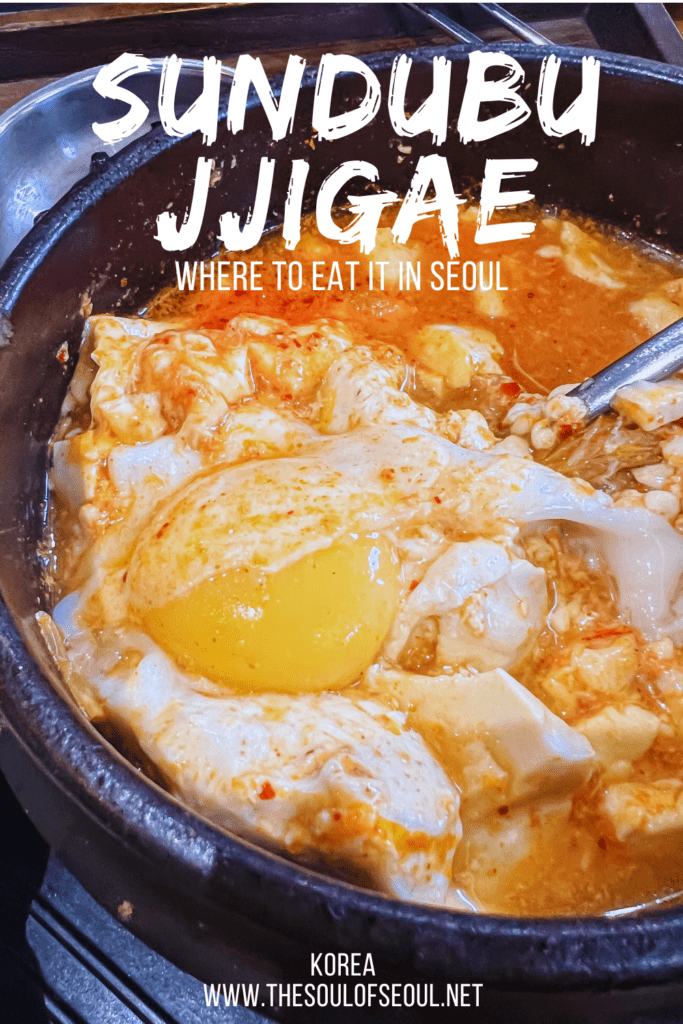
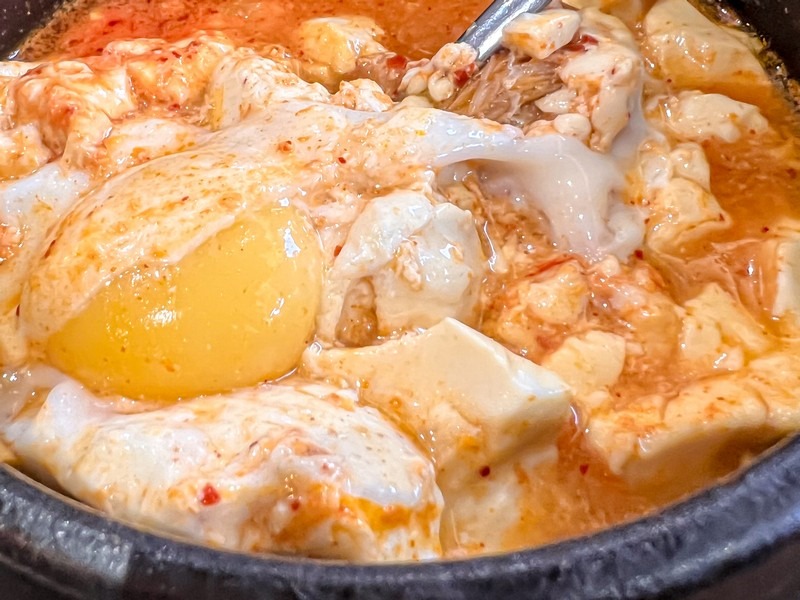
Before your first bite: look on the table for a raw egg. This goes into the stew. Crack it directly into the boiling broth, let it cook slightly in the residual heat, and stir it gently to distribute the yolk through the soup. This step adds richness and rounds out the broth, skipping it is technically your choice but strongly not recommended.
From there, eat the stew with rice (served separately) and use the banchan side dishes at the table to pace the meal.
Where To Eat Sundubu Jjigae In Seoul
You can find sundubu jjigae all over the place and really don’t have to travel far to get a good bowl of it. That said, if you do want to travel someplace specifically for a bowl of the delicious soft silky tofu stew, then here are a few places to eat sundubu jjigae in Seoul.
Golden Bean Field (황금콩밭)
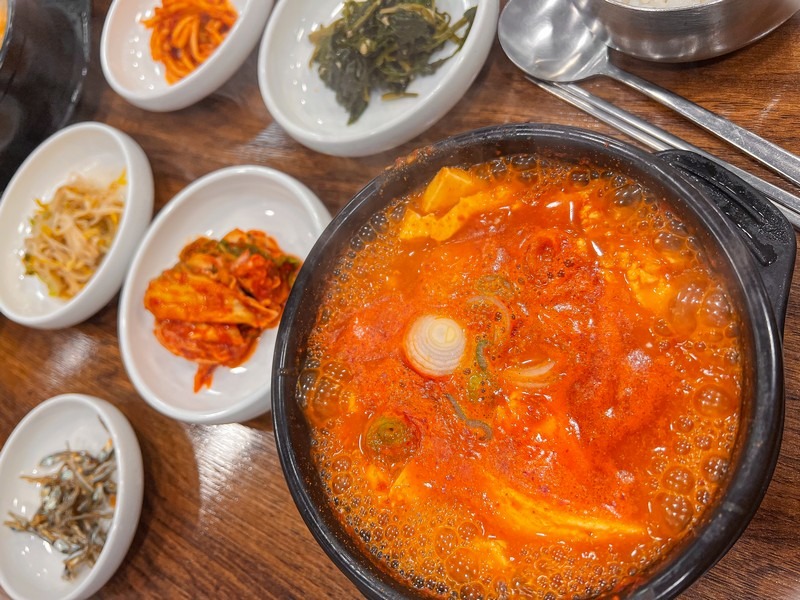
This artisanal tofu restaurant makes tofu and cheonggukjang from 100% domestic soybeans every morning. They use Korean beef from Sobaeksan Mountain and antibiotic-free pork from Jeju Island. They make their own kimchi using high-quality domestic red pepper powder and garlic, and everything is carefully prepared. They received the Michelin Guide’s Green Star three times from 2021 to 2023 so far.
It’s so good, you have to try this spot in the heart of Gondeok.
- Address: 9 Mapo-daero 16-gil, Mapo-gu, Seoul (서울특별시 마포구 마포대로 16길 9)
- Hours: Every day: 11:30am ~ 9:30pm (Weekdays there’s a breaktime from 3:00pm ~ 5:00pm)
Baeknyeonok (백년옥)
With homemade fresh bean curd, Baeknyeonok specializes in not just that bright red and delicious sundubu I’ve talked about here, but they also make a plain soft bean curd stew as well as a perilla seed soft bean curd stew.
If you want some variety, find this spot across the road from the Seoul Arts Center.
- Address: 2407 Nambusunhwan-ro, Seocho-gu, Seoul (서울 서초구 남부순환로 2407)
- Hours: Every day: 10:00am ~ 8:00pm
Jaedong Sundubu (재동순두부)
Their tofu is made with organic soy beans they grow on their farm. They make a chodang sundubu, which you may have had if you’ve visited Gangneung before. It’s a subtle taste but really quite delicious. Of course, you can still opt for the spicier seafood version too. All homemade, and all delicious.
- Address: 6 Bukchon-ro 2-gil, Jongno-gu, Seoul (서울시 종로구 북촌로2길 6)
- Hours: Monday, Tuesday, Thursday, Friday: 11:00am ~ 10:00pm; Wednesday, Saturday: 11:00am ~ 9:00pm
FAQ
What is sundubu jjigae?
Sundubu jjigae (순두부찌개) is a Korean soft tofu stew. The base is anchovy or kelp broth with pork or beef and often seafood. Uncurdled silky tofu is the main ingredient. It’s served in a hot stone pot (dolsot), boiling when it arrives at the table, and a raw egg is added tableside before eating.
Is sundubu jjigae spicy?
Less spicy than the bright red color suggests. The red comes from gochugaru (Korean red pepper powder) which adds warmth and flavor depth rather than sharp heat. Most people find sundubu jjigae significantly milder than expected on first taste.
Is sundubu jjigae vegetarian?
No, traditional sundubu jjigae uses anchovy stock as its base and typically contains pork, beef, or seafood. The presence of tofu as the main ingredient sometimes leads visitors to assume it’s vegetarian, but it usually isn’t. Ask the restaurant if dietary restrictions matter.
What is chodang sundubu?
A regional variety of soft tofu originating from Gangneung on Korea’s east coast. Chodang tofu is made by setting the soy curds with seawater rather than standard brine, resulting in a softer, silkier texture with a subtle ocean flavor. Jaedong Sundubu in the Bukchon area serves it in Seoul.
How do you eat sundubu jjigae?
When the dolsot arrives, crack the raw egg from the table directly into the boiling stew before eating anything. Let the egg cook slightly in the residual heat, then gently stir to distribute. Eat with the rice served on the side and the banchan (side dishes) at the table.
Where is the best sundubu jjigae in Seoul?
Golden Bean Field (황금콩밭) in Gongdeok is the Michelin Green Star pick, exceptional sourcing and in-house tofu production daily. Baeknyeonok near the Seoul Arts Center offers variety including a perilla seed version. Jaedong Sundubu in the Bukchon area specializes in chodang-style tofu for a more delicate version.
Sundubu jjigae is one of those dishes that can take a few tries to fully appreciate, the red color misleads, the boiling heat intimidates, the tofu seems mild. Then you add the egg, mix everything together, eat it with the rice, and suddenly it makes complete sense why it becomes a comfort food. It grew on me slowly. Now I crave it.
Did you like this post? Pin IT!