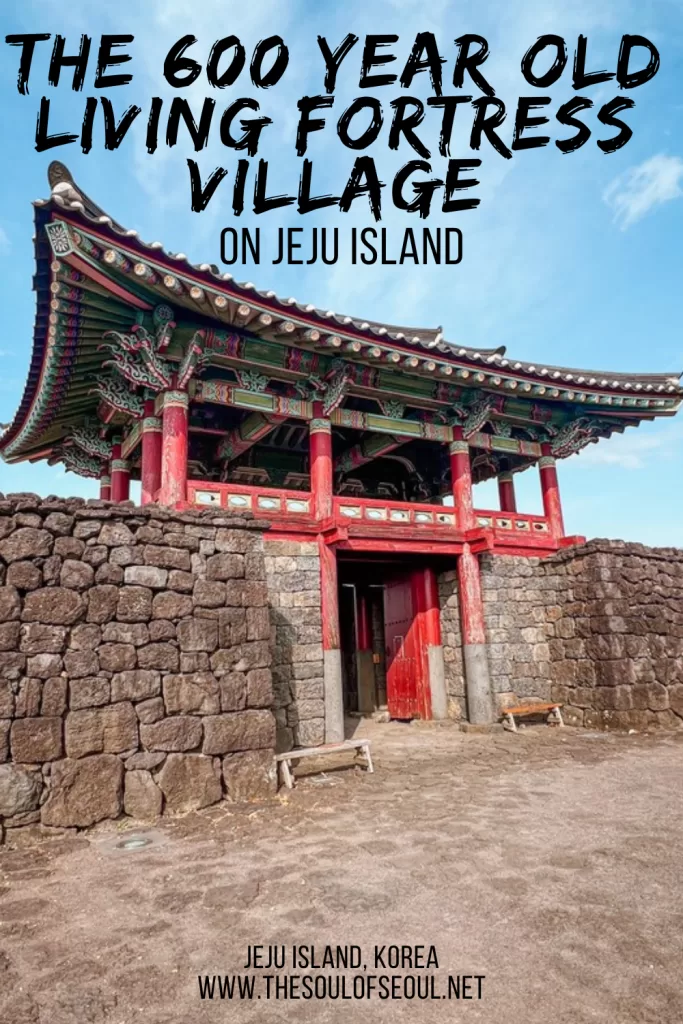
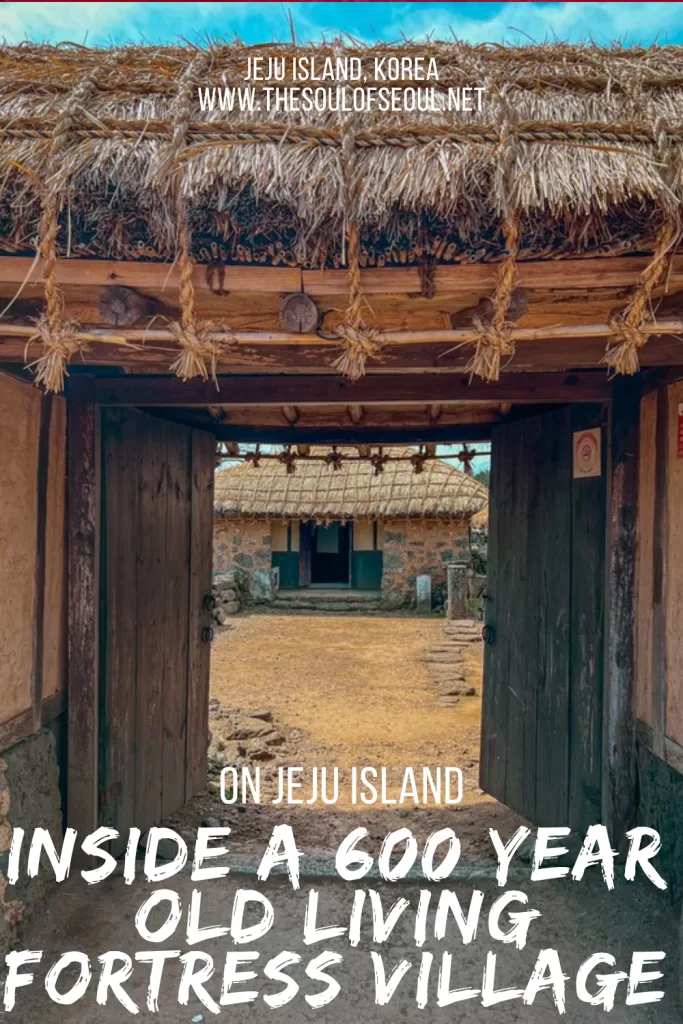
Inside Seongeup Folk Village: The 600-Year Old Fortress Town Still Lived In On Jeju Island
Last Updated on February 20, 2026
You might think Korea’s folk villages are frozen in time, preserved only for visitors, tourists, and school trips. But, did you know that some of them are still real neighborhoods where people wake up, cook meals, and go about daily life? Which may or may not include thatching their roof?
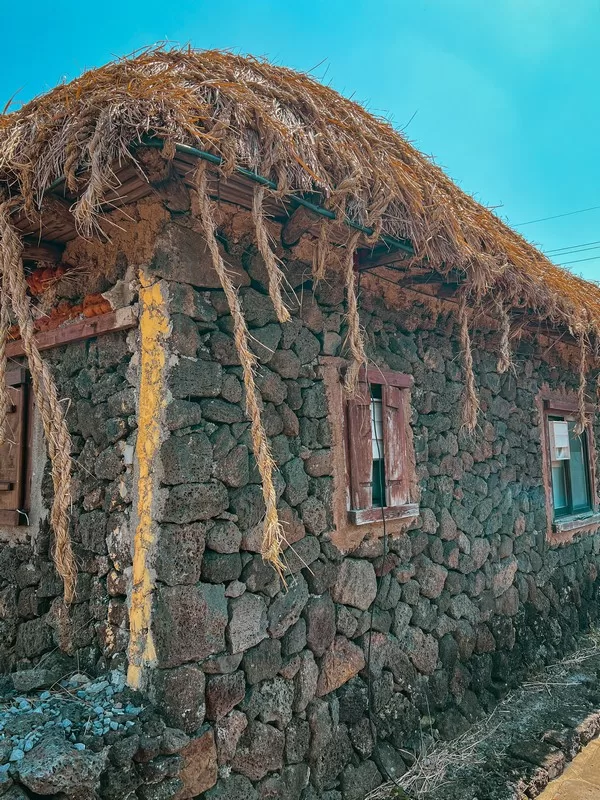
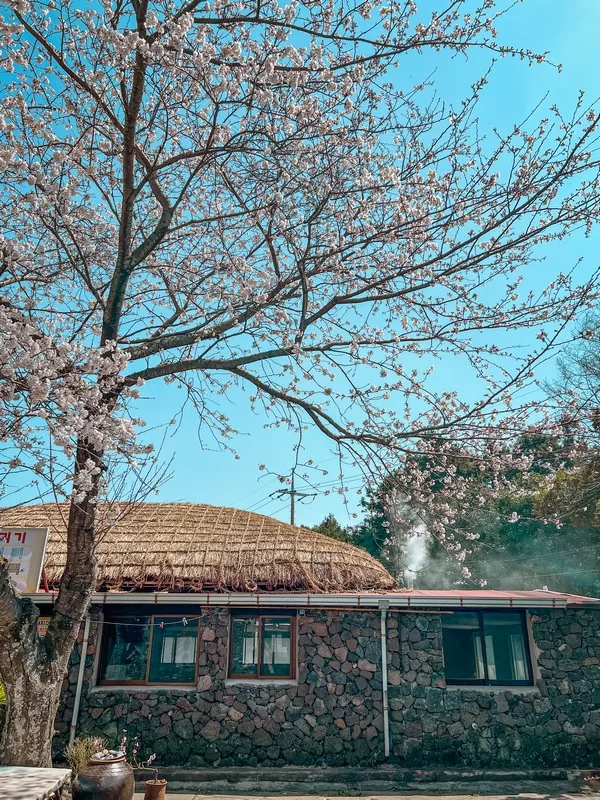
If you’re looking for culture things to do in Jeju, Seongeup Folk Village (성읍민속마을) is one of the most unique historic attractions in Seogwipo. This isn’t a reenactment or a recreated set. It’s a living village that has been continuously inhabited for around 600 years. Behind lava stone walls and thatched roofs, residents still call these traditional Hanok home, and are still involved in traditional upkeep of these homes.
Walking through Seongeup feels less like visiting an attraction and more like stepping into a place where history quietly continues into present day. Some homes are open to visitors, others are private, and that mix is exactly what makes the village feel so authentic. If you’re curious about how traditional life in Korea blends into the present, this is one of the most fascinating places to experience it.
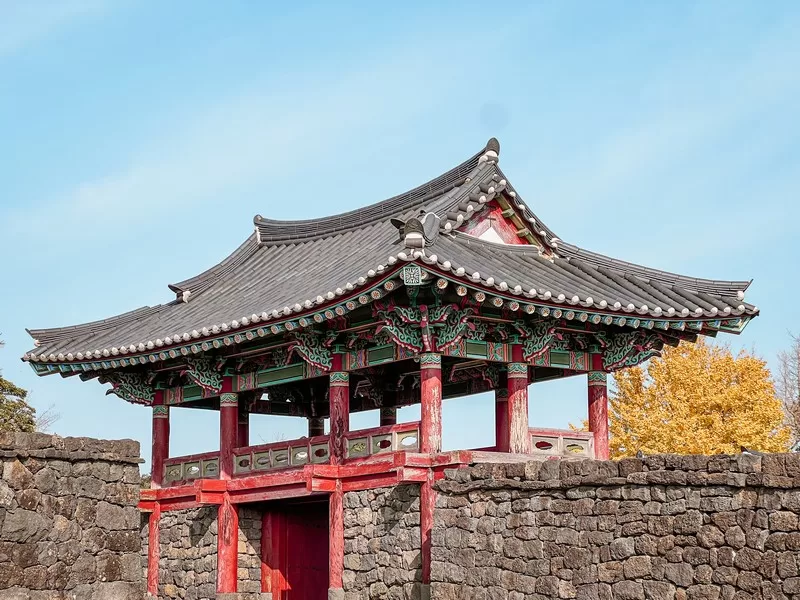
Seongeup Folk Village on Jeju Island sprawls from inside fortress walls to outside. Make sure you understand where you can and can’t go to experience it:
- Basic Info
- A Living Folk Village
- Jeonguihyeon Fortress and Why The Village Moved
- What To Look For Inside The Village
- Eating In and Around The Village
(This post contains affiliate links, which means I receive a certain percentage of a sale if you purchase after clicking at no cost to you. Thank you for your support.)
Basic Info
Address: 3294 Seongeup-ri, Pyoseon-myeon, Seogwipo-si, Jeju-do (제주특별자치도 서귀포시 표선면 성읍리)
Join a Tour: While the easiest way to get there is in a car, I’ve had friends visit and do the eastern Jeju day tour to see the highlights and said it was great. Not renting a car in Jeju? This is the best option for you.
Hours: Open daily. Experiences and some spaces may have specific hours.
Admission: Free
Accessibility information: The grounds of the village, pathways, and entrances are very well maintained. Some doorways would be tricky to enter, but generally, the paths are paved and wide.
How long should you spend here? That depends on what you want to experience.
- Quick walk through: 45 minutes – 1 hour
- Slow wander, entering the open buildings and reading the signs: 1 hour – 2 hours
- With lunch nearby: 3 hours
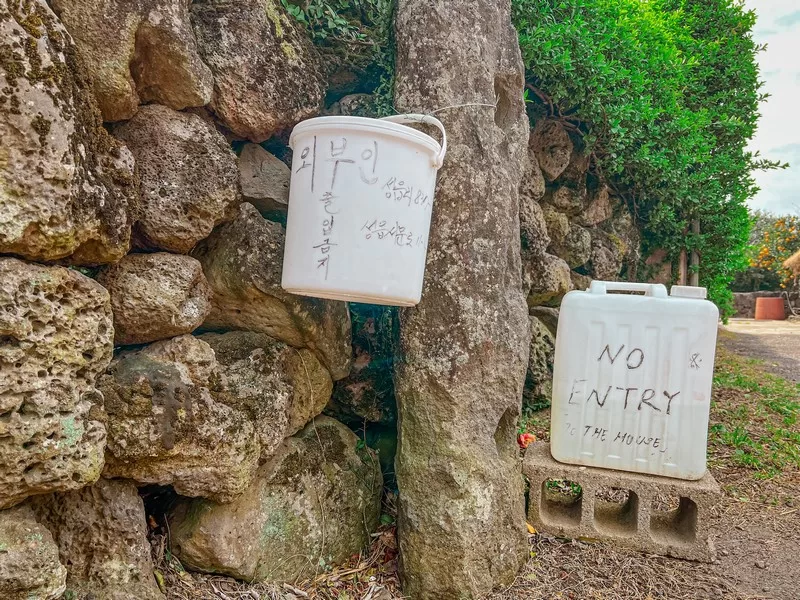
A Living Folk Village
Inside the fortress walls, you’ll find a number of Hanoks, traditional Korean homes, some you can enter and some you cannot. Pay attention to the signage. This is a living folk village which means there are still residents who are actively living in the homes.
Quick Tip: If a doorway is roped off or clearly marked private, skip it. There’s plenty to see without intruding.
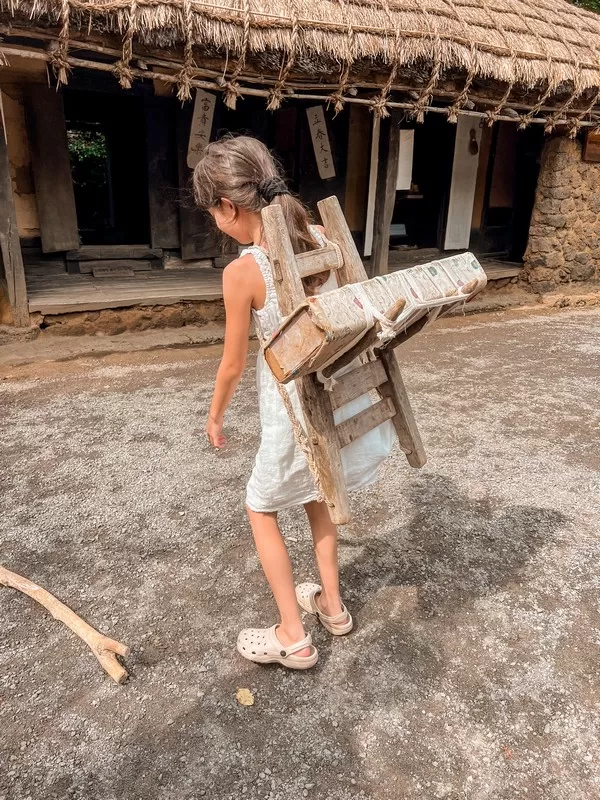
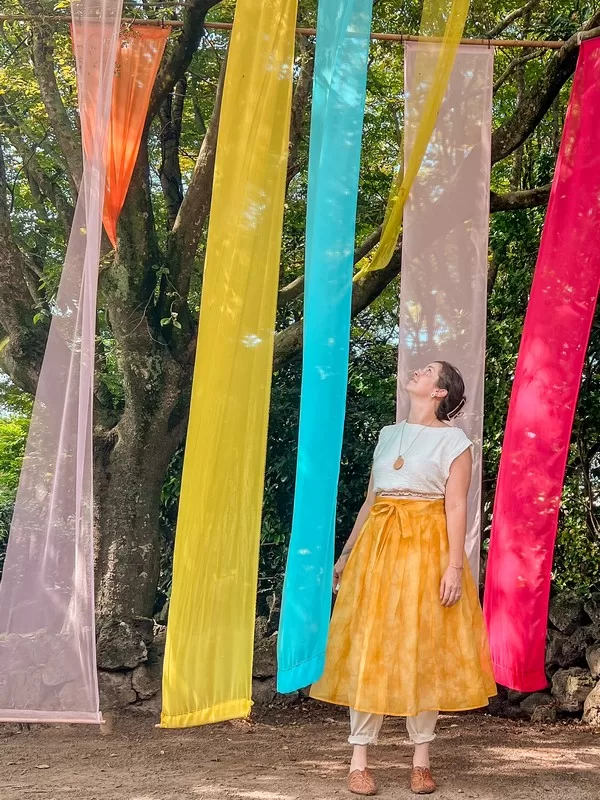
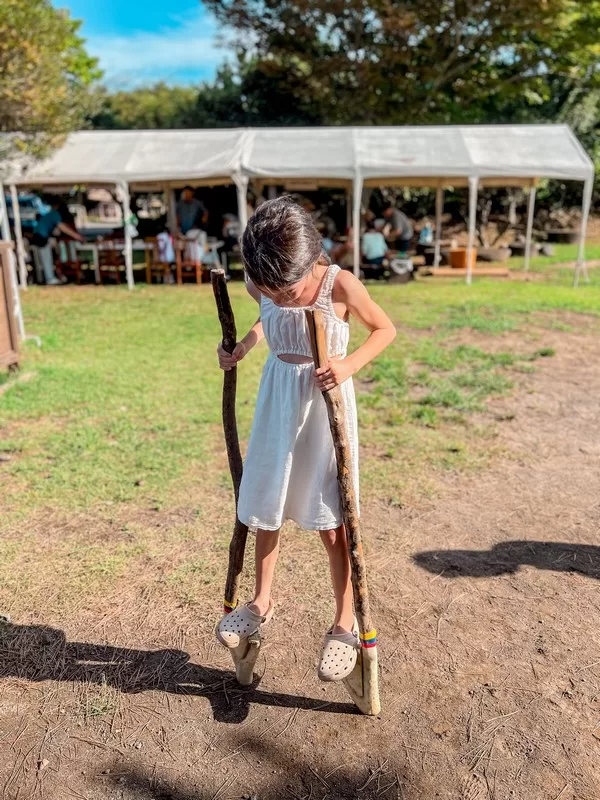
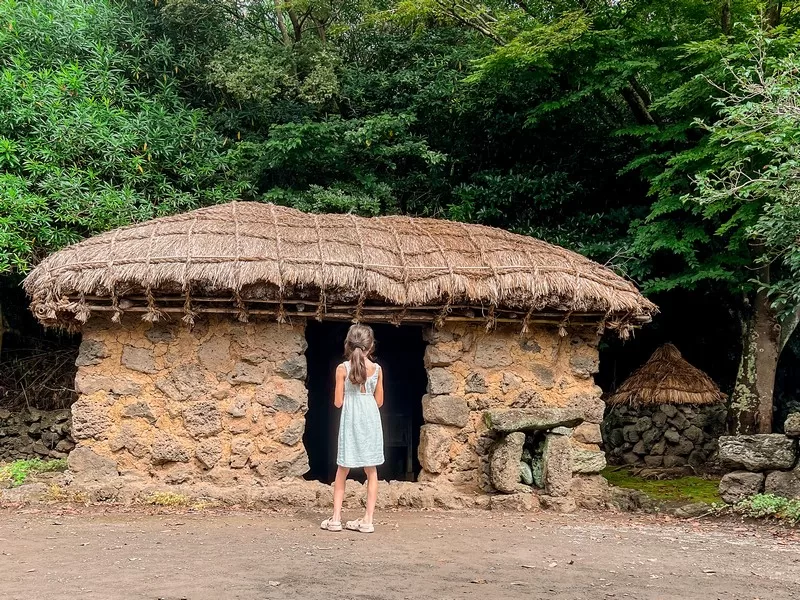
Also on Jeju Island is the Jeju Folk Village, which is a fun place to visit, but it’s important to note that the Jeju Folk Village is a recreation of a folk village and established for people to see traditional lifestyles and culture. It’s more similar to a theme park while the Seongeub Folk Village is a living historical folk village. Both are interesting for different reasons.
Seongeup Folk Village vs. Jeju Folk Village
| Seongeup Folk Village | Jeju Folk Village |
| Real residents | Recreated village |
| Free | Paid admission |
| Main area is smaller | Larger, more structured |
| Authentic daily life | Experiential & performance-oriented |
Jeonguihyeon Fortress and Why The Village Moved
When you first come to the Seongeup Folk Village, it might seem confusing because there are little neighborhoods and areas that have signage saying they are the Seongeup Folk Village as you’re driving into the area. These areas outside of the fortress walls are also part of the folk village, but they mainly hold restaurants and cafes today.
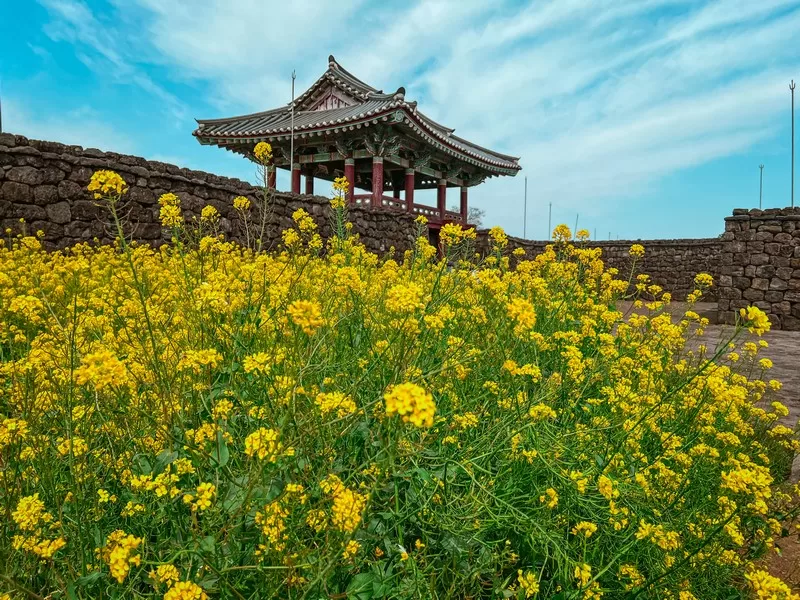
A part of the Seongeup Folk Village indeed, the main area is actually housed inside of the Jeonguihyeon Fortress walls. The best place to go is toward the southern gate where the main parking lot is.
Enter through the main gate that was constructed in the 16th year of King Taejong’s reign (1416). It was built to defend against Japanese pirates who had appeared near Udo Island. Now, if you look at a map, you may wonder how the fortress so far inland is protecting against pirates. The fortress was originally located in Seongsan-eup but was often hit by typhoons and had to deal with Japanese marauders.
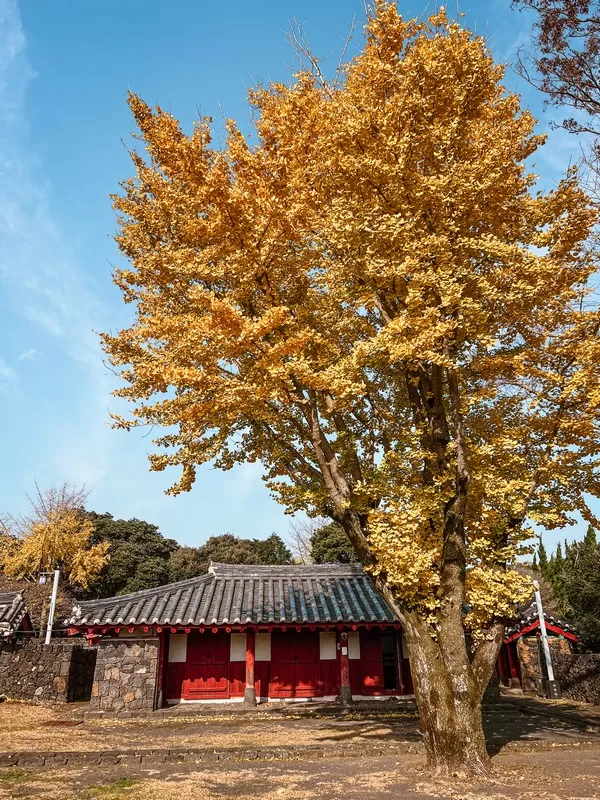
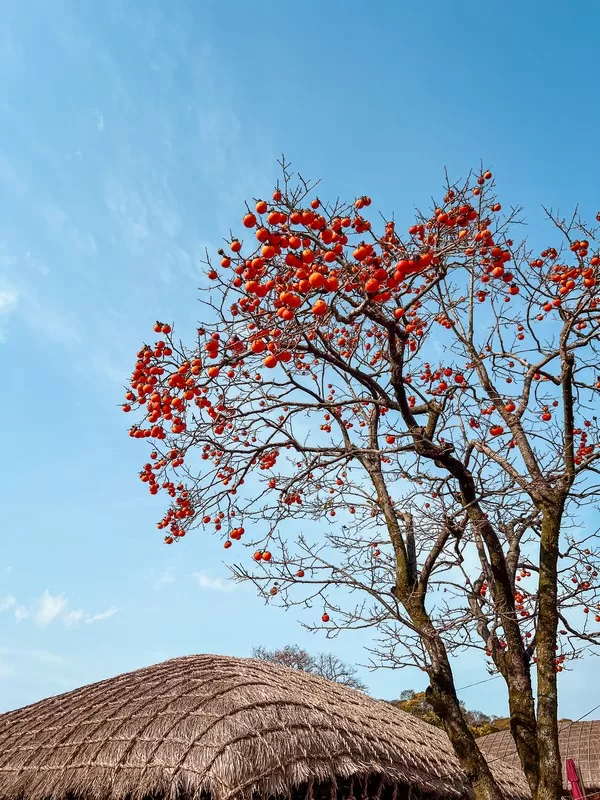
The fortress, which was the administrative center of the island, was relocated to its current position in 1423 with the help of all of the citizens of Jeju Island, it is said. It was a prosperous area of the island for five centuries with 1,436 households, 140 rice paddies and fields, 442 military personnel, 1,178 heads of horses, and 228 black cows.
The village prosperous until May 1, 1915 when the system of Jeju County was abolished and a new system of provincial order was started.
Quick Tip: There is a festival held in October of each year with reenactments, processionals, and other cultural events and experiences. Look for the Jeongeui-gol Folk Festival (정의골한마당축제) and see when it’s going to be held this year.
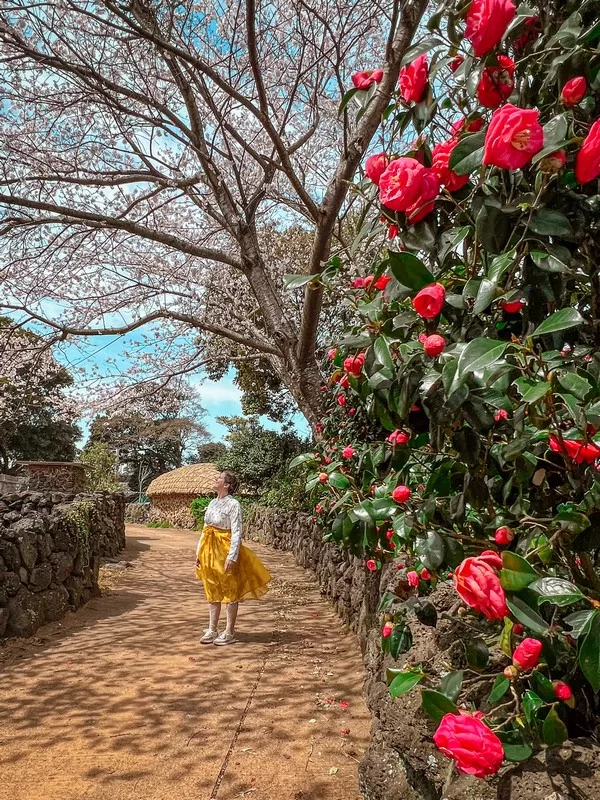
What To Look For Inside The Village
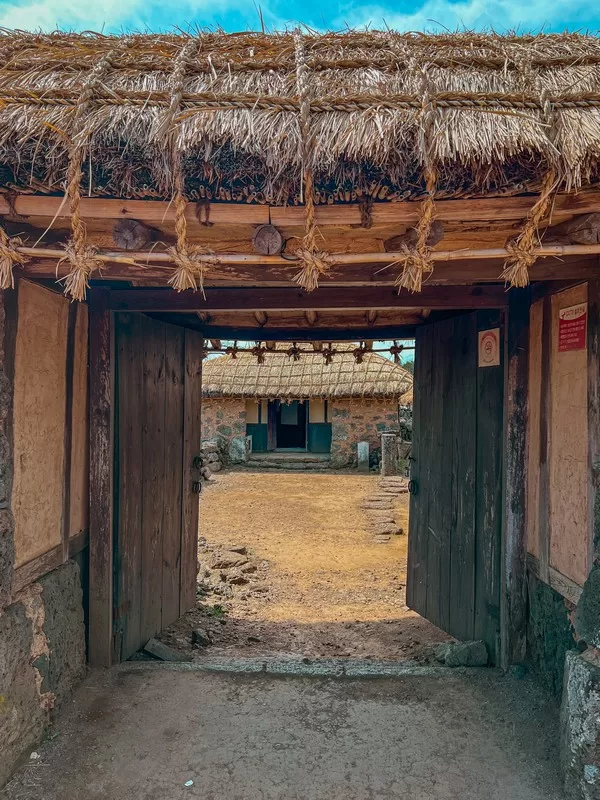
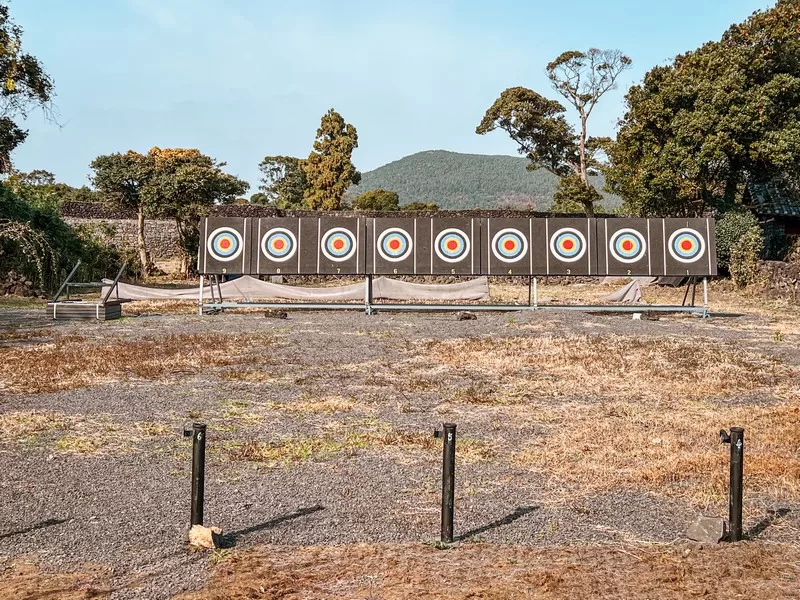
Once inside the fortress walls, slow down and explore the details. This village rewards curious wandering. Go slow, noticing which buildings you can go inside and which you can’t. Watch as the locals rethatch the roofs of their homes, try archery, or create a handmade clay pot.
There are some really local experiences for visitors, as well as the opportunity to see how people are actually living in the village today. If you see the locals working, be sure to say “hello”.
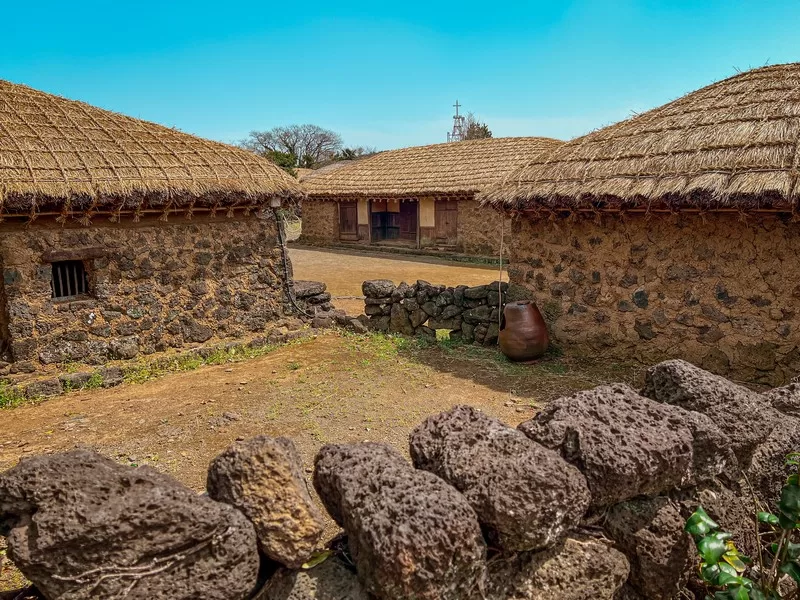
Merchant’s House
This house was constructed in 1901 by Jo Il Hun’s grandfather. The house has a slanted thatched roof for easy drainage, and is composed of an inner house, outer house, shed, and main entrance. This house was originally an inn for merchants and was equipped with posts for tying horses and cattle.
Fun fact: The village is designed according to the principles of feng shui, and is designed and placed with its defense in mind.
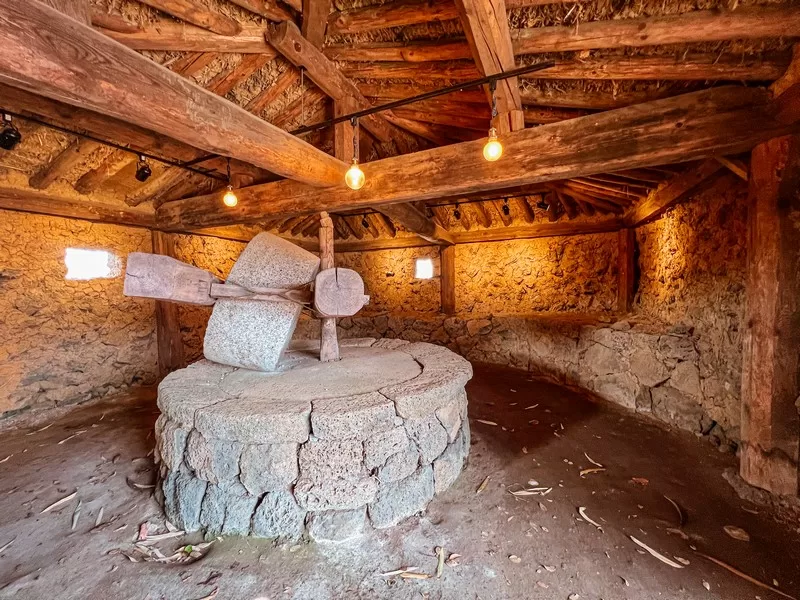
Malbanga
When you first enter through the southern gate (the one closest to the parking lot), you’ll notice this Hanok with a large tool inside. It was used to pound or grind grain. Similar to millstones used by people in mainland Korea, this one however, was powered by a horse.
The large round and flat stone slab is the aldol, or base stone, and the round stone that rolls over the aldol is the utdol, or millstone. It is said that 30 households got together and formed an association and shared one of these.
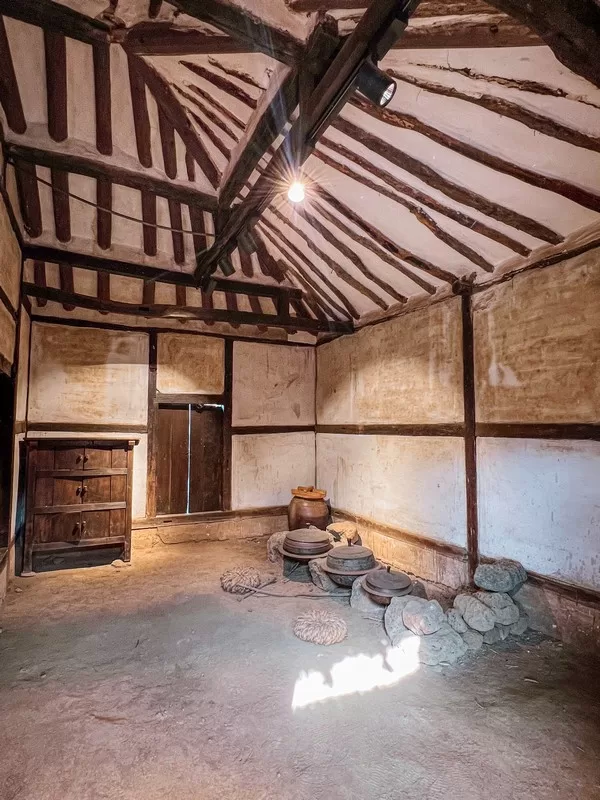
Hanok of Various Sizes
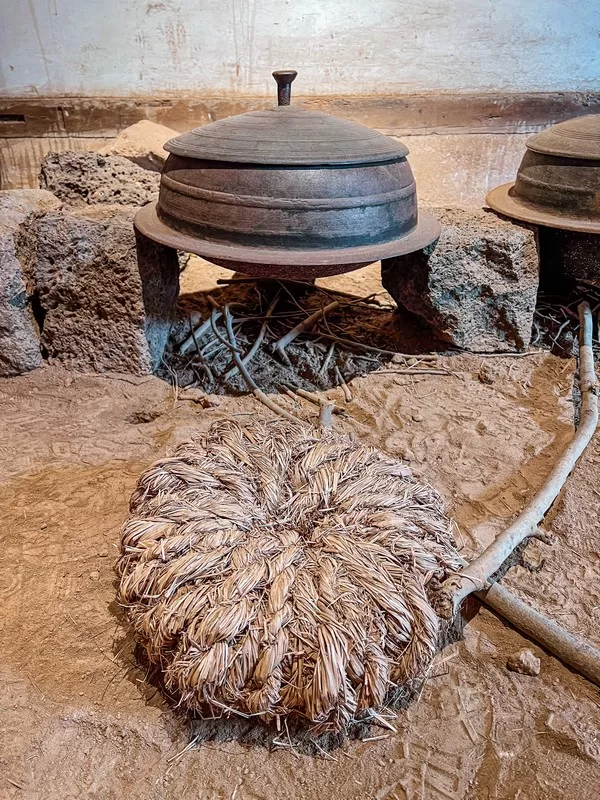
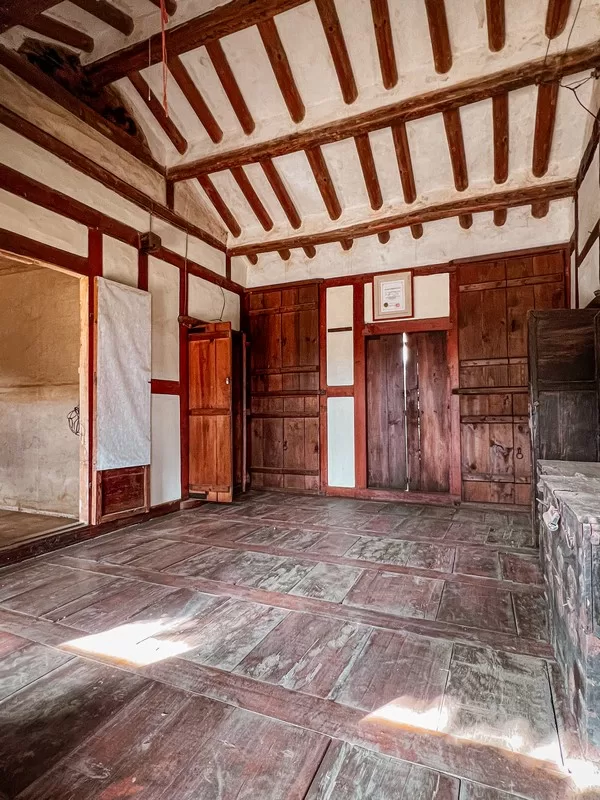
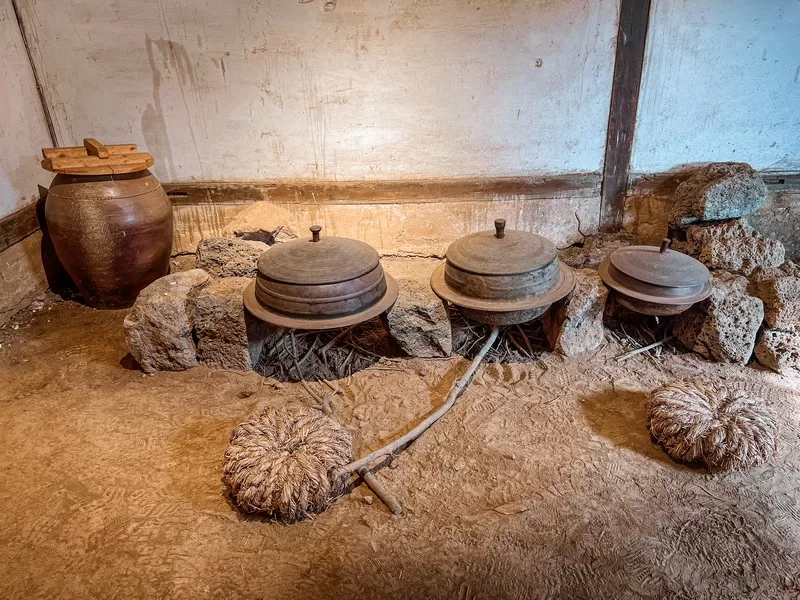
Remember that not all of the Hanoks are open because people do live here, but there are some Hanoks that are open to visitors so you can see the interior of the traditional Korean homes. There are various sizes of homes. Step inside to see traditional kitchens, rooms, and the ondol, or under floor heating system.
Quick tip: This isn’t a place for the high-energy attraction oriented traveler. It’s for the history lovers, slow travelers, and photographers.
Gaeksa
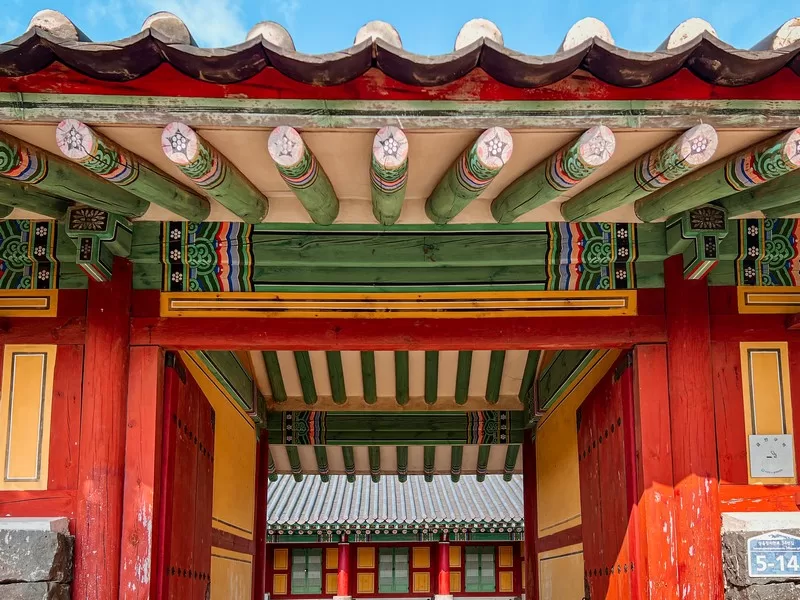
While the majority of the homes in the folk village are small, unpainted, and made of stone and thatched roofs, there are some larger buildings that are painted with traditional dancheong styles too. This is Gaeksa, a guesthouse for officials who were dispatched from the central government. It features an office space and ancillary wings on each side.
Experiences
As you walk through the village, note there various activities that the locals will host. What’s interesting is that they really aren’t trying to get you involved. They’re very open if you step in or ask to partake in archery or pottery or the other activities, but here it seems the experiences are more of a push by the government to have something to do in a place where locals could have or have not. Ask if you’re there, but be ready to look around for the people running each place.
Eating In and Around The Village
There are a number of great places to eat near the Seongeup Folk Village. This is where those neighborhoods outside of the fortress walls come in clutch. The folk village inside the fortress walls doesn’t have many places to eat, but nearby, there are plenty of places to choose from. Some are within walking distance, and some are better visited with the car.
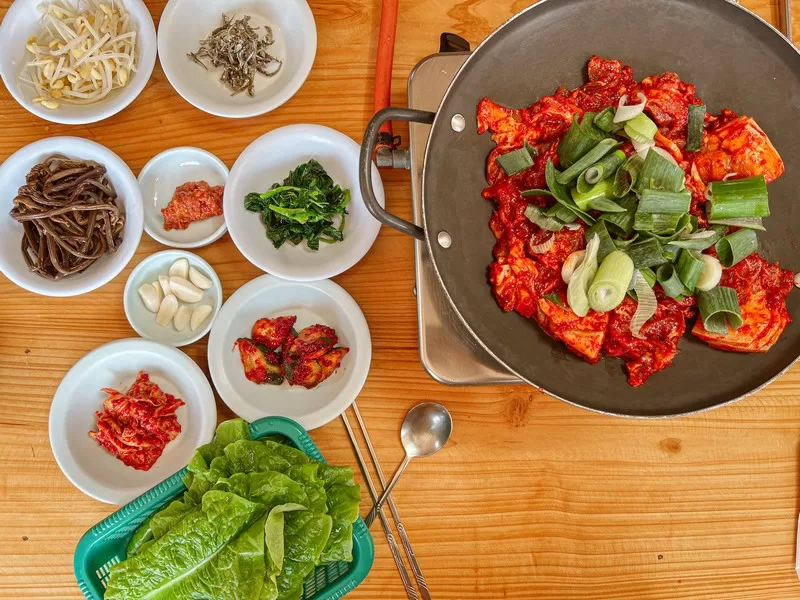
Ieodo (이어도식당)
Just outside of the main entrance to the fortress village there is a small village of buildings that house restaurants and cafes. We opted for Ieodo on our first visit. They serve a variety of meat dishes with pork bulgogi being a very popular option. Very delicious with great side dishes, my husband still talks about this spot.
- Address: 14 Jeonguihyeon-ro 22beon-gil, Seongeup, Pyoseon-myeon, Seogwipo-si, Jeju-si (제주 서귀포시 표선면 성읍정의현로22번길 14)
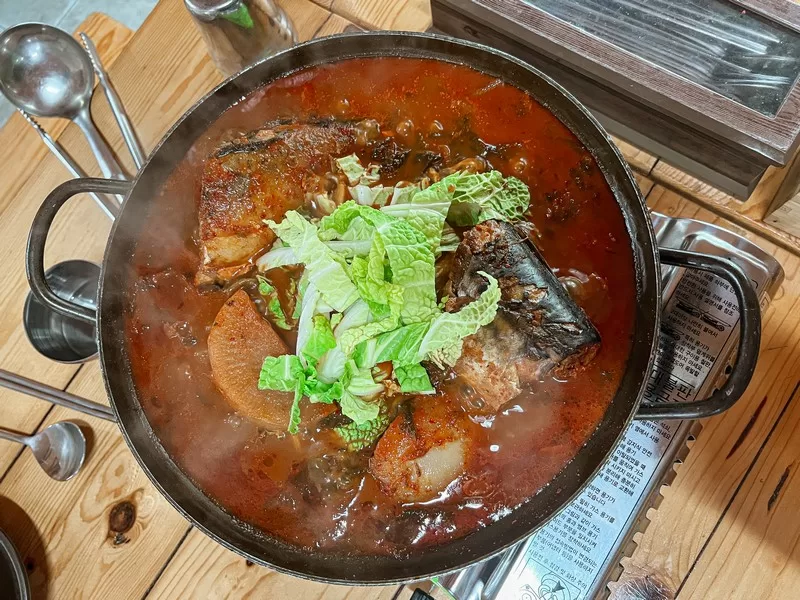
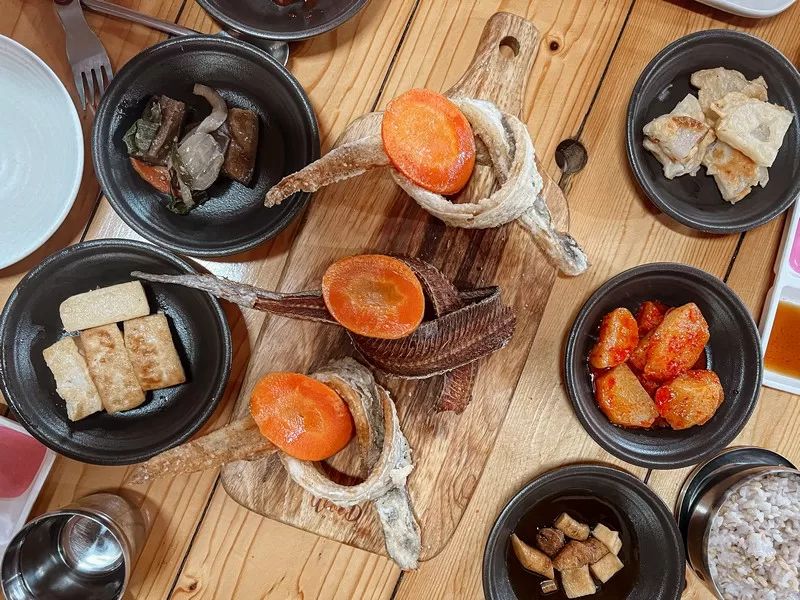
Samsin Grandmother’s Restaurant (삼신할망밥상)
Named after Jeju’s goddess of childbirth and protection, this restaurant serves one of the best galchi jorim (갈치조림), or braised cutlassfish, around. This fish is fresh, the sauce is perfectly spicy-sweet, and the banchan (side dishes) spread makes the meal feel abundant. What is most fascinating about this spot, the knotted fried fish presentation is actually a patent of their own, so presumably you can only find it here.
- Address: 180 Seoseongil-ro, Pyoseon-myeon, Seogwipo-si, Jeju-do (제주 서귀포시 표선면 서성일로 180)
- Hours: Every day: 8:30am ~ 8:30pm
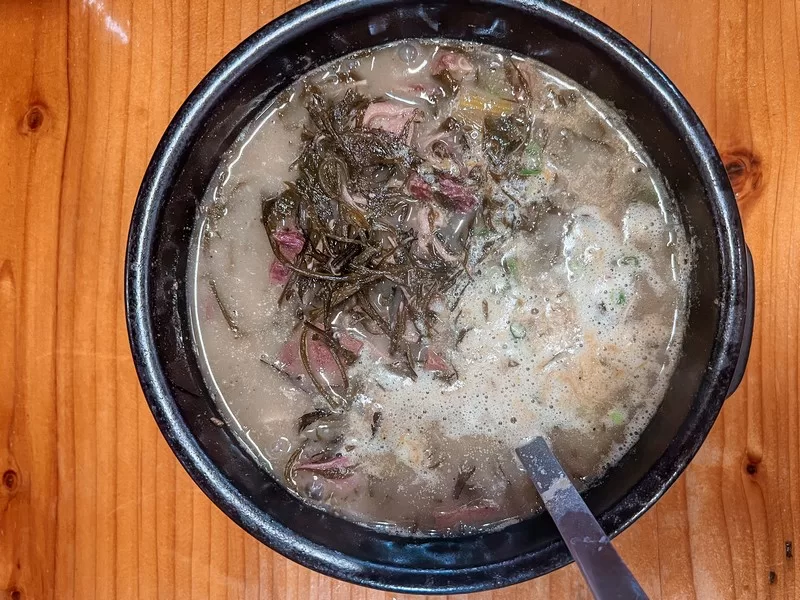
Seongeup Tamna Restaurant (성읍탐라식당)
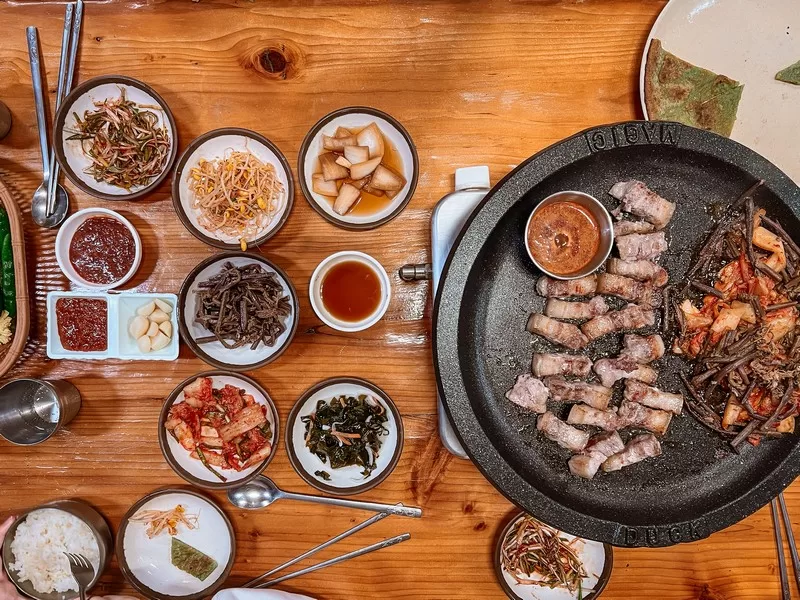
One of our favorite spots near the Seongeup Folk Village, this spot does Jeju food right. The momguk, or Jeju seaweed and pork soup, is deeply savory and comforting, and the Jeju pork bbq is simple but excellent, letting the meat speak for itself. It feels like eating at a countryside restaurant that locals rely on and the owners are super nice. The side dishes here are two thumbs up. You’ll want to eat every bit.
- Address: 116 Jeonguihyeon-ro, Seongeup, Pyoseon-myeon, Seogwipo-si, Jeju-do (제주 서귀포시 표선면 성읍정의현로 116)
- Hours: Every day: 9:00am ~ 9:00pm
The Seongeup Folk Village on Jeju Island is really a must visit. It’s not flashy. It doesn’t try to entertain you, but it’s meaningful. Much like the Naganeubseong Fortress on the mainland where locals are still living and preserving, it’s an amazing look at how fortress towns of the past are still relevant today in Korea.
Did you like this post? Pin iT!