Yangju Nari Park: Korea’s Prettiest Autumn Flower Fields
Last Updated on September 28, 2026
Having lived in Korea for nearly twenty years, I have seen A LOT of this country and I can honestly say Yangju’s Nari Park (양주나리공원) is one of the prettiest places I’ve seen in the whole country of South Korea. There are numerous parks around the country and each is a bit different in what they offer. Nari Park in Yangju just north of Seoul is purely for the flower lover within you.
I’ve now been to this garden three times, twice during the festival and once after the festival had ended, and it’s still one of my favorite autumn escapes from Seoul. It’s one of the most picturesque places that’s close enough to Seoul to make a perfect day trip, but just far enough out that it isn’t always busy.
Expansive plot after plot of curated flowers await in colors like purples, pinks, oranges and bright reds. As the autumn sun heats up the days with cool breezes blowing in, this is where to go to appreciate the changes of the season. Learn more about fall in Korea if you’re headed this way in the later months of the year. It’s a gorgeous time to visit.
Get ready to head to a gorgeous flower garden in South Korea:
- How To Get To Yanju Nari Park
- Basic Info, Admission Fees & The Gift Certificate
- Yangju Nari Park Map
- When To Visit Nari Park
- What To See: Flowers, Flowers, and more Flowers
- How Nari Park Has Changed Since My First Visit
- Nearby
- FAQ
(This post contains affiliate links, which means I receive a certain percentage of a sale if you purchase after clicking at no cost to you. Thank you for your support.)
How To Get To Yangju Nari Park
Address: 731 Gwangsa-dong, Yangju-si, Gyeonggi-do (경기도 양주시 광사동 731)
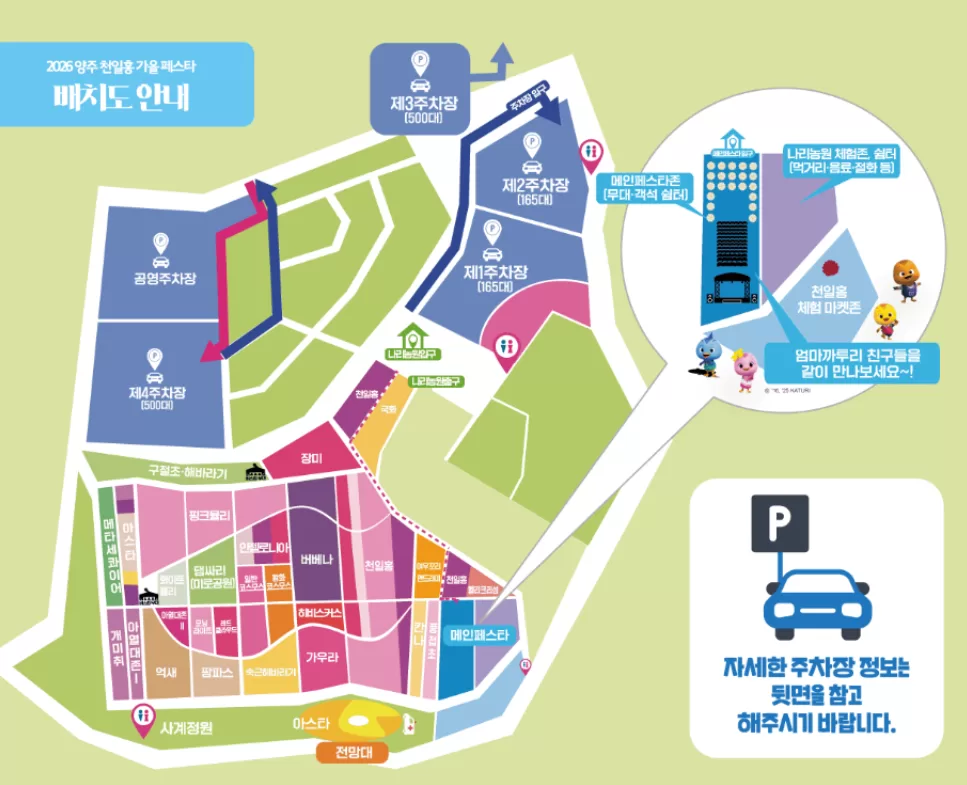
Search 양주나리농원 on Naver Map or Kakao Map and it will take you straight there. You’ll see 812 Gwangsa-dong pop up in some listings too. That’s one of the four parking lots in the area, not the garden itself, so don’t let the two addresses confuse you.
Parking: If you’re driving, there are a number of parking lots near the park and some further away when it’s really busy. There are plenty of signs that will point you to where to park. Parking is free, and there are several visitor lots around the farm.
By Subway/Bus: Nari Park isn’t in Seoul, but it’s easy to reach on the subway. Here’s the simplest way to get there:
- Get off at the Nari Farm stop (나리농원) and follow the crowds and signs to the entrance.
- Take Seoul Subway Line 1 north to Yangju Station (양주역).
- Head out of the station and cross to the bus stop on the opposite side.
- Take bus 80, 77-1, or 2-4.
Join A Tour: Klook has the easiest way to get up to the park and back down into the city if riding on the subway for a couple hours isn’t your jam. Book Your Tour Now! kkday also has a fun tour that goes to Nari Park as well as a few other spots in the region that a lot of tourists miss. Check out the kkday itinerary here.
Basic Info, Admission Fees & The Gift Certificate
2026 season: September 18 to October 25, 2026
Hours: 9:00am to 8:00pm this season.
2026 Yangju Globe Amaranth Autumn Festa (양주 천일홍 가을 페스타): The main festival dates are September 26 to 27 and October 3 to 4, when the performances and bigger events are held. There’s also flower-path busking and market booths on weekends through October 18. During the week, it won’t be as festive, but the flowers are exactly the same.
Heads up on crowds: October 3 (National Foundation Day) through the substitute holiday on October 5, and October 9 (Hangeul Day) through October 11, are long weekends this year and will be the busiest days of the season. There’s also a festival marathon on the morning of October 5.
Admission: There is a small fee to enter the park. It isn’t too hefty at just W5,000, but there is an admission charge, though it’s really meant to get people to see more of Yangju.
During the festival period, you pay W5,000 and you’re given a W5,000 Yangju Love Gift Certificate (지류형 양주사랑상품권) right back. So you’re essentially getting in for free, as long as you spend it in Yangju.
| Visitor | Festival period fee | Given back |
|---|---|---|
| Adults (non-Yangju residents) | W5,000 | W5,000 Yangju Love Gift Certificate |
| Youth and military | W3,000 | W3,000 Yangju Love Gift Certificate |
| Regular open days outside the festival | W7,000 for adults | W5,000 Yangju Love Gift Certificate |
The paper gift certificates can be used at about 400 local stores in Yangju. The list of affiliated stores is on the Yangju City website, and the certificates are valid for five years, so you don’t have to use them on this trip up.
They’re also accepted at the registered partner booths and market stalls at the festival itself, so you can use yours on snacks or a souvenir right there in the park. The official Yangju Cheonilhong festival website has a list of nearby vendors too, so if you’d rather leave the park for lunch, that’s another great option.
I think it’s a really clever system. The city is using the admission fee to get visitors to see more of Yangju rather than just the garden.
Yangju Nari Park Map
When To Visit Nari Park
Nari Park is an autumn garden first and foremost. Different flowers peak at different times, so here’s roughly what to expect:
| Flower | Korean | Typical peak |
|---|---|---|
| Globe amaranth | 천일홍 | Mid-September to mid-October |
| Whirling butterflies (gaura) | 나비바늘꽃 / 가우라 | September to early October |
| Cosmos | 코스모스 | September |
| Pink muhly | 핑크뮬리 | Late September to October |
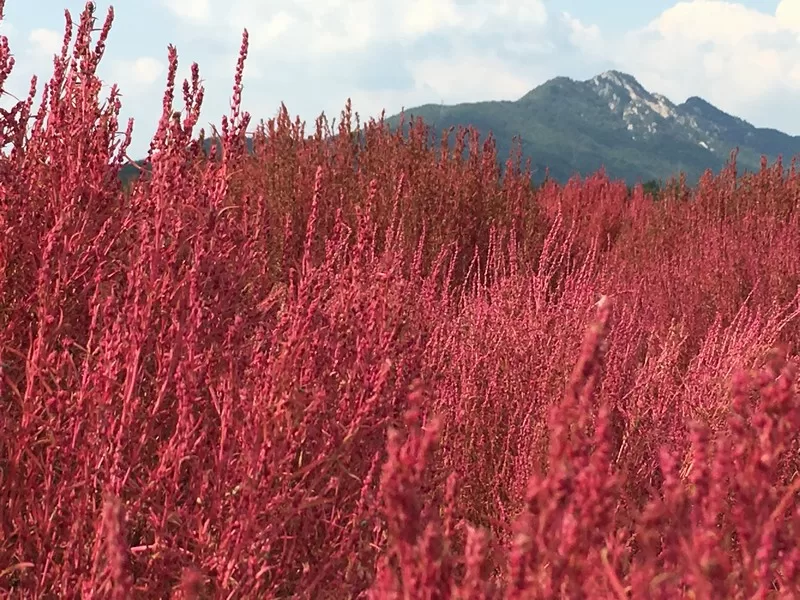
| Kochia | 꽃담싸리 / 댑싸리 | Green in September, red mid to late October |
If you’re set on seeing the kochia in deep red, aim for mid to late October. It depends on the weather that year, but when it stays warm longer, they turn later. If globe amaranth and the festival are what you’re after, late September to early October is the sweet spot. The best time of day for photos (and thinner crowds) is right when the park opens at 9:00am, or in the hour or two before sunset.
What To See: Flowers, Flowers, and more Flowers
Nari Park (officially Yangju Nari Farm (양주 나리농원)) is a city-run flower farm in Gwangsa-dong, Yangju, in Gyeonggi-do, about an hour north of central Seoul by subway and bus. Nari Park is known for having the largest globe amaranth garden in Korea, but it’s so much more than one flower. In 2026, around 30 kinds of flowers were planted in long striped plots across the farm, and the city expanded the subtropical zone this year too. There’s also a viewing cart that runs through the flower fields if you’d rather not walk the whole thing. I think it’s one of the most picturesque places close enough to Seoul that it’s a perfect escape from the city.
I’ve gone during the festival twice and once after the festival period ended, and I actually enjoyed the quieter period better myself. The festival weekends are fun with performances and booths, but the fields are the real star. If you can go on a weekday, that’s ideal. It’s still just out far enough that it isn’t always busy, which is part of the charm.
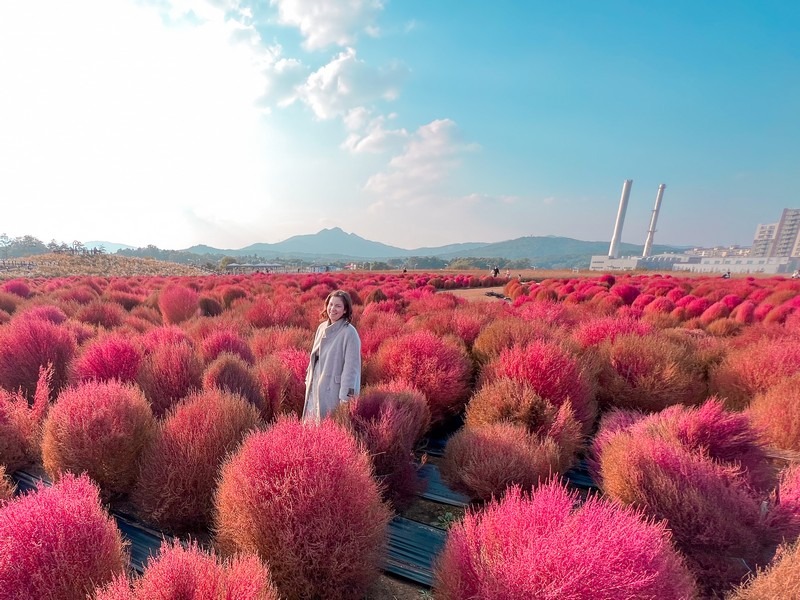
Kochia Scoparia (꽃담싸리)
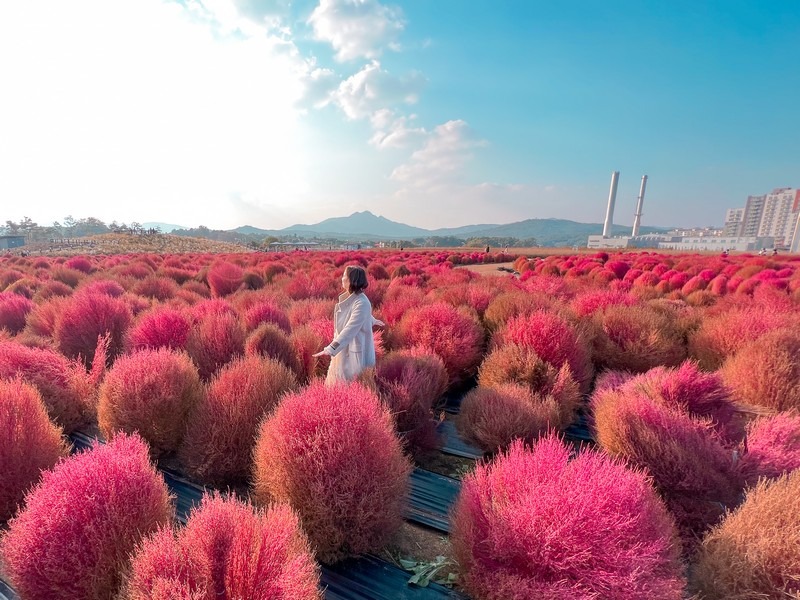
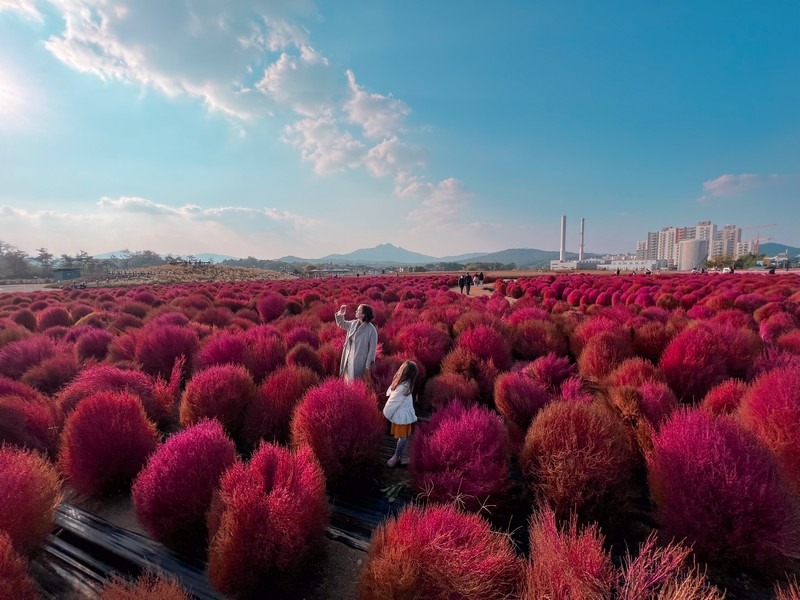
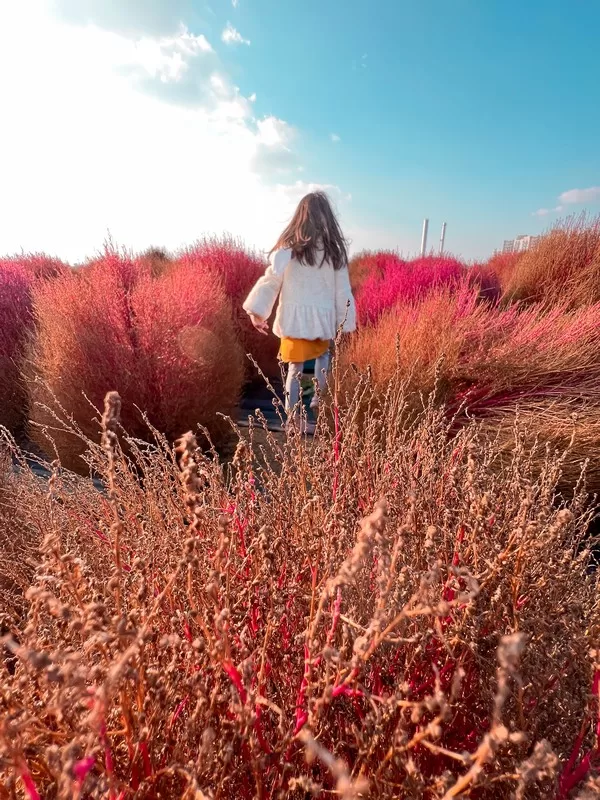
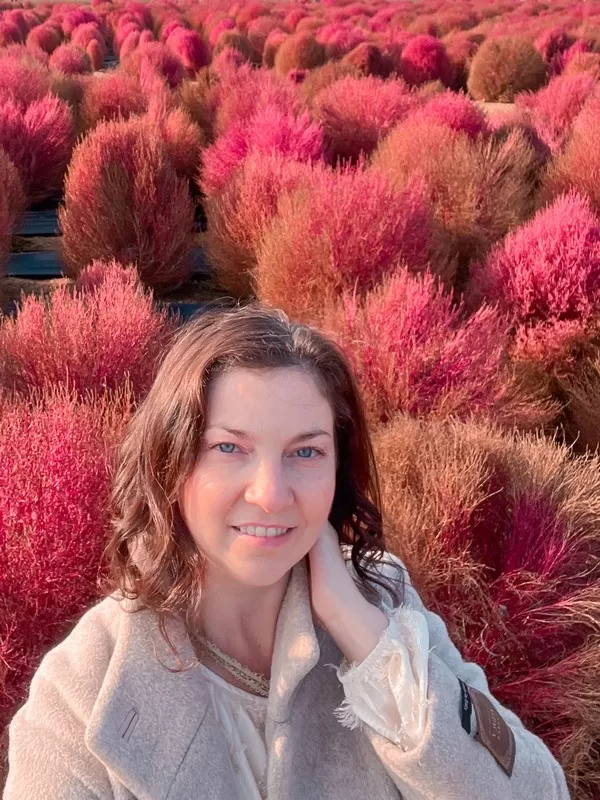
The Kochia scoparia flowers (꽃담싸리) are a shrub that also go by the name of Mexican Fire Brush, Fireball, or Burning Bush and this annual shrub goes from green to deep red come autumn. Walking through this section of the park really had me feeling as though I were walking in some other country or planet. They are just so different in their shape to anything I’ve seen in Korea and the pinks and reds were incredibly gorgeous and left me feeling grateful to have come here.
Kochia are sturdier than many of the other more delicate flowers in the park which also made them interesting to walk among. These have really become wildly popular in parks around Korea and were planted in the gardens at World Cup Park as well as a few other spots around the city of Seoul.
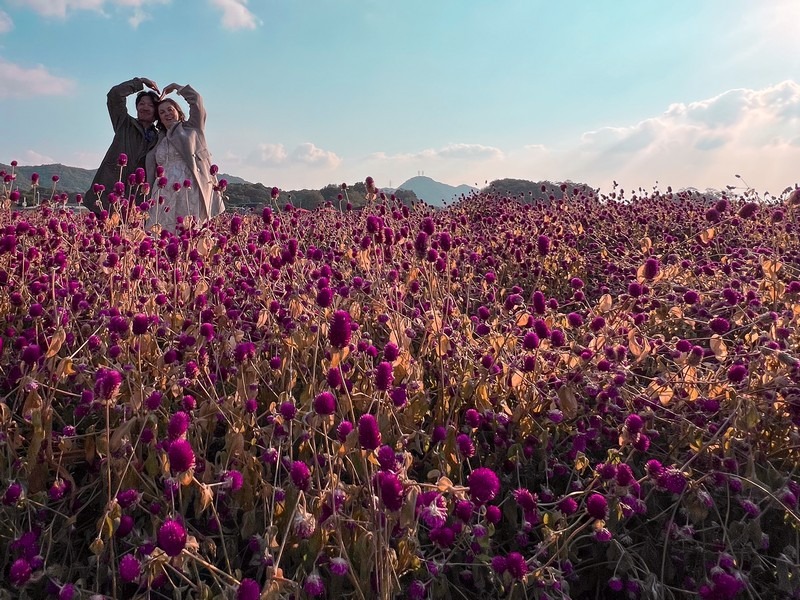
Globe Amaranth (천일홍)
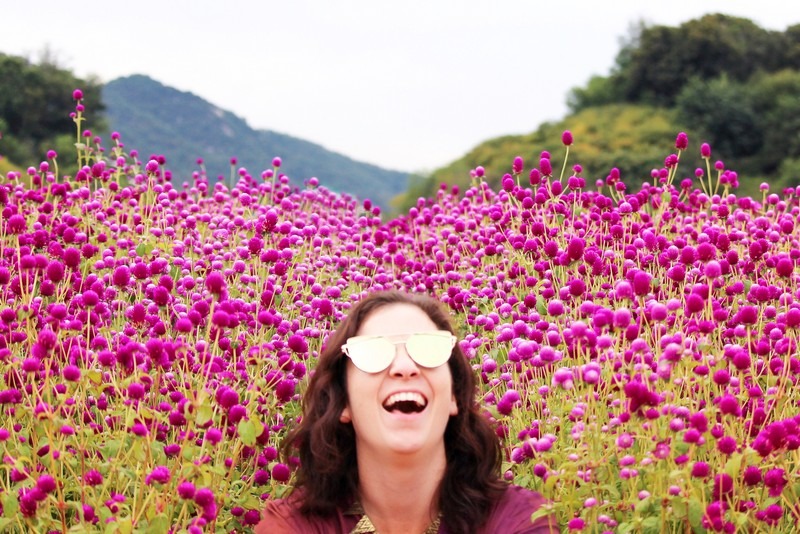
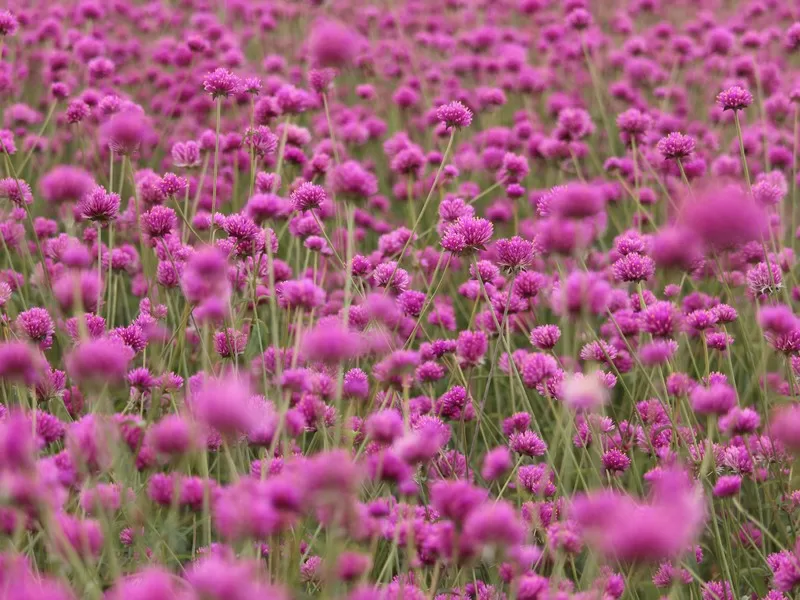
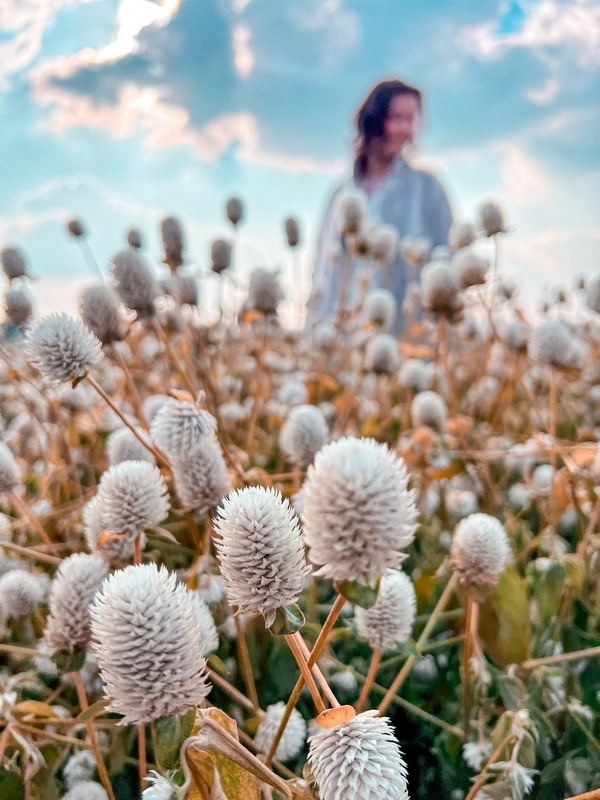
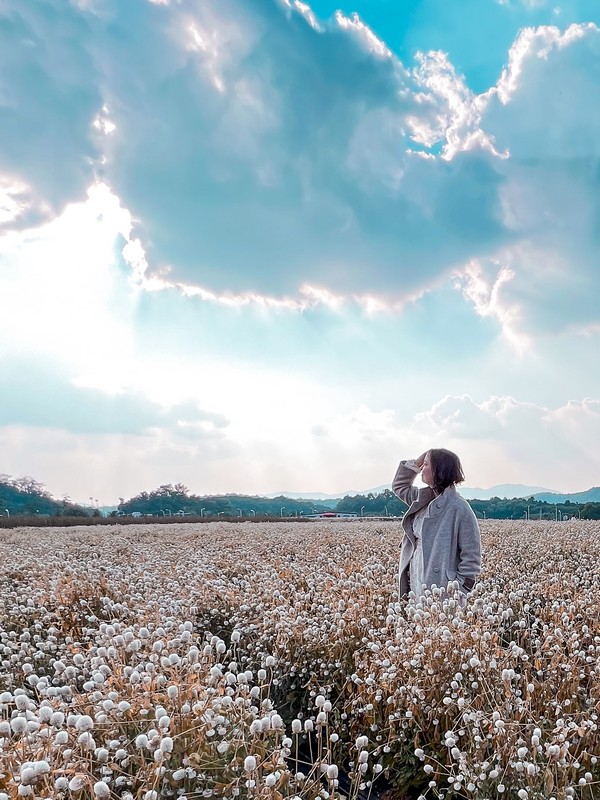
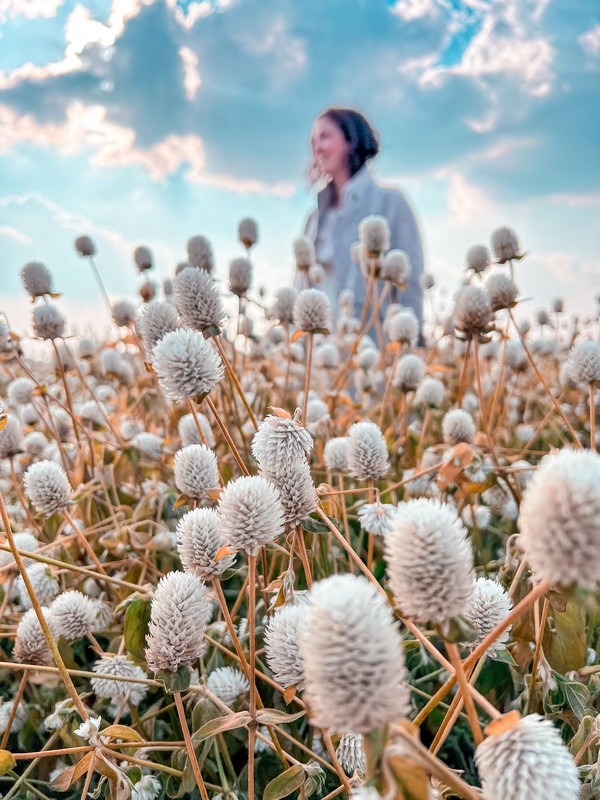
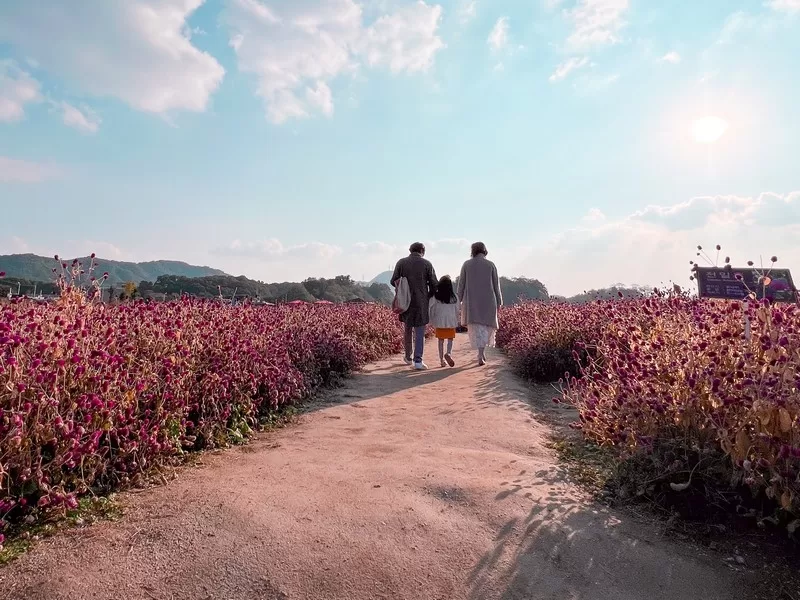
The most substantial plots are for the Globe Amaranth (천일홍). This flower is known as the 1000 days unchanged flower as it doesn’t change color even after being dried. Symbolizing eternal and unchanged love for Koreans, you can imagine these fields are extremely popular with young lovers and couples.
While many areas of the plots are roped off, it’s easy to see where photo zones are and where you can step in to get those wanted nonchalant sitting among the flowers shots… because we all know how often we do that. While they are popular, again, they are the most substantial plots, so there is plenty of space to spread out and get pictures.
Fun fact: The round, colorful “balls” of globe amaranth are actually bracts rather than petals, which is why they hold their color for so long. Nari Park has the largest globe amaranth garden in the country, and the flower is the namesake of the whole festival.
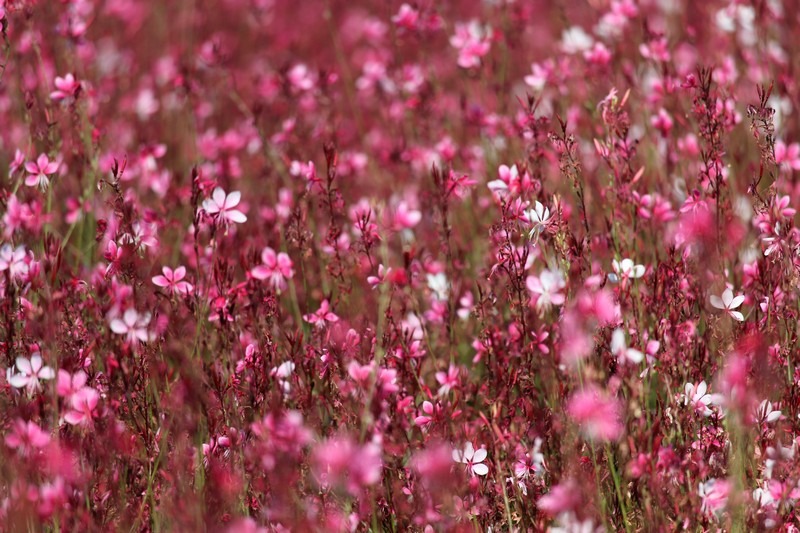
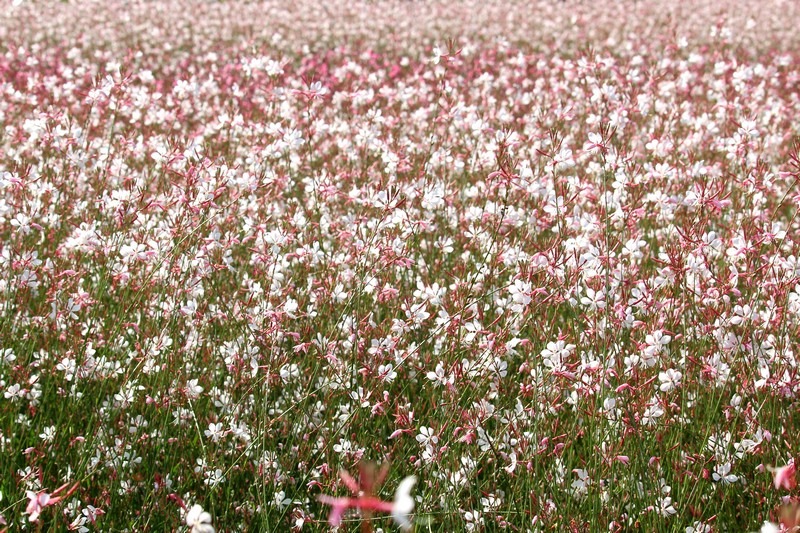
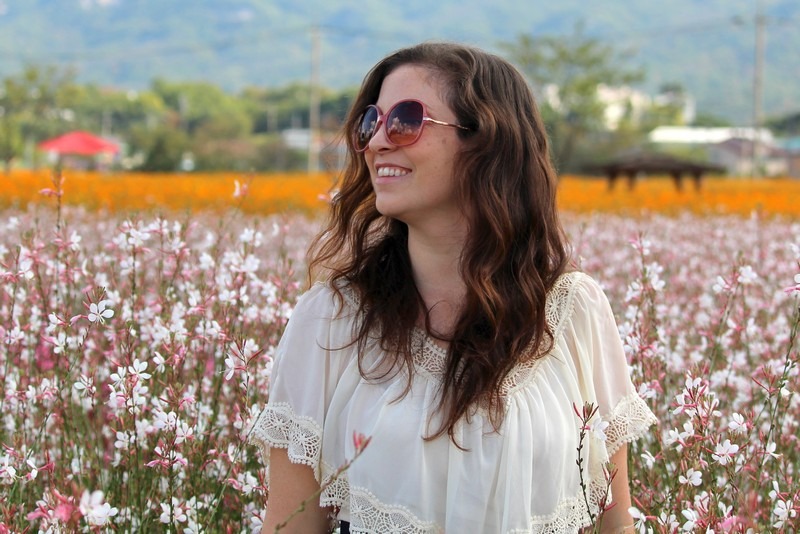
Whirling Butterflies (나비바늘꽃)
We walked into the park and headed straight to the cloud of moving butterflies. The Whirling Butterflies (나비바늘꽃) come in pinks and whites and while they look delicate are pretty sturdy flowers. The park is quite long so make sure to walk around and take it all in. After the whirling butterflies were orange cosmos flowers and there were other plots too.
Like I said, the park was just considerable plot after considerable plot of flowers. Some were small and some were tall. Some were bushy and some were delicate, but all of them were gorgeously blooming in the autumn sun… which turned out to be pretty hot since there weren’t any trees to sit beneath.
Don’t Miss! If you love autumn blooms, be sure to visit the Yulgok Botanical Garden in the autumn as well. There is a gorgeous hillside covered in Siberian chrysanthemums that you can’t miss. Check it out!
Pink Muhly (핑크뮬리)
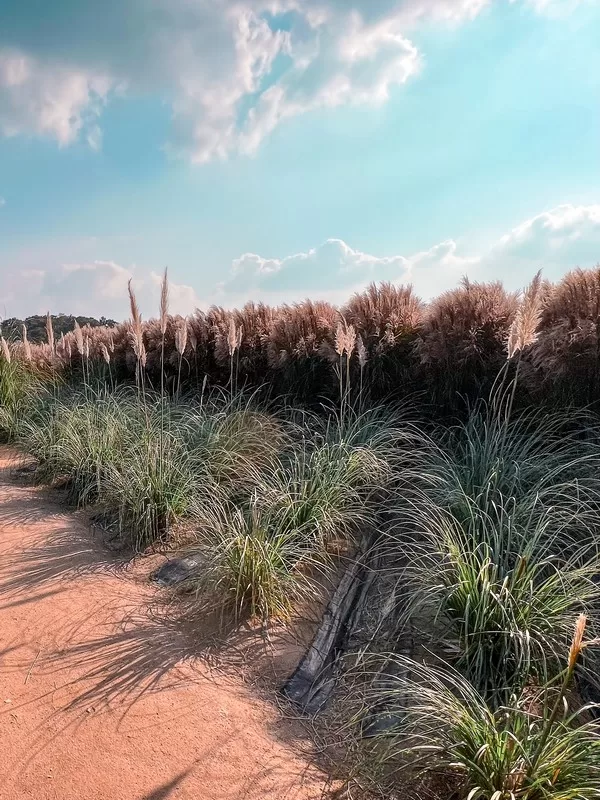
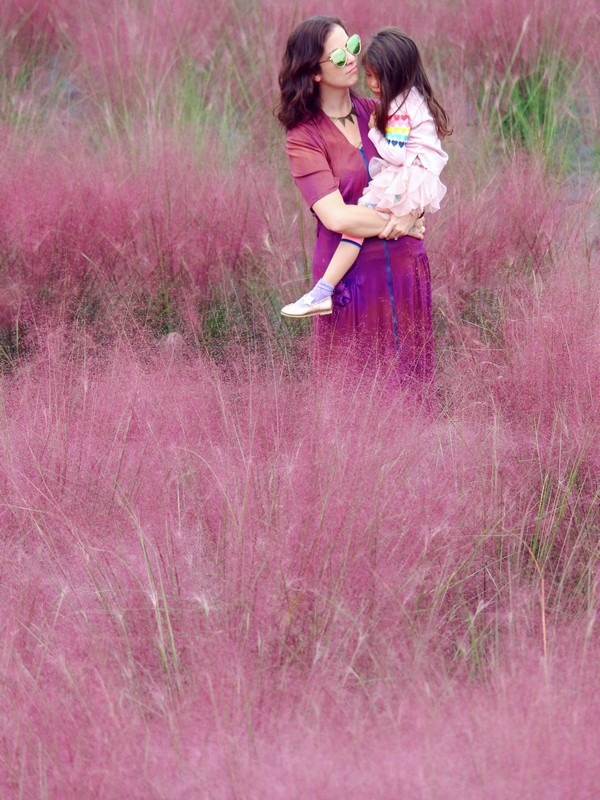
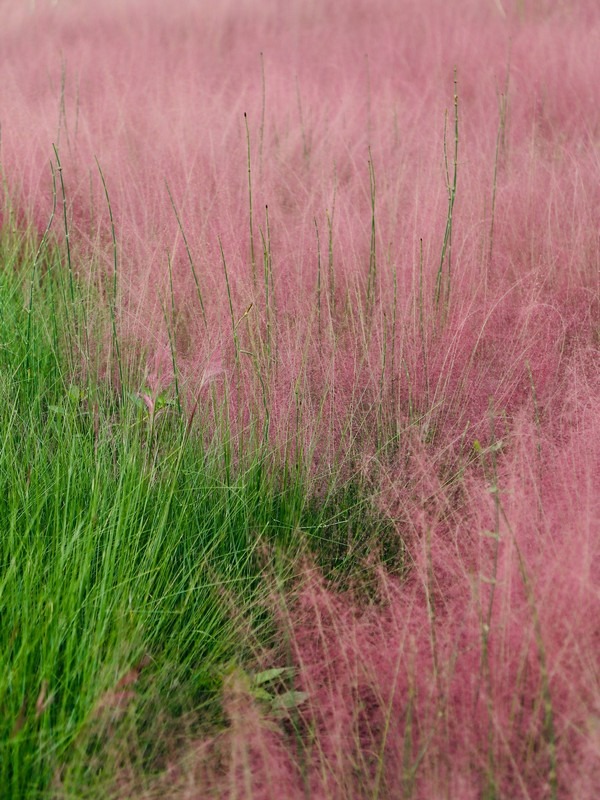
Pink muhly is planted at Nari Park alongside the globe amaranth, and these wispy pink grasses usually look their best from late September through October. They’re one of the most popular sights for many people. Up close, they can look like very little, see through, a bit like cotton candy wisps, but back up and see them as they wave in the winds and they’re a gorgeous field of pink. If you can’t get enough of it, here are 29 places to see pink muhly in Korea in the fall.
Silver Grass & Pampas
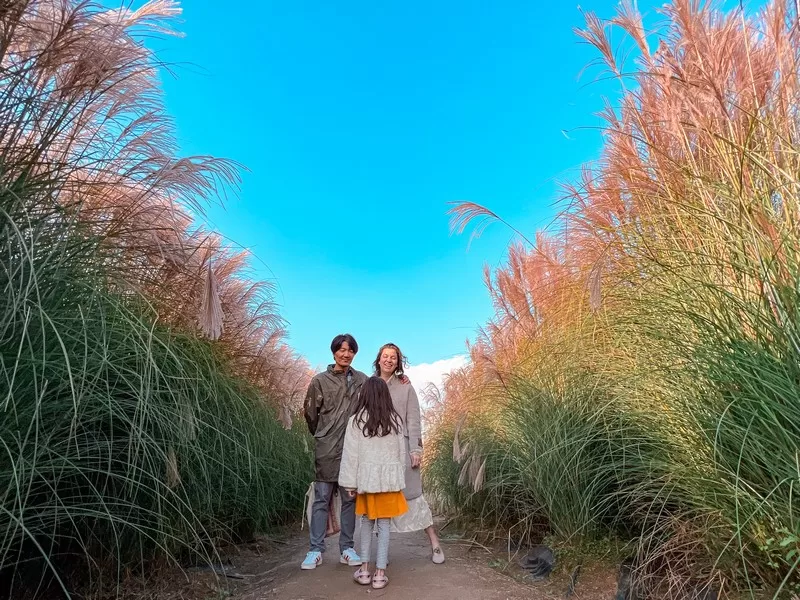
Silver grass, called eoksae (억새), is one of those Korean autumn views that are a must have. We usually go to Sky Park in the World Cup Parks area system to see the most beautiful views, but if you just want one place and silver grasses too, then Yangju is definitely your spot. Next to the silver grass is the plot of pampas, which I especially love. Flowers upon flowers and beautiful grasses, it’s just got everything.
How Nari Park Has Changed Since My First Visit
Since I first visited, this locally known garden has become much more popular with Seoulites looking for autumn flowers. That first year we went, it was really just locals. There are some apartments nearby and a playground for children, and that’s where people mostly were. There was no admission fee, and we had to figure out street parking nearby.
By my second visit, an admission fee had been added because it had gotten more popular, and the city had actually created parking lots. Now, it’s much more well-known. The city has built parking lots for visitors, the festival has grown into a multi-week event, and the admission fee is given back in gift certificate form as a way to help people see more of Yangju rather than just the garden. It’s a fantastic garden.
Nearby
If you’ve got a bit of energy after the fun at the park and don’t want to head straight back into the city but want to continue your trek, try to find this next place… I dare you! Yes, I got a little lost finding my way, but in the end, it was so worth it.
Uijeongbu Art Library (의정부미술도서관)
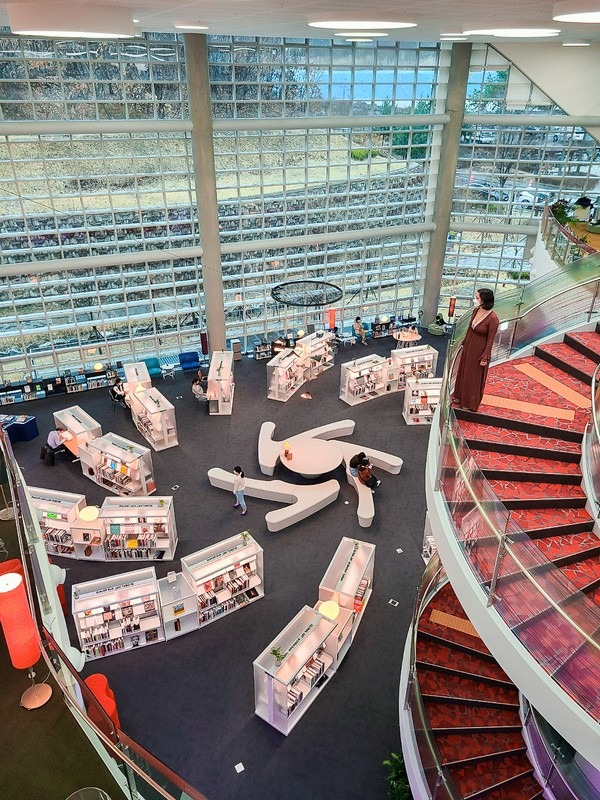
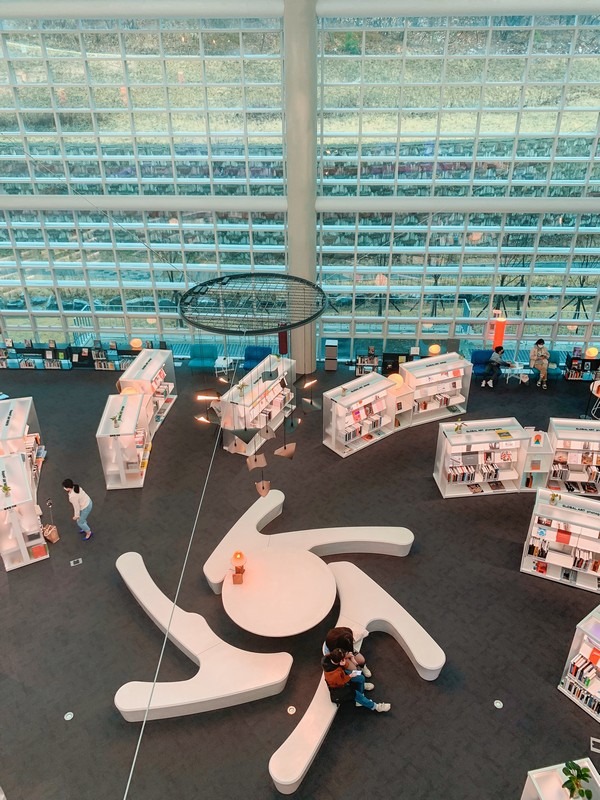
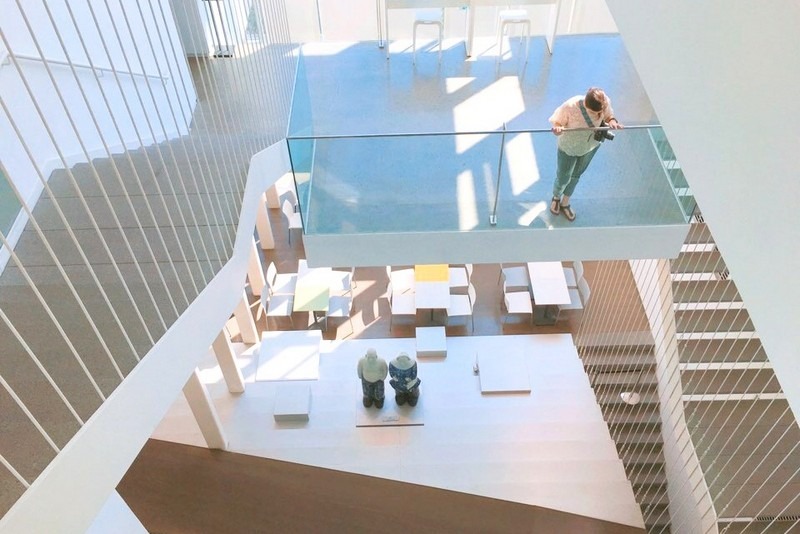
There is a really interesting and very eye catching library in Uijeongbu which is very close to the park if you want a little quiet indoor time after the or before the flower viewing. The Art Library of Uijeongbu won the 2020 Korean Architecture Award’s Grand Prize and is a cultural complex that combines an art gallery with a library.
The interior is very eye catching and you’ll want to take a seat with a good book and just enjoy the space while learning about art. We greatly enjoyed our visit to this one-of-a-kind library in Korea.
- Address: 248 Millak-ro, Uijeongbu-si, Gyeonggi-do (경기 의정부시 민락로 248)
- Hours: Tuesday – Friday: 10:00am ~ 9:00pm; Weekends: 10:00am ~ 6:00pm
Bilugae (비루개)
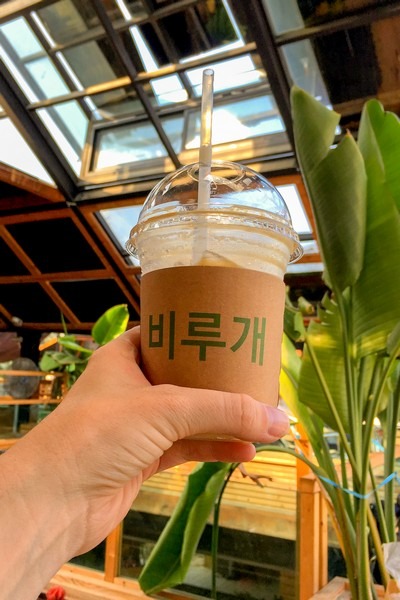
For an added surprise, if you’re out in the Yangju area, then I’d highly recommend continuing on and trying to find your way up to 비루개. I’m not saying this will be easy, but it IS worth it.
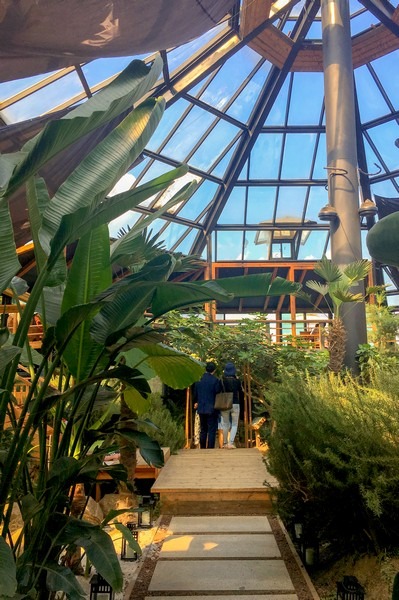
Bilugae is just about impossible to get to if you don’t have a car. I’m not exactly sure what Bilugae goes by in English or what it means. When I asked my husband what it means, he said he had no idea. I CAN say, this place is SUPER unique. It’s three greenhouse structures that are combined to make one large greenhouse cafe. The design is really something else. The standard chairs and tables to overlook the beautiful mountain views in Namyangju, but there are also hovels with large pillows, nets to lie in, swinging chairs and more.
- Address: 227 Yongam-ri, Byeolnae-myeon, Namyangju-si, Korea (경기도 남양주시 별내면 용암리 227)
- Hours: Thursday – Monday: 10:30pm ~ 8:00pm
FAQ
Is Nari Park in Seoul?
No. It’s in Yangju, a city in Gyeonggi-do north of Seoul. You can get there with Seoul Subway Line 1 to Yangju Station and a short local bus ride.
How much does Nari Park cost?
During the 2026 festival period, admission is W5,000 and you get a W5,000 Yangju Love Gift Certificate back, which can be used at about 400 stores in Yangju for up to five years.
Can I use the gift certificate at the park?
Yes. The paper Yangju Love Gift Certificates are accepted at registered partner booths and market stalls at the festival, as well as at affiliated stores around Yangju listed on the Yangju City website.
When is the 2026 Yangju Globe Amaranth Festival?
The park is open September 18 to October 25, 2026. The main festival days with performances are September 26 to 27 and October 3 to 4, with weekend busking and market booths through October 18.
Is it worth visiting outside the main festival days?
Absolutely. I’ve been both during and after the festival, and I enjoyed the quieter visit more. The flowers are the same, just with fewer people.
When do the kochia turn red?
Usually mid to late October, depending on the weather. In September, they’re mostly green.
Is there pink muhly at Nari Park?
Yes, and it usually looks best from late September through October.
Is there shade at Nari Park?
Very little. It’s open farmland, so bring a hat, sunscreen, and water.
How long should I spend at Nari Park?
About 1.5 to 2 hours is plenty to walk the fields and take photos.
Is Nari Park crowded?
Festival weekends and holidays are the busiest. Weekdays are ideal if you can swing it.
Can I visit Nari Park in spring?
Sometimes. In 2026, the farm had a free spring opening May 9 to 17 with barley fields, but it’s mainly an autumn destination.
Is there a tour to Nari Park from Seoul?
Yes. Day tours from Hongdae, Myeongdong, and Dongdaemun combine Nari Park with nearby spots like Pocheon Art Valley and Herb Island.
If heading up to Yangju is a bit far, there are plenty of other places to visit to enjoy autumn in Korea. There are beautiful places with autumn flowers. This would also be a great time to walk around the Seoul City Wall, get the views, see the foliage and see the city while you’re at it.
If you like off the beaten path flower gardens and parks then also be sure to check out the off the beaten path Dream Park in Incheon which is still relatively unknown. Or if you want to find something more easily accessible, head to World Cup Parks to find the pink muhly, kochia, and other autumn blooms. Or head out of the city and find Farm Kamille in Taean-gun.
Autumn is a gorgeous time to get out and about and see what you can see. I hope you enjoy the vie
Did you like this post? Pin It!

8 Comments
Evangelyn Pascual
Wow!im in awe seeing your posts!thanks a lot for the infos,cant wait to explore
Hallie Bradley
You’re welcome! There’s so much to see. Enjoy enjoy ^^
Ann
Hi! I was wondering if you have any insight to if Nari Park is worth visiting in early-mid Sept? I’m struggling to find a beautiful mass floral kind of place when I’m visiting – it seems most of the nice places look best early Oct 🙁
Hallie Bradley
Cosmos flowers are usually blooming in September so you could keep an eye on Nari Park, Olympic Park, and World Cup Park to see how they’re looking when you arrive. Best to search on Instagram for updated pictures to see what is in full bloom the week you’re here.
K. B.
Hi! Would you know the best week in October to see the kochia in full red bloom?
Hallie
This year they seemed to get read a bit late. But it stayed warmer a lot longer than usual so it’s difficult to say. I think mid to late October they were almost all red.
Karen Reyes
Hi, I’ve been following your blog for quite some time now and I really enjoy reading all the places you’ve been to esp in Korea. I want to ask if Nari Park is as pretty in April? I love parks but managed to visit only a few although I’ve been to Korea twice already. The people I’m usually with love the city life so not enough time for me. April 2019 will be my first solo trip in korea and I’ve been listing the picturesque parks to see 🙂 thank you and can’t wait to read more from you.
Hallie
I’m not sure what is in Nari Park in April. I was just there this week and can definitely say the curators for the garden are becoming more aware of the popularity of the flowers. Last year there was no entrance fee or parking lots, this year there is a W2,000 fee and parking lots have been paved. But I only saw autumn blooming flowers. By next year, they might open it up to spring AND autumn blooms, but I can’t say what their plans are. As of now, it’s only an autumn spot to check out. But that could definitely change next year. I’d keep an eye on it on Instagram if I were you. ^^