Korean Words That Made It Into The Oxford English Dictionary
Last Updated on December 8, 2025
Did you know you might already be using Korean without realizing it? Thanks to K-pop, K-dramas, Korean food, and even Netflix hits like Squid Game, the Oxford English Dictionary has added dozens of Korean words to its official pages. It really astounds me how much Korean has infiltrated the vernacular. When I first arrived in Korea in 2006, most of my friends only associated the country with the Korean War and North Korea and knew nothing else about K-pop or kimchi. Look how far we’ve come!
The OED, considered the accepted authority on the English language, now recognizes terms that once lived mainly in Seoul cafes, PC bangs, or your favorite K-drama scripts. You’ve probably heard some of these already, but how many of them did you really understand?

You may have heard more Korean than you realized. If not, you can always sit down and start learning!
- Everyday Korean Words You Might Already Know
- Culture, Food, and History
- New Additions in 2025
- Why It Matters
(This post contains affiliate links, which means I receive a certain percentage of a sale if you purchase after clicking at no cost to you. Thank you for your support.)
Everyday Korean Words You Might Already Know
- Aegyo (애교): That overly cute, charming (some might say whiny) style of speech/behavior you’ve seen idols (and maybe your Korean friends) pull off.
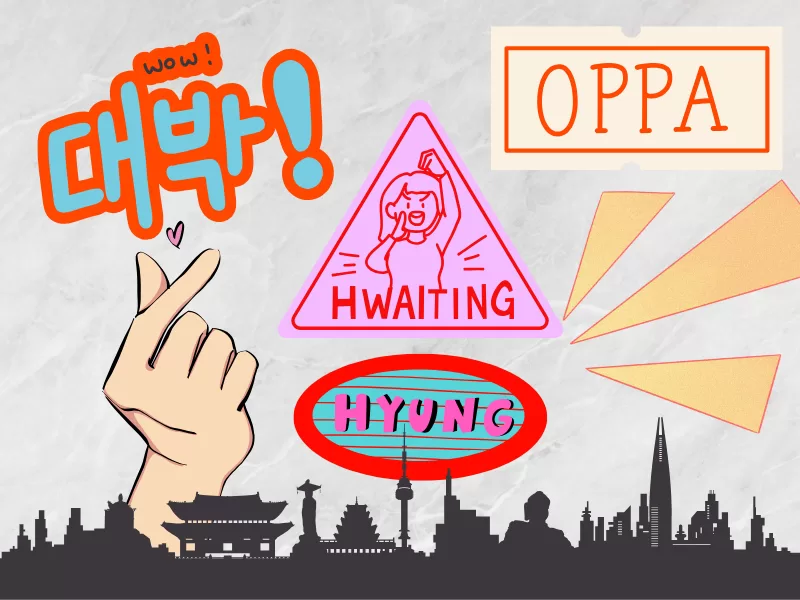
- Daebak (대박): Your new favorite word for when something is “amazing” or “fantastic.” Found a new K-drama obsession? Daebak!
- Fighting (화이팅): Koreans use this to cheer each other on. It’s basically “You got this!” in one catchy word. When you hear it, it sounds more like “hwaiting”.
- Oppa (오빠) / Noona (누나) / Unni (언니) / Hyung (형): These are Korean familial words. Girls call older boys oppa, and younger guys might call female friends noona.
- Skinship: A Konglish creation that means close physical affection between friends, lovers, or family. People might be a bit more touchy than you realize in Korea.
Want to start learning Korean? There are some fantastic Korean language learning series out there provided by well-known Korean universities and companies that are devoted to language learning. Textbooks might seem like an old-fashioned way to learn, but they’re still utilized for a reason.


Culture, Food, and History
- Hallyu (한류): The “Korean Wave” itself, covering everything from BTS to Parasite.
- K- / K-drama / K-pop: Household words at this point, the “K-” is added to any noun letting you know that it’s South Korea-related.
- Gisaeng (기생): The women who worked at the royal court as entertainers, singers, and dancers. If your favorite dramas are the historical ones, you’ve definitely seen them.
- Hanbok (한복): The traditional Korean clothing that is both elegant and symbolic of Korea’s history.
- Hangul (한글): The Korean writing system that was scientifically designed by King Sejong the Great in 1443. You can learn to read in less than an hour. Yes, really!
- Mukbang (먹방): Those videos where someone eats massive amounts of food while chatting with viewers. They become extremely popular in Korea.
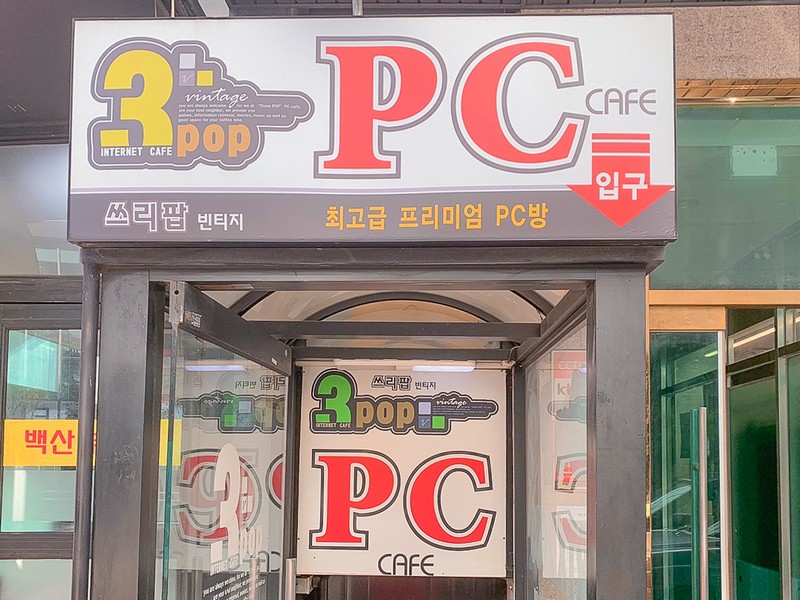
- PC Bang (피시방): Korea’s famous gaming cafes. Cheap, cozy, and full of late-night gamers, but you can also visit during the day to get work done, print stuff out, and email family back home.
- Manhwa (만화): Korean comics, often likened to Japanese manga.
- Trot (트로트): A genre of upbeat Korean music, old-school, catchy, and even trending again thanks to stars like BTS’s Jin.
Did you know: Hangul was created to be an easy-to-learn system to improve the overall literacy of the Korean citizens. Because of this, Hangul is fairly easy to learn and many people will tell you it only takes an hour to figure it out. To be clear, it’s pretty easy to learn what sounds the characters make and how to read Hangul… you won’t know what you’re reading though. But it’s a good first step.

New Additions in 2025
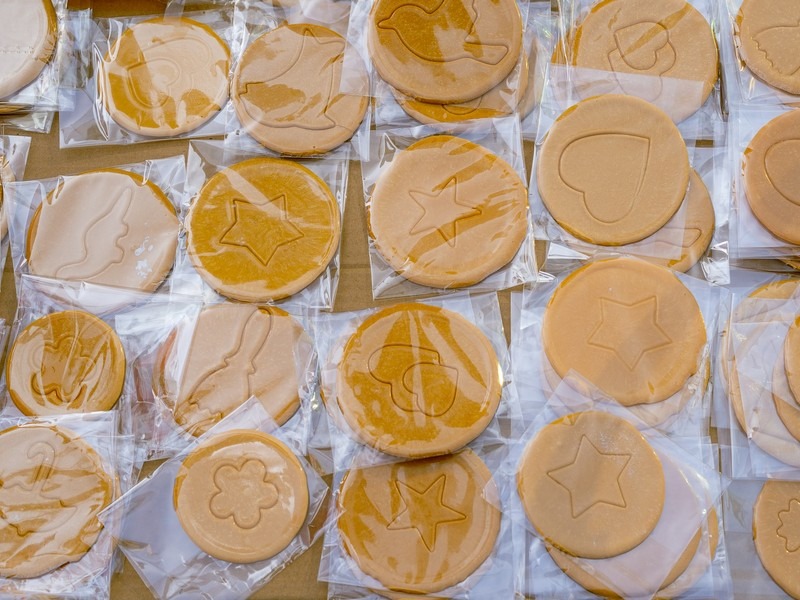
- Dalgona (달고나): Thanks to Squid Game, this sugary candy went viral worldwide and yes, you can make dalgona right at home yourself.
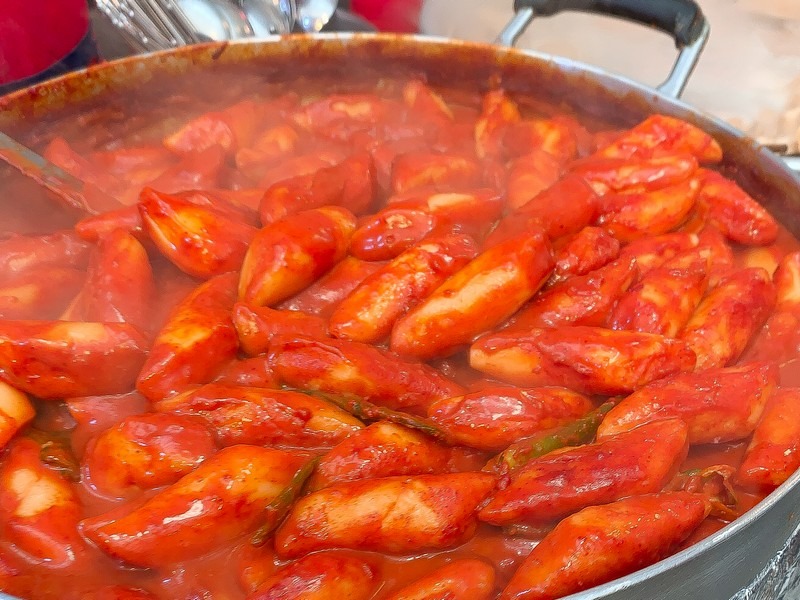
- Tteokbokki (떡볶이): Spicy, chewy rice cakes that every Korean kid, and tourist, craves. They’ve been spreading abroad and now when abroad, next to most ramens at the store, you’ll find tteokbokki too.
- Jjigae (찌개): Korean stews, from kimchi jjigae to doenjang jjigae.
- Noraebang (노래방): Korean karaoke rooms where you’ll sing your heart out until 3:00am, if you’re ready for the fun.
- Maknae: The youngest member of a group (BTS’s Jungkook, for example).
- Pansori (판소리): Traditional Korean storytelling through music, powerful, emotional, and uniquely Korean.
Learn Korean online: Whether you want to learn Korean so you can understand more of what your favorite Korean idols are saying or because you plan to live in Korea, there are a ton of resources out there to help you. Check out the online classes and apps that can help you learn Korean.
Why It Matters
The inclusion of these words isn’t just a nod to pop culture, it shows how language evolves as cultures mix. Just like sushi, tapas, or siesta became part of English, Korean words are weaving themselves into daily conversations around the globe and it’s interesting to watch how it happens and which words people start to pick up.
The Oxford English Dictionary itself said these additions are like “a wave rippling on the sea of English words.” And honestly, that feels fitting: we’re all surfing the Korean wave, one word at a time.
Next time you say “daebak” while watching a new drama, cheer your friend on with “fighting,” or crave late-night tteokgbokki, remember, you’re part of the global spread of Korean language and culture.
Did you like this post? Pin iT!