Jagalchi Fish Market: What To Eat, How To Order, and What To Know
Last Updated on July 3, 2026
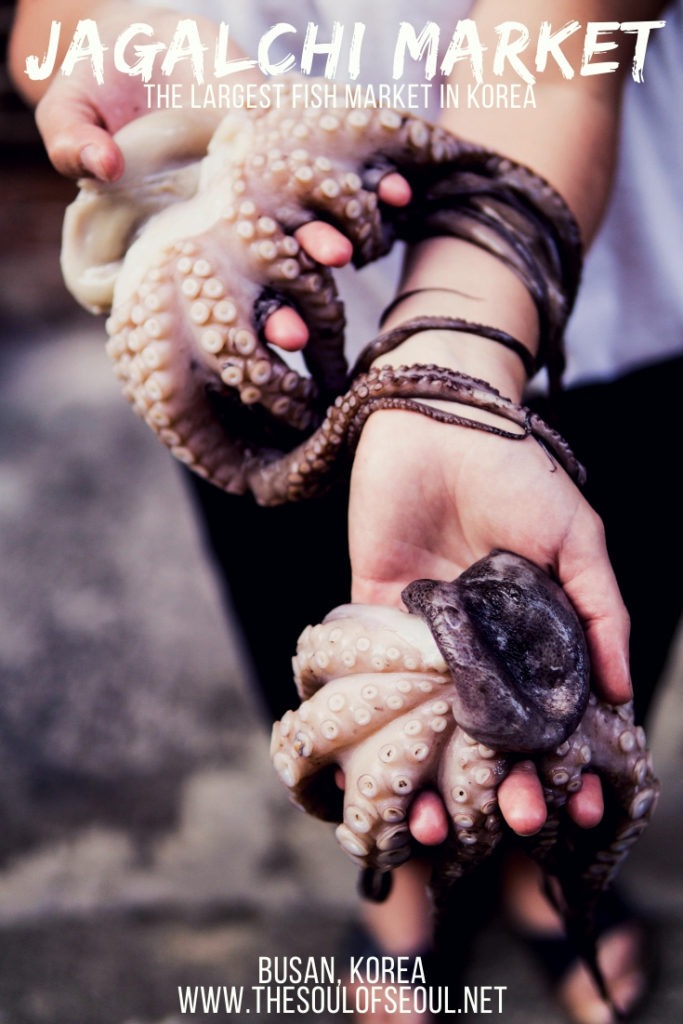
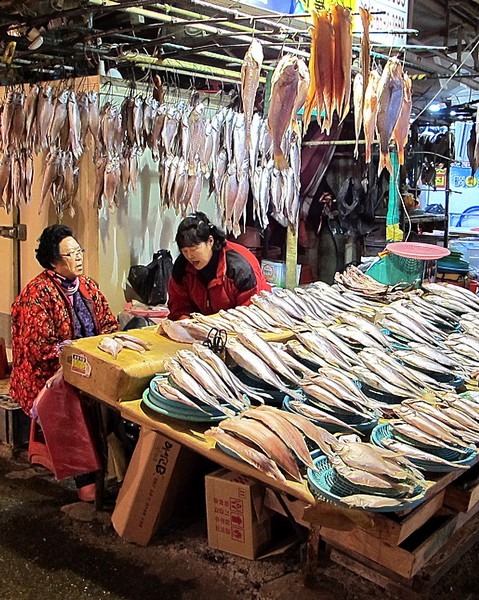
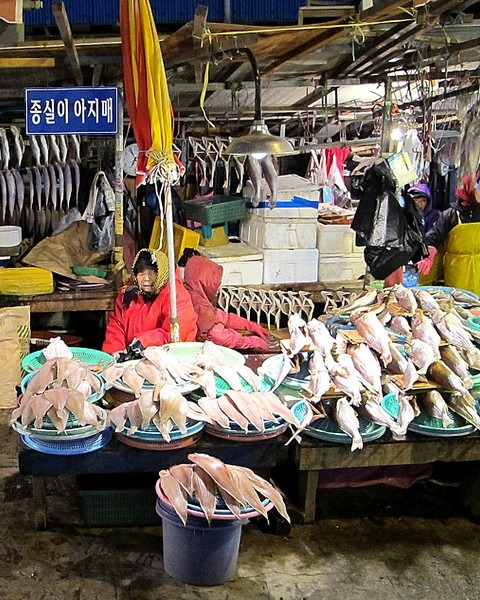
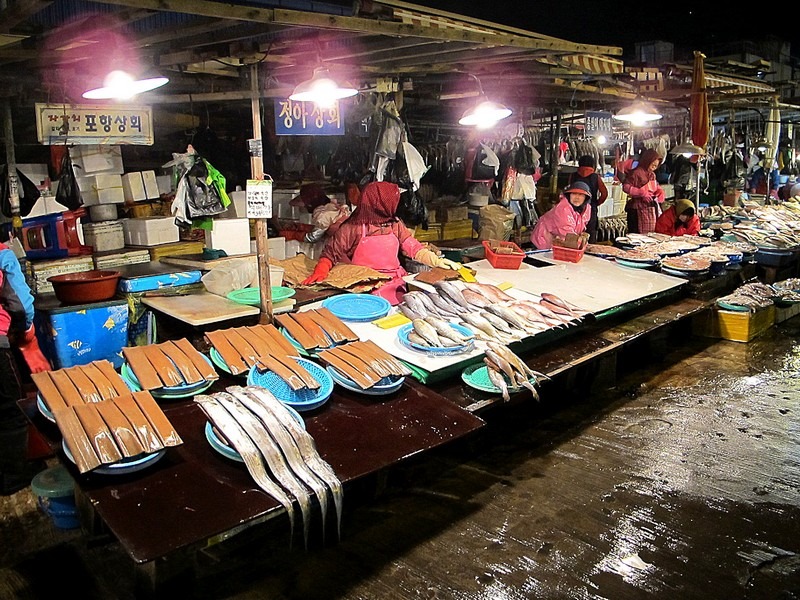
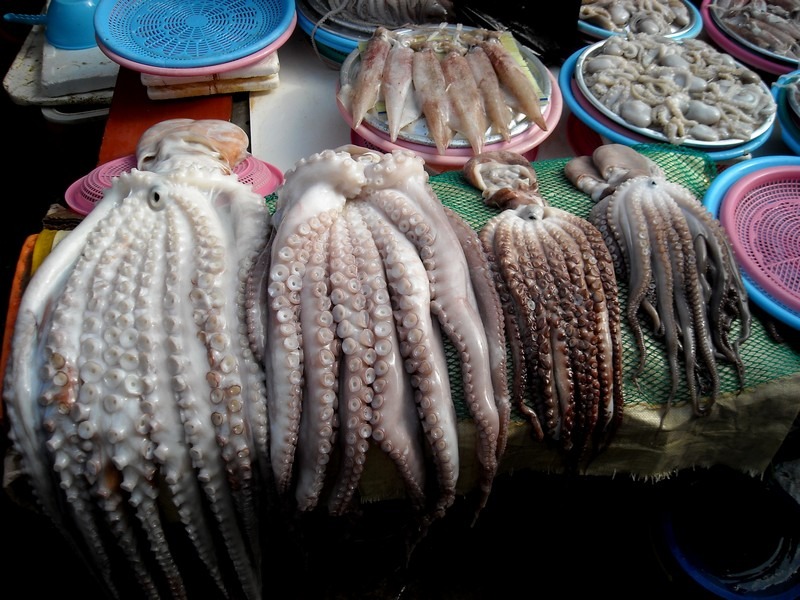
Jagalchi Fish Market (부산자갈치시장) is the largest fish market in South Korea and one of the best things to do in Busan, and that’s true even if you never buy a single thing. Walking the stalls alone is worth it: live octopus pulling itself over the edge of tanks trying to escape back to the ocean… literally, tentacles as long as your arm, shellfish you don’t have names for in English, and fish that hang drying in the booths that line the market’s watery alleyways.
Each booth is run by an older woman who may not seem particularly welcoming at first glance. That’s just the southern Busan demeanor. They’re used to foreign visitors walking through snapping photos of everything without buying anything, and they take it in stride. Come in, look around, and don’t let the initial atmosphere put you off the experience.
Fishy water and maybe some fishy guts cover the small umbrella covered alley that winds through the market. Nearby, fresh fish restaurants sit for those wanting to enjoy a good lunch or dinner after eyeing all of the goods. Planning a trip to Busan? You definitely need to have Jagalchi Market on your itinerary.
Get ready to explore Jagalchi Market:
- Basic Information To Know
- What To Wear
- Where To Start: Outside
- Korean Seafood Vocabulary
- What To Do Inside
- How To Haggle
- What To Eat and How It’s Prepped
- Get A Guide!
- FAQ
(This post contains affiliate links, which means I receive a certain percentage of a sale if you purchase after clicking at no cost to you. Thank you for your support.)
Basic Information To Know
Address: 52 Jagalchihaean-ro, Jung-gu, Busan (부산광역시 중구 자갈치해안로 52)
By Subway: Jagalchi Station Exit 10, turn right onto Jagalchi 3-gil Street
Hours: Every day: 5:00am ~ 10:00pm (Closed the 1st and 3rd Tuesdays of the month)
Highlights: October is the Jagalchi Fish Festival
Website: http://www.jagalchimarket.org/
Join a tour:
- You can book the Busan Seafood Tour & Dinner with Busan Oppa on Klook
- Book the Gamcheon Culture Village & Jagalchi Fish Market Walking Tour on Klook.
The Busan Itinerary Pack – 6 Busan Itineraries
$14.00
What To Wear
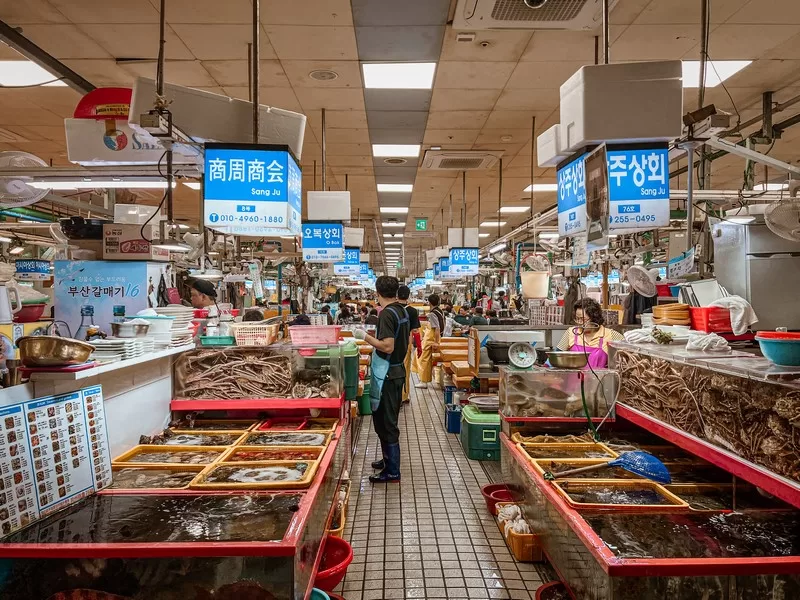
Fish markets are wet. The seafood is kept alive in tanks, which means water is constantly flowing in and through hoses out across the floor. This is a good thing for freshness, whether you visit at 7:00am or 7:00pm, the seafood is fresh, but not a good thing for nice shoes or open-toed sandals. Closed-toe shoes you don’t mind getting wet are the practical call. You could definitely wear sandals if you want, just know that your feet will likely get wet at some point so if you’re fine with that, it’s all good.
The Jagalchi building is largely covered and more protected than many outdoor markets, but between the constant water flow and occasional fishy runoff in the alleys, your footwear will get the worst of it.
Where To Start: Outside
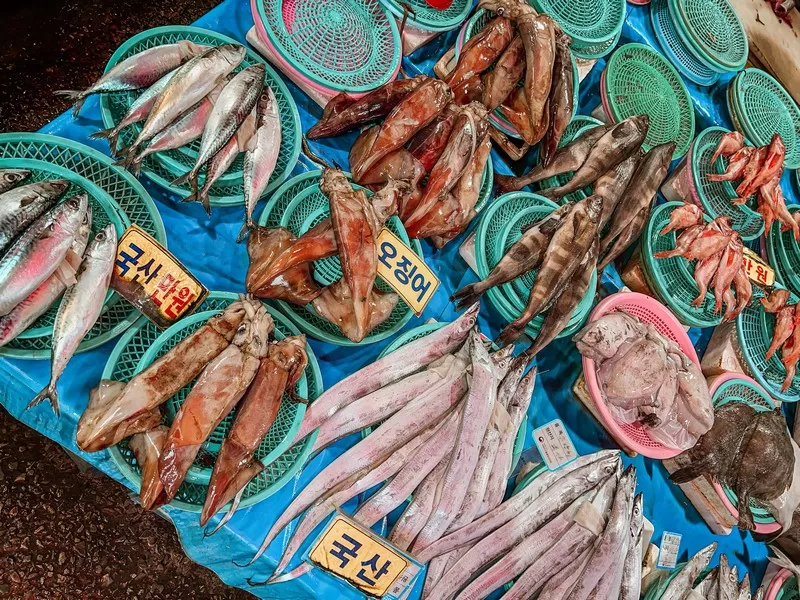
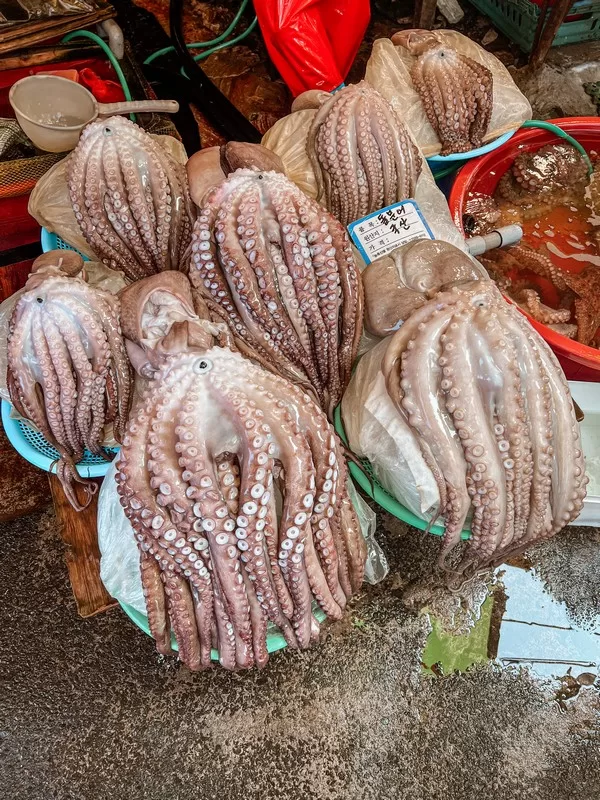
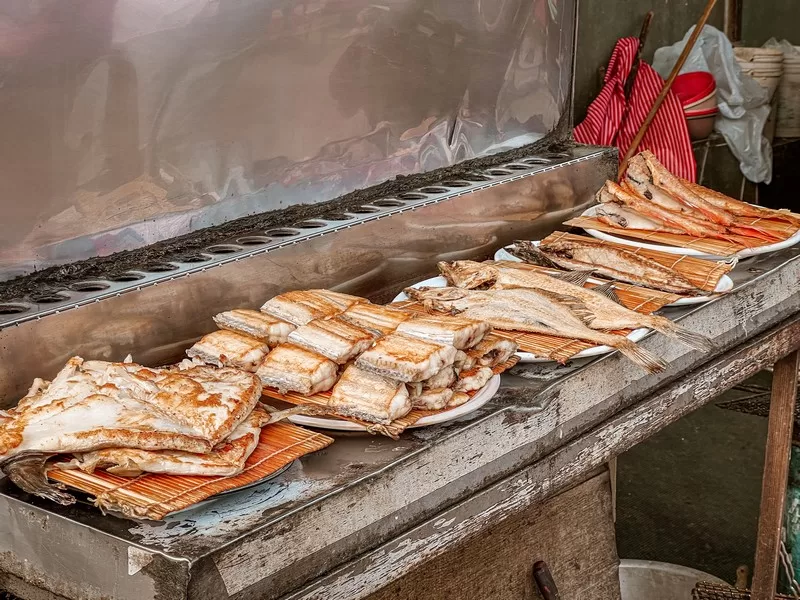
When you approach the Jagalchi Market, you’ll see that there are two buildings and a long outdoor alley that is lined with fish stalls. Live octopus in buckets of water slowly pulling themselves over the edges trying to escape back to the ocean only to be caught by the old woman selling them, or octopus with tentacles as long as I am tall still get me gawking in wonder. Fish that I’ve never seen before and don’t have names in English other than the scientific biology class kind of names because Westerners don’t eat them and fish that I have seen but wouldn’t have imagined were edible hang drying in the booths that line the fish market.
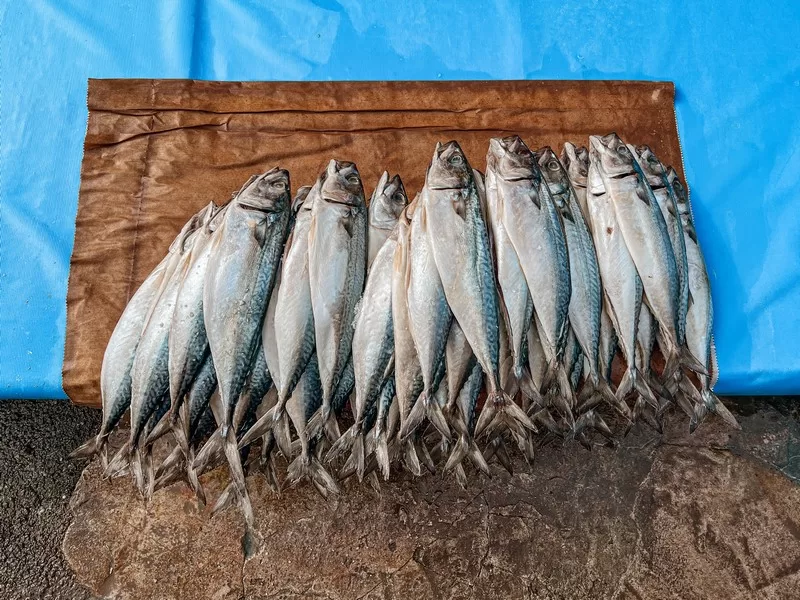
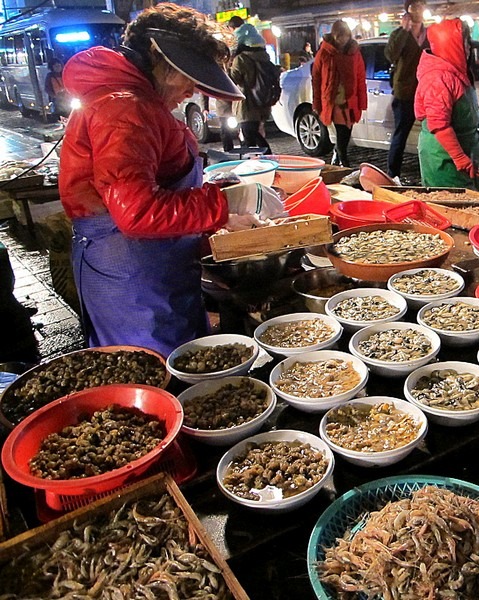
Buckets of shell fish, tanks of live fish squirming around, fish hanging to dry and more make for some great pictures and a good introduction into understanding Korean cuisine, especially the southern cuisine. There are smaller stalls and restaurants here too with vendors that will try to usher you in. Take them up on the offer if you like what they’re selling.
What I like to do first, especially if I’m visiting with someone who has never been there before, is walk along this outdoor alleyway pointing out the various seafood options. Outside, it’s a bit less chaotic than indoors and with the open sea air, it’s just a great introduction to the Jagalchi experience.
Korean Seafood Vocabulary
Going through a market like this without knowing what you’re ordering is how you end up with something unexpected on the plate, not necessarily a bad thing, but good to go in prepared. Here are the key terms.
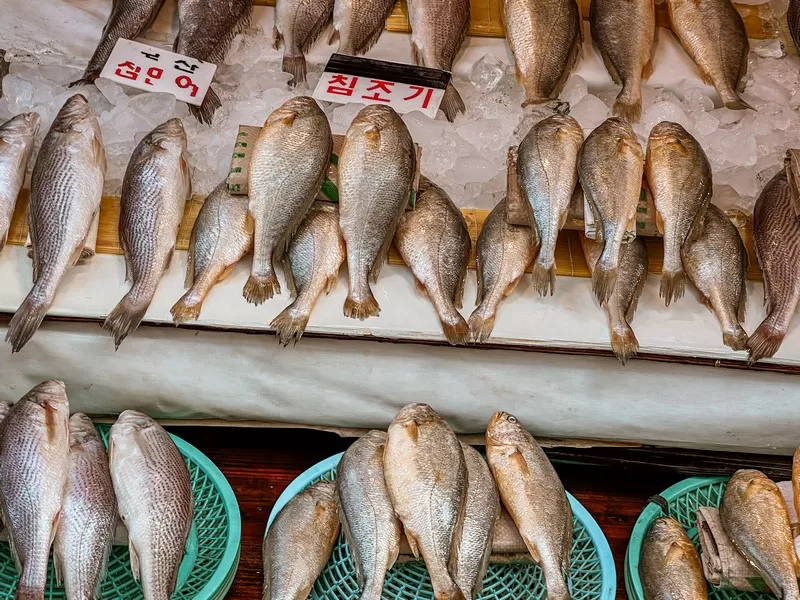
Fish:
- Bass: 농어 (nong-uh)
- Flounder: 광어 (gwang-uh)
- Cod: 대구 (dae-goo)
- Rockfish: 우럭 (ooh-luck)
- Salmon: 연어 (yeon-uh)
- Tuna: 참치 (cham-chi)
- Yellowtail: 방어 (bang-oh)
- Eel: 장어 (jang-uh)
- Mackerel: 다랑어 (darang-oh)
Hweh (회): Raw fish, Korean style. Unlike Japanese sashimi, hweh is typically dipped in chojang (초장), a tangy red sauce, and wrapped in leaf vegetables (ssam, 쌈) or sesame leaves (kkaennip, 깻잎). Laver is often on the table too.
Common hweh fish: salmon, tuna, rockfish, flounder.
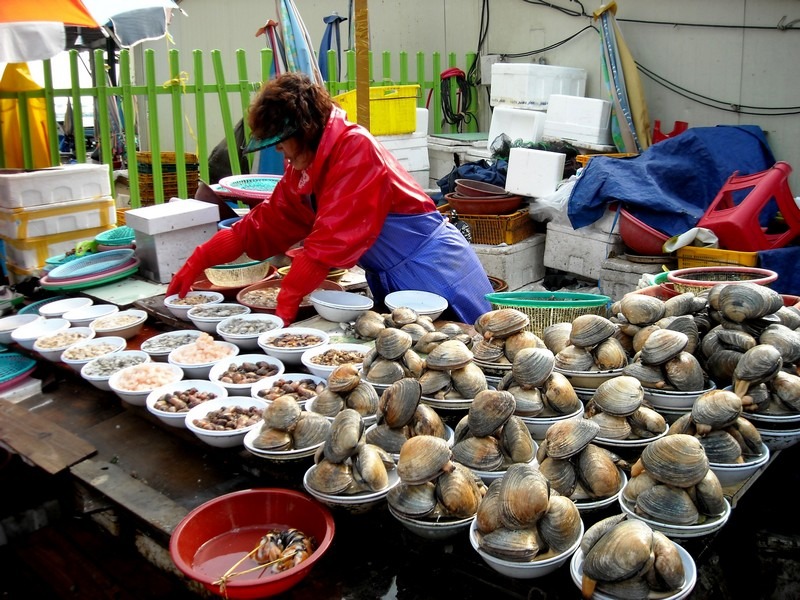
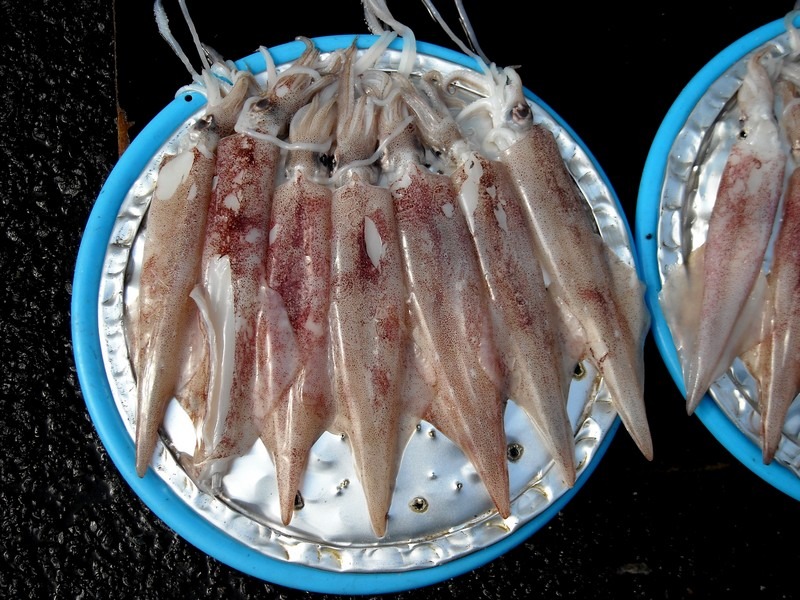
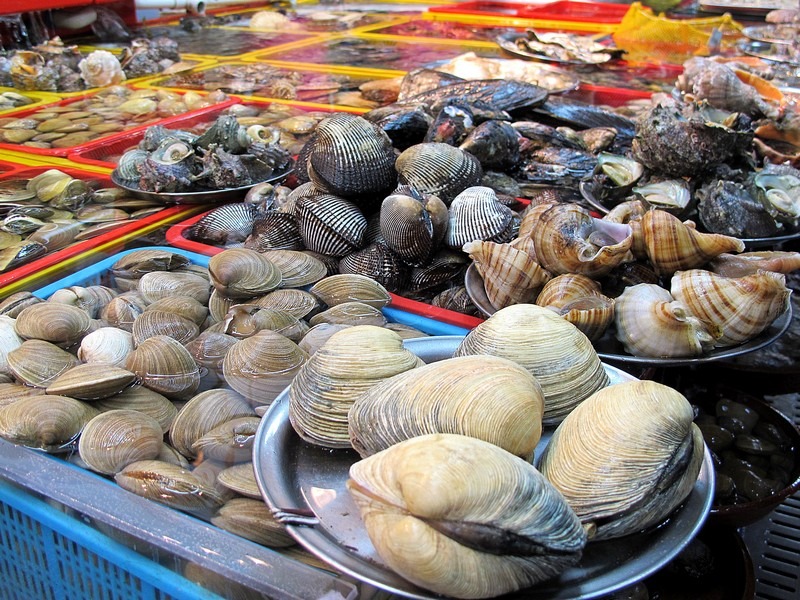
Shellfish and Other Finds:
- Shrimp: 새우 (sae-ooh)
- Lobster: 바닷가재 (ba-dat-ga-jae)
- Crab: 게 (gae)
- Scallops: 가리비 (gah-ri-bi)
- Oysters: 굴 (gool)
- Clams: 조개 (jo-gae)
- Abalone: 전복 (jeon-bok)
- Live Octopus: 산낙지 (san-nak-ji)
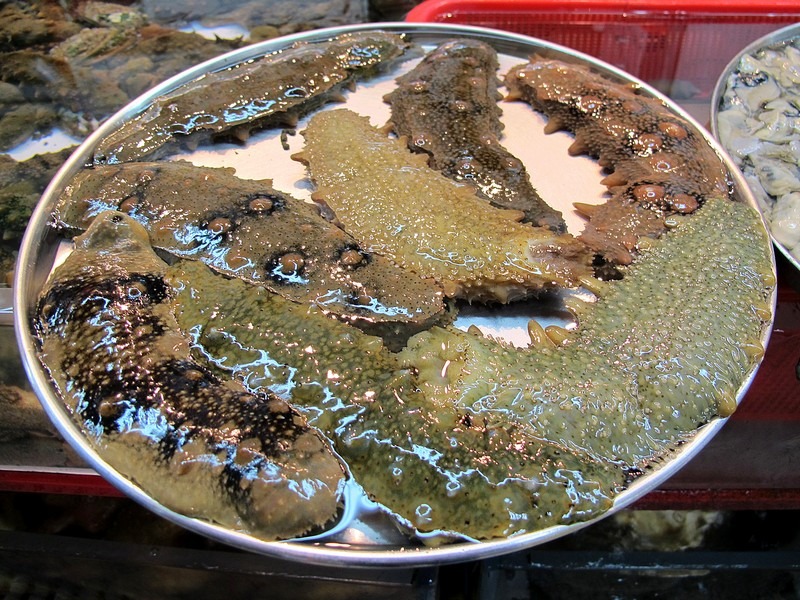
- Sea Cucumbers: 해삼 (hae-sam)
Two worth knowing specifically:
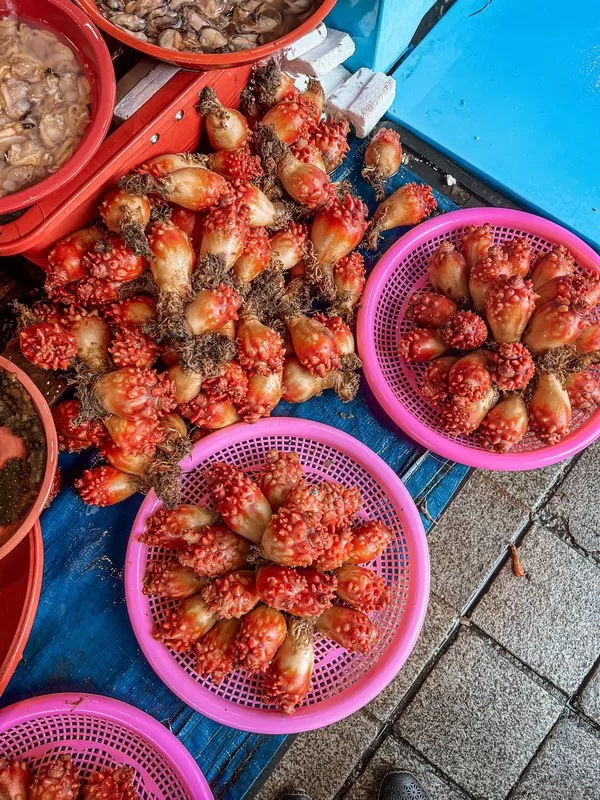
Gaebul (개불), or penis fish / sea worms: Eaten raw, dipped in salty sesame oil. Once you see it, you’ll understand the nickname. American fishermen throw these back according to my uncle who owns a fish company. Korean fishermen found a way to enjoy them.
Sea cucumbers (해삼, hae-sam): Often served alongside the gaebul and much saltier, so usually dipped in chojang instead. If you order one, order the other.
What To Do Inside
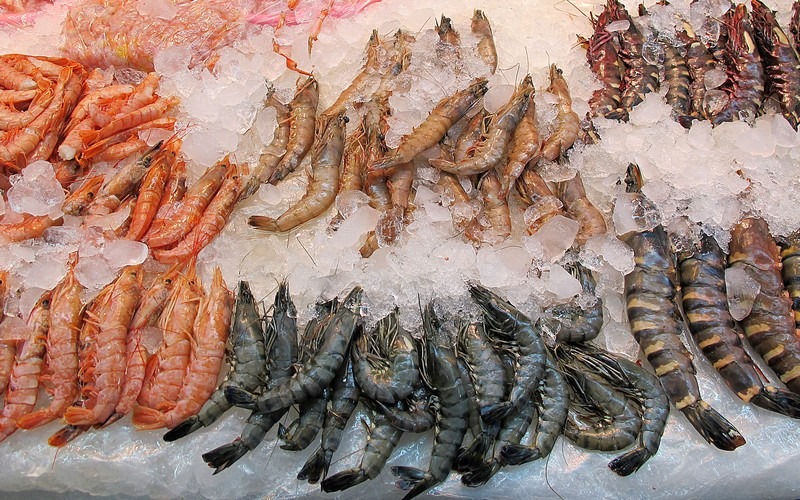
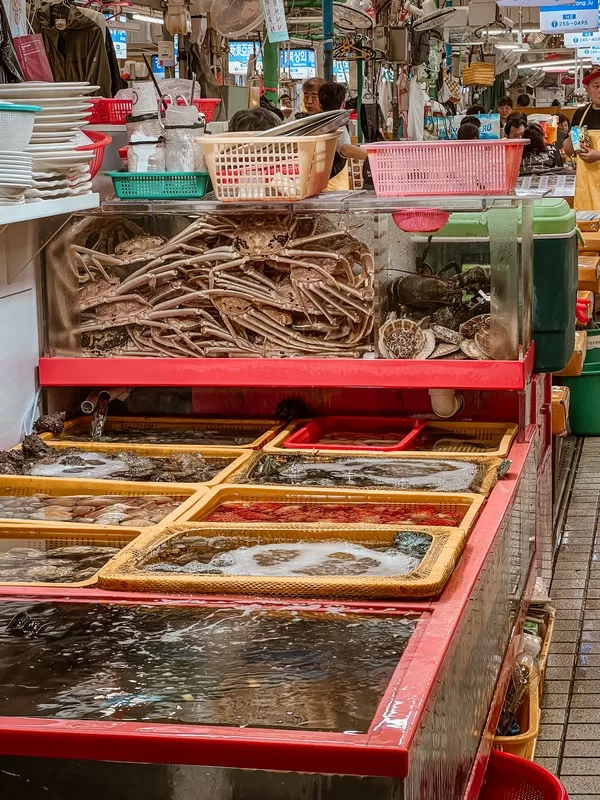
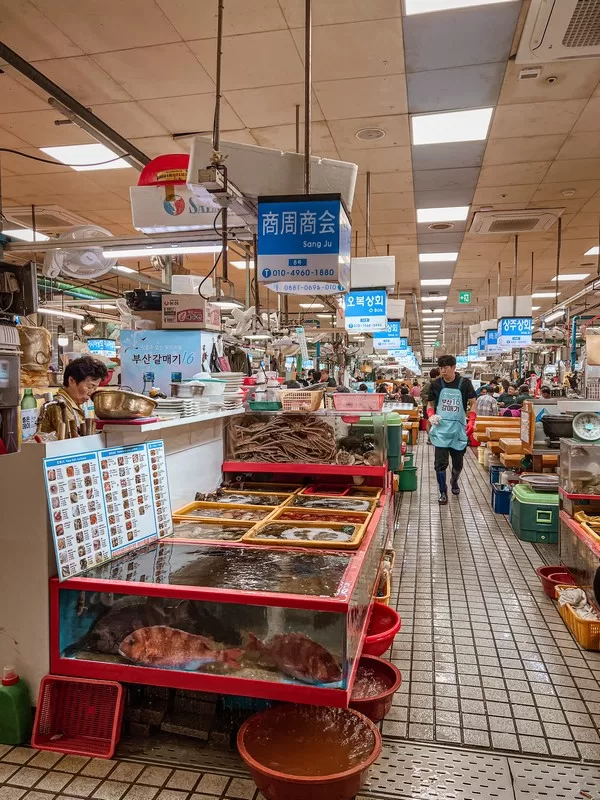
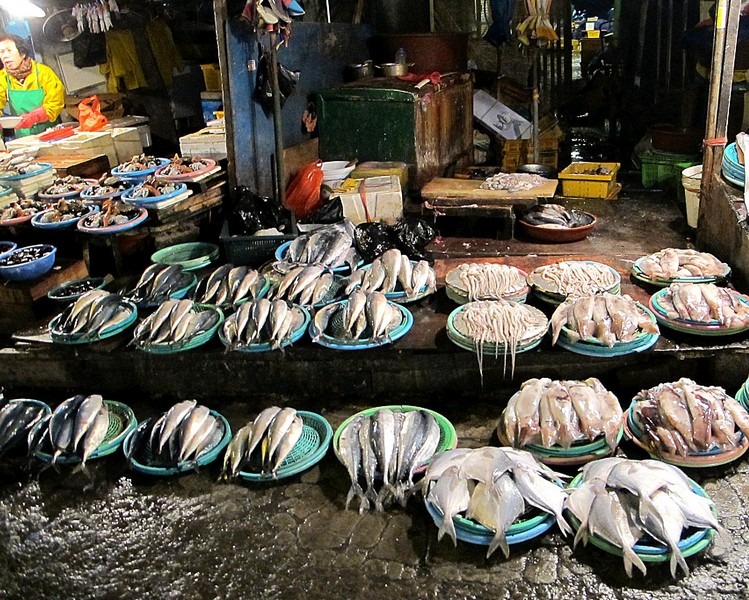
Step inside and you’ll see tables set up for diners and rows and rows of vendors with tanks filled to the brim with seafood. Huge fish, whole squid, shrimp and prawn the size of a forearm, scallops, crab, abalone, live octopus in tanks, all of it organized by vendor and running the length of the covered market. If this is your first fish market, it will feel overwhelming.
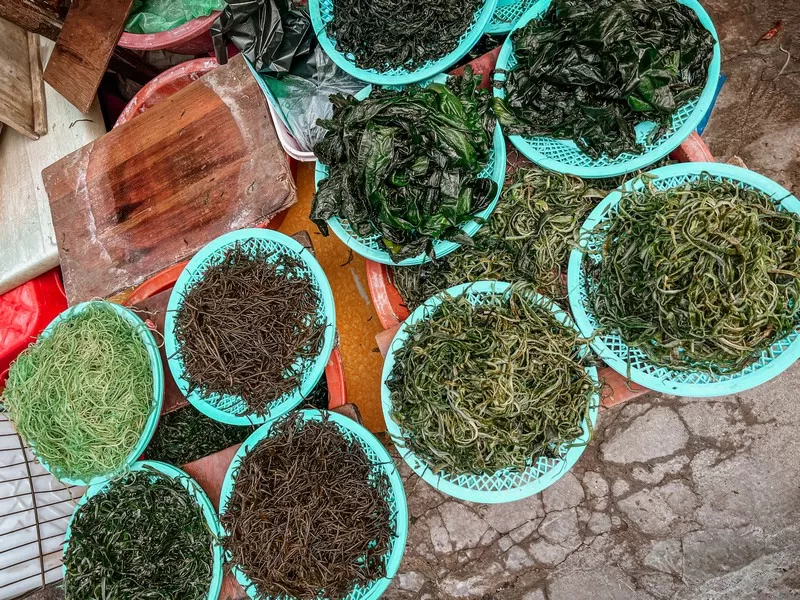
Living in a country that is surrounded on three sides by water, means that I’ve had to get used to eating a lot more fish than I grew up on. Raw fish, cooked fish, dried fish, baked fish, fried fish… it’s all eaten here and you can find fish markets in every coastal city. Even small areas like Seocheon-gun have their own fish market. Maybe it’s because I came from the American Midwest where fresh fish wasn’t so prevalent that one of my favorite things to do is walk around the fish market.
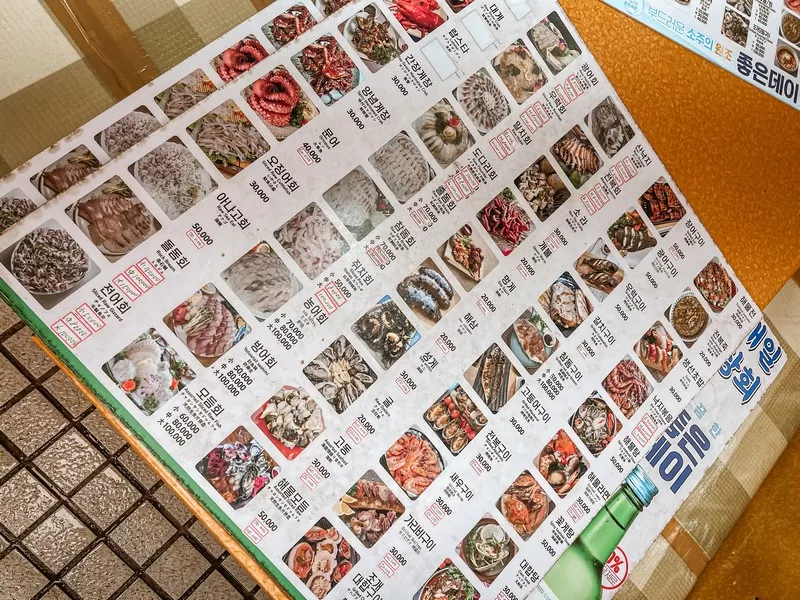
Inside, you have two options, you can go straight to the fish stalls, choose the fish you want and the vendor will help you get a seat at a nearby table with the side dishes and soups. They’ll prep the fish for you there. Or, you can just choose a place to eat, order, and they’ll work with their favorite vendor to get the meal going.
How To Haggle
I have spent years in Korean fish markets and I still let my husband handle the seafood negotiations. He knows which fish go well together and how to get the right mix for a table without overspending. I sit and watch as he takes the reins and before I know it, delicious things are in front of me. Sometimes, it’s me with a group of tourists though and then I have to sort it out.
Often tourists will go for what they recognize, things like shrimp, crab and lobster. Of course, these are also the more costly things and while my husband and his friends tend to go with some white fish and shellfish, my friends decided to go big.. and then go home. A choice that is certainly valid if you’re going for a bang.
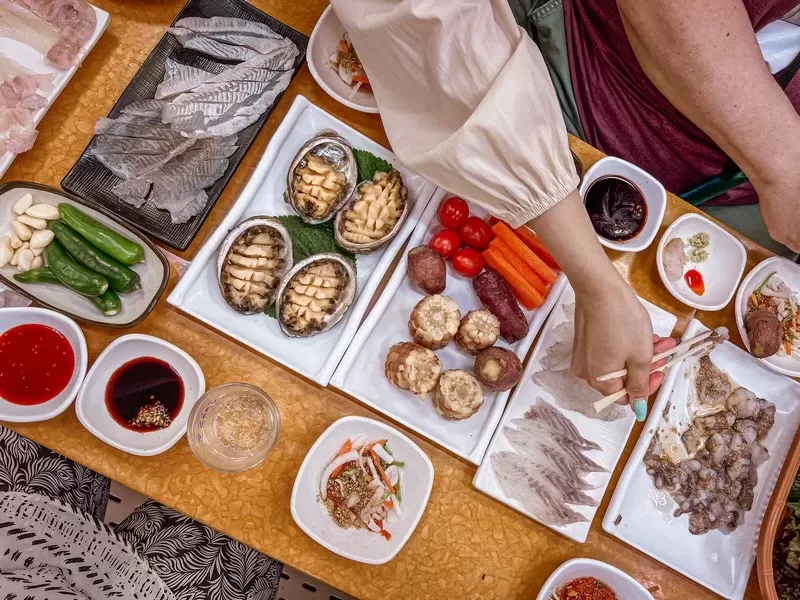
What my husband orders when he’s with a group: sea bass hweh, flounder hweh, an assortment of raw white fish really, along with sea squirts, penis fish, and sea cucumber. If we’re going all out, we’d also get grilled abalone, and at the end of the meal is maeuntang, a spicy seafood stew that uses all of the leftovers from the fish. With our daughter, we’d also get some grilled fish, her favorite is grilled mackerel. Octopus is also another great option.
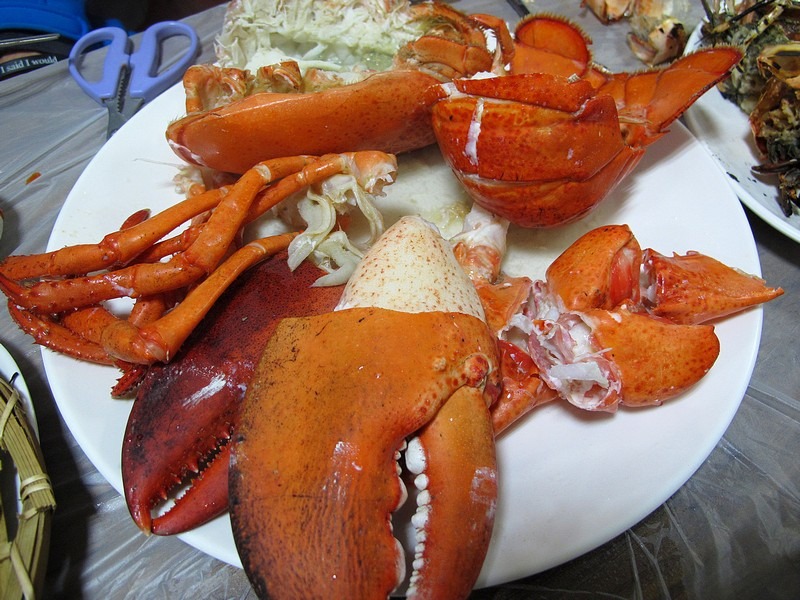
What my friends wanted when they had just arrived from the States: crab and lobster, which are expensive, but massive and it was decided that a lobster and two gigantic prawn would do. I added some munggae (멍게), or sea squirts, and gaebul (개불), or the commonly called “penis fish”, to the mix so there was something different on the table for them to try. You can’t come to Korea and NOT try “penis fish”. Right??
What To Eat and How It’s Prepped
As soon as the goods were selected, they were cleaned, sliced and diced as needed and whisked upstairs to be prepared. Those at the tables near us ogled our huge lobster. Clearly not many people take a huge lobster upstairs to be prepared.
The server will ask what you purchased and coordinate the preparation. For shellfish, you choose your cooking method: steamed (jjim / 찜) or grilled (gwi / 구이). The women upstairs immediately asked how we wanted things cooked and weren’t quite sure how lobster, prawn, sea squirts and gaebul were supposed to go together.
This is one thing I love about Koreans. They have very specific foods that they think go together for a meal and then subsequently “know” which alcohol should go with it. Our mix and match of fishy foods wasn’t really what they were expecting.
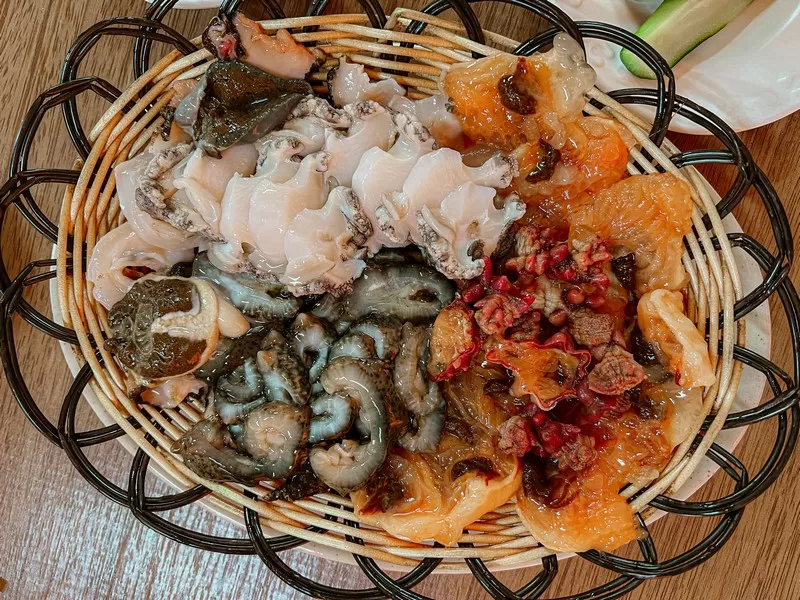
Sea squirts and gaebul are eaten raw and usually accompany hweh, or Korean style sashimi, on the table. We had no other raw fish and they couldn’t understand why. I explained it was just to try and the real meal would be the steamed lobster and prawn. They headed into the kitchen to see what they could come up with.
Preparation fee: Roughly W5,000 per person for standard preparation. Something large like a whole lobster runs higher, around W8,000 extra. There’s also typically a small seating fee of ₩2,000-₩4,000 per person. No tipping in Korea, so factor this in and move on.
Specific preparations worth requesting:
- Salt-grilled shrimp (새우소금구이): The salt-grilling method makes the shells brittle enough to eat whole, shell and all. Worth requesting specifically.
- Butter-grilled scallops (버터구이): Can also be steamed, but if the restaurant offers it, the butter-grilled version is excellent.
All was prepared magnificently and though the visitors didn’t like the munggae or gaebul as much as the more common lobster and prawn, they still tried it and could go home to tell their friends of the strange fishy treats they had while in Korea.
Closing with maeuntang (매운탕): About halfway through the meal, order maeuntang. This is a spicy soup made from the fish bones and head, cooked with vegetables in a chili broth. It uses everything that would otherwise go to waste and is the traditional way to close a Korean seafood meal. Pair it with soju or beer (maekju).
Get A Guide!
If you want to head to Jagalchi and you’re like my friends and may need some help picking eats out or just knowing what is what, definitely get a guide. It took me years to know what was what and what to buy when I visited fish markets or just restaurants here. Here are some of the options to look into:
If You Enjoy Eating: Walk through the market and barter for the goods, and then eat it up. You’ll be able to try the crab, abalone, scallops, shrimp, sashimi and you can even get spoon worms, small octopus, and sea squirts if you want to try more. You wouldn’t be able to buy and try this all on your own so if you’re interested in seafood, definitely check out this awesome tour option here.
FAQ
When is Jagalchi Fish Market open?
5:00am-10:00pm daily, closed on the 1st and 3rd Tuesdays of each month.
Is there a best time to visit Jagalchi Market?
Morning gives you the freshest selection and the most active market atmosphere. Evening is still lively and the seafood is still fresh from the tanks. October brings the annual Jagalchi Fish Festival, worth planning around if your trip allows.
Do I need to speak Korean to visit Jagalchi?
Not strictly necessary, but some basic food vocabulary helps enormously (see the guide above). For a first visit, a guided tour removes most of the language friction.
What should I actually order at Jagalchi?
Hweh (raw sliced fish) is the classic order, typically flounder or rockfish. Salt-grilled shrimp and butter-grilled scallops are strong picks. The adventurous order includes gaebul and munggae alongside whatever fresh fish caught your eye on the floor.
What happens after I buy seafood downstairs?
Head upstairs to the restaurant level connected to your vendor. The prep fee runs around ₩5,000 per person for standard items, higher for something like a whole lobster. Choose steamed or grilled for your shellfish, and close the meal with maeuntang soup made from the fish bones.
What is the penis fish at Jagalchi?
Gaebul (개불), a type of sea worm eaten raw and dipped in sesame oil. It has a mild, slightly salty flavor and a very specific shape. American fishermen throw it back. Koreans eat it. Try it at least once.
Jagalchi is one for the slow travelers. Take your time, look at everything, ask questions, and order something you’ve never heard of before. The lobster is impressive. The gaebul is the story you’ll tell when you get home. Come hungry, wear closed-toe shoes, and let your husband handle the haggling if you can.
Did you like this post? Pin It!