Cold Korean Soups: 9 Dishes To Beat the Summer Heat
Last Updated on June 12, 2026
When summer hits Korea, it can be pretty hot, humid, and sweaty, well, for foreigners anyway. My Korean husband seems to only sweat when he’s eating hot soup. Traditional Korean belief promotes the idea of iyeol chiyeol (이열치열), or fighting heat with heat, aka eating HOT soups on the HOTTEST days to feel cooler afterward. Not all Korean summer food follows this logic, though.
Some of my favorite summer meals in Korea are when we sit down to a delightfully cool bowl of cold soup that may or may not also have ice cubes floating in it. Before coming to Korea, the only cold soup I knew was gazpacho. Gazpacho does not have the market cornered when it comes to Korean cuisine though.
Here are the cold Korean soups worth seeking out this summer.
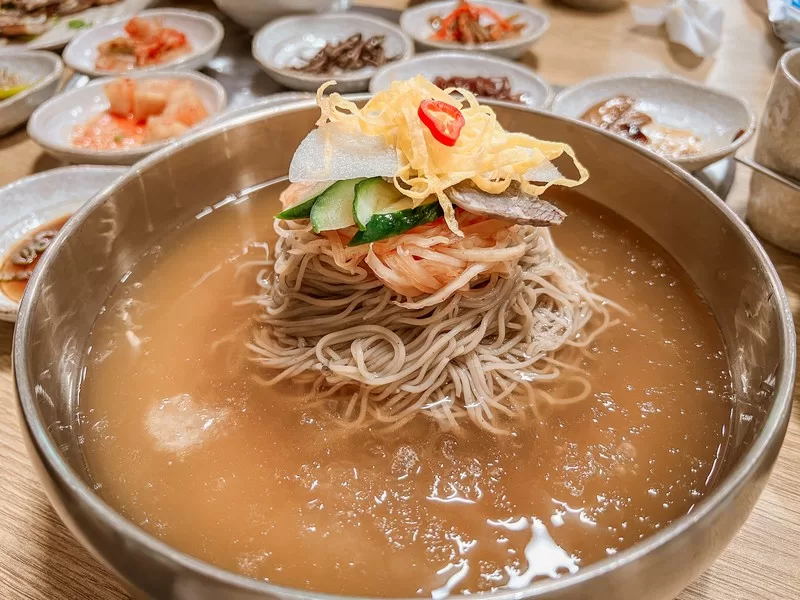
Trust me, they are not only pleasantly cool, but they are tasty and will definitely hit that hot spot in your belly.
- Why Koreans Eat Cold Soup in Summer
- Kongguksu (콩국수)
- Pyeongyang Naengmyeon (평양냉면)
- Mul Naengmyeon (물 냉면)
- Milmyeon (밀면)
- Yeolmu Guksu (열무국수)
- Oi-naengguk (오이냉국)
- Chogyetang (초계탕)
- Makguksu (막국수)
- Mulhoe (물회)
- FAQ
(This post contains affiliate links, which means I receive a certain percentage of a sale if you purchase after clicking. These funds go to maintain the site. Thank you for your support.)
Why Koreans Eat Cold Soup in Summer
Iyeol chiyeol (이열치열) is the traditional Korean belief that heat cures heat, eating hot food on the hottest days drives out the body’s heat and makes you feel cooler afterward. You’ll see this at work on Boknal days (Korea’s three hottest calendar days) when everyone seems to be eating scalding samgyetang in 35-degree heat.
The cold soups below represent the other side of Korean summer eating: the dishes designed to cool you down directly. Ice cubes floating in soup are not unusual. Cold buckwheat noodles served just above freezing are standard. These dishes are not afterthoughts, they’re a developed culinary tradition that takes the heat seriously, as seriously as any visitor should take it because Korea can get HOT in the summer.
Kongguksu (콩국수)
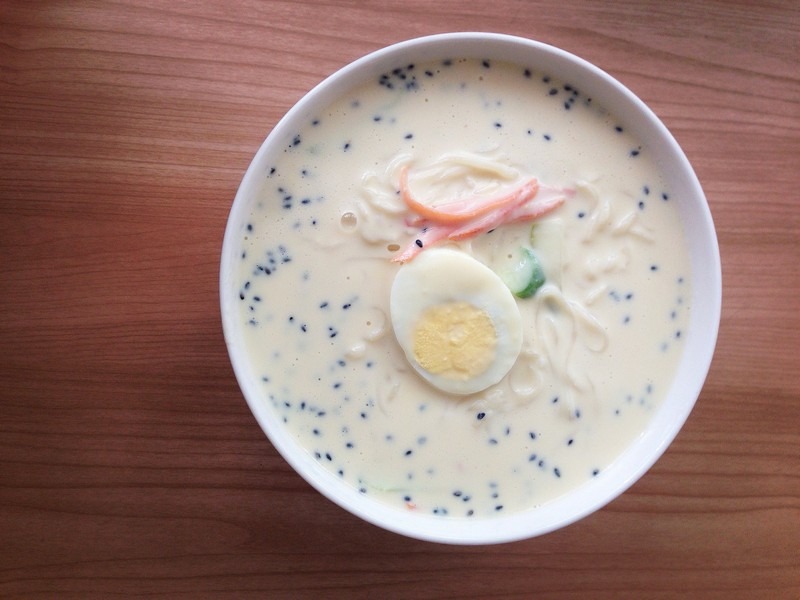
Cold soy milk noodle soup. Kongguksu is one of those soups my husband gets urges for every summer without fail and now so do I. He takes his time with the noodles and then gulps down whatever soy milk broth is left at the bottom of the bowl. The whole thing is refreshing and filling without being heavy.
The soy milk here is not the sweetened, commercial soy milk you find in cartons. Kongguk (the soy milk base) still has its natural fiber and the small bits of soybean that make the flavor noticeably nuttier and thicker. It’s less sweet than most packaged soy milk so don’t picture pouring your soy milk in the fridge on top of noodles and calling it a meal. This is more savory. The broth is thicker than water broth and takes a sip or two to calibrate to, but most people find themselves finishing the bowl.
The noodles are handmade wheat noodles, served in the cold soy milk broth with cucumber, carrots, sesame, and a boiled egg. The broth is the thing you’ll remember.
Eating tip: Add salt to taste. Like I said, this isn’t a sweet dish. There’s usually a dish of salt on the table which you add to this just prior to eating.
Pyeongyang Naengmyeon (평양냉면)
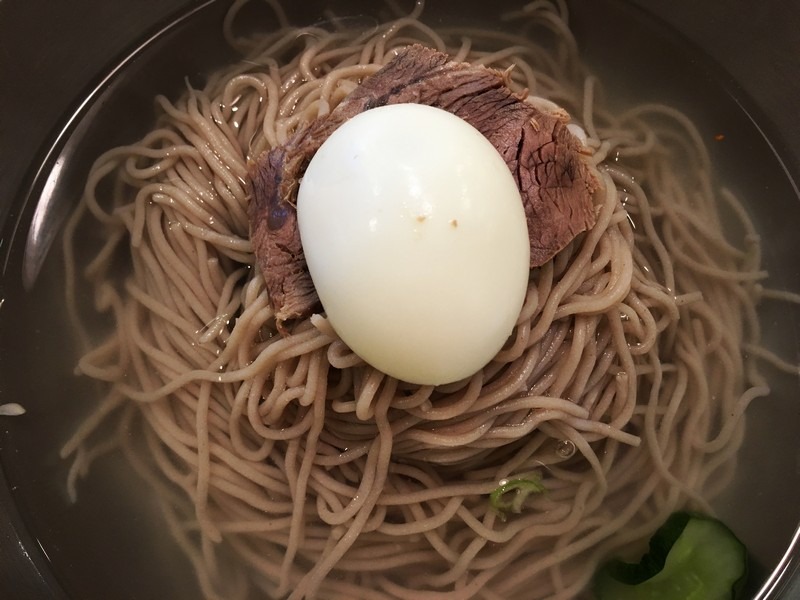
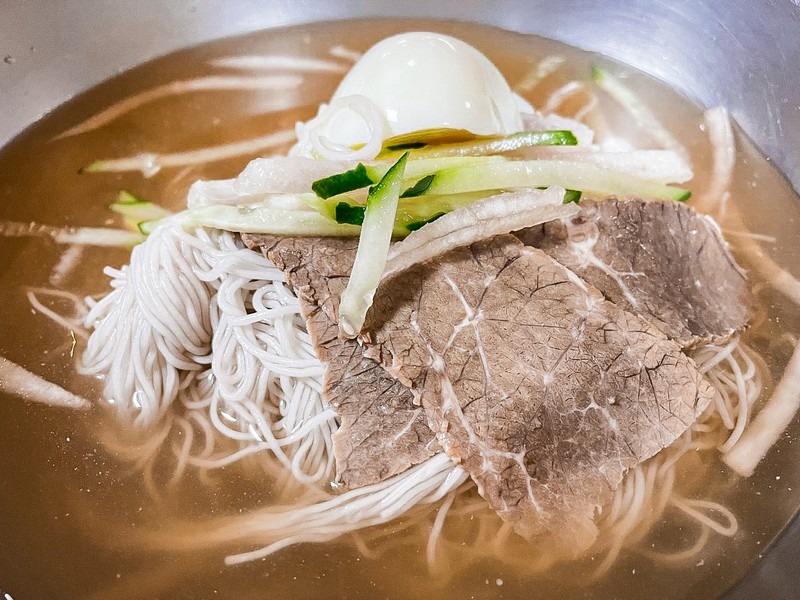
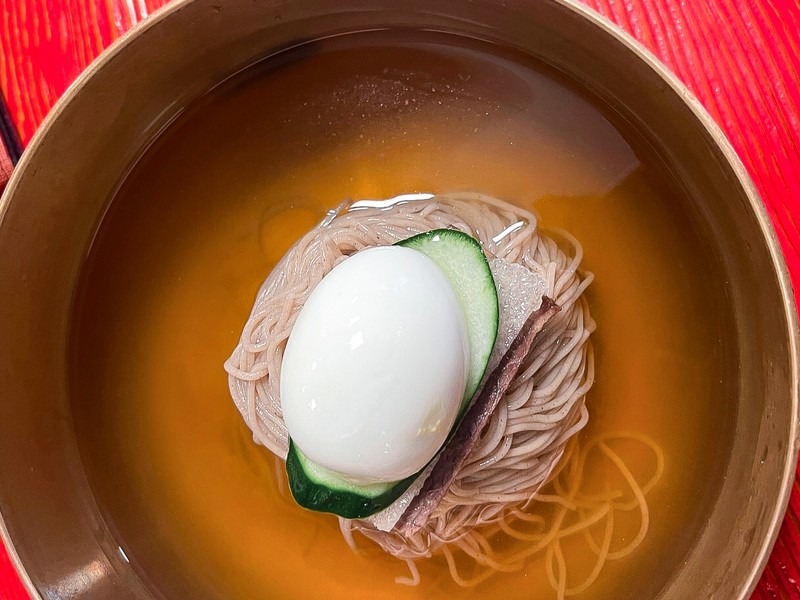
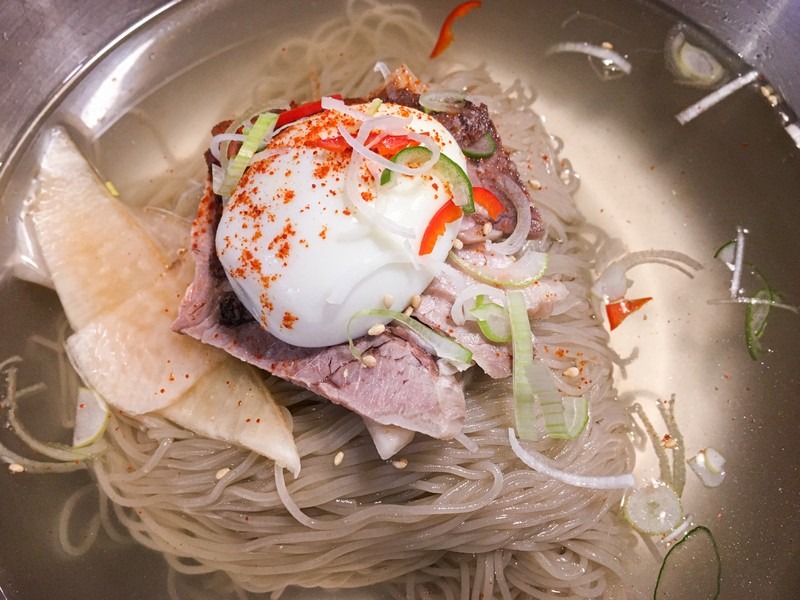
Buckwheat noodles in a cold, mild beef broth, the most famous of Korea’s cold noodles, and the most debated. Naengmyeon has been made in Korea since the Joseon Dynasty and was a delicacy of northern Korea, particularly Pyeongyang. It became widely available in the South after the Korean War brought northern refugees and their food traditions.
My husband loves it. He has a strong opinion about where to eat it in Seoul, we frequent Eul Mil Dae, a Pyeongyang naengmyeon restaurant that’s been open since the 1970s. I’ll be honest: I like other naengmyeons better. The mild broth, the chewy buckwheat noodles, the cold beef and water kimchi, it’s subtle to the point where, the first time I ate it, I wasn’t sure anything had happened. Then I was walking down the street afterward and had the sudden, clear urge to go back and eat more. My husband said that was proof I was a lover and not a hater.
Pyeongyang naengmyeon is a love-it-or-hate-it dish. The broth is deliberately restrained and the flavor arrives quietly. Don’t expect it to announce itself.
Mul Naengmyeon (물 냉면)
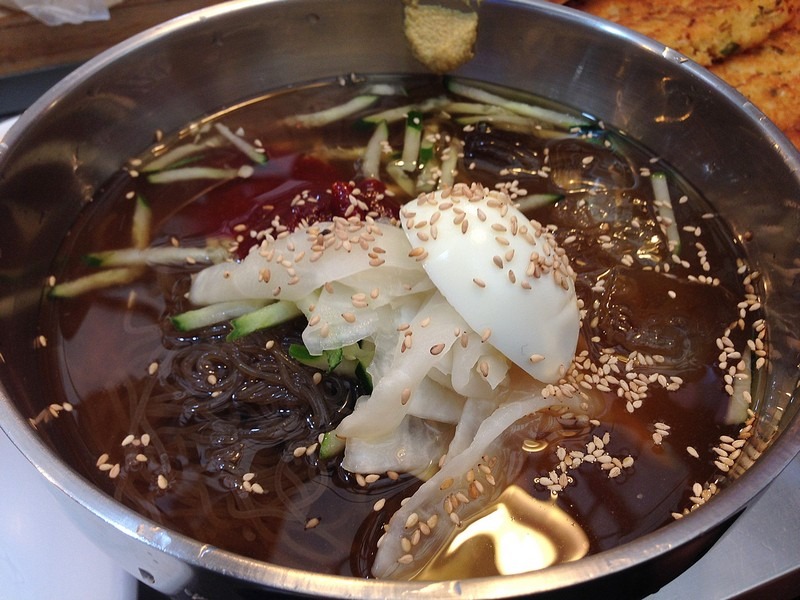
The spicier, tangier cousin of Pyeongyang naengmyeon. The buckwheat noodles are the same, but the broth is more assertive and served with julienned cucumbers, sliced Korean pear, radish, a boiled egg or cold boiled beef, with spicy mustard and vinegar making the broth tangy and bright.
Long buckwheat noodles were traditionally eaten whole without cutting, symbolizing longevity and good health. These days, your server will almost certainly offer to cut them with scissors. Take the scissors. The noodles are long and chewy and eating them whole is more commitment than most people want to make at lunch.
Ice cubes float in the bowl to keep it cold as you eat. My husband and I are technically not supposed to pick up the bowl and drink the broth directly in Korean dining etiquette. We do it anyway. We cannot stop.
Milmyeon (밀면)
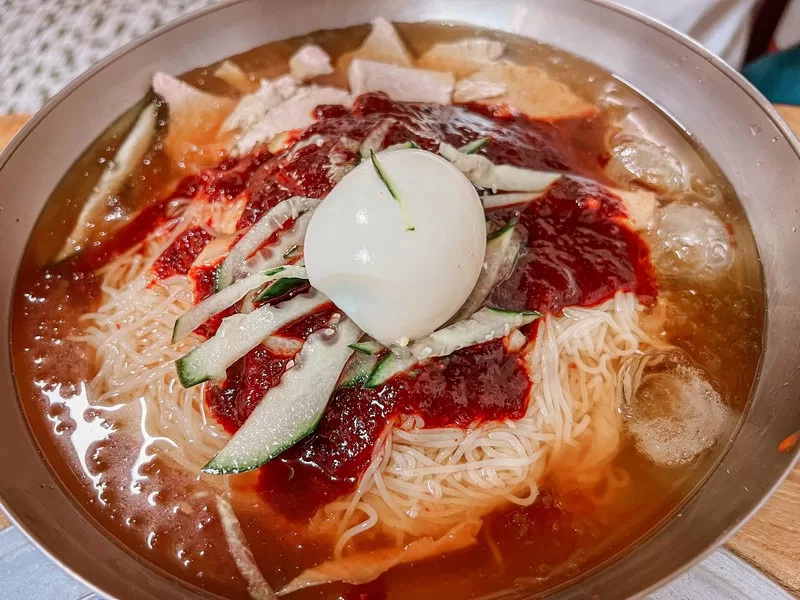
One of my Busan-native husband’s favorites, milmyeon originated in Busan on the southern coast of Korea and is a variant of northern naengmyeon. Rather than buckwheat noodles like in naengmyeon, northern refugees in Busan came up with somyeon, wheat flour noodles, made with flour from American rations.
There are two varieties of this soup, bibimmyeon made with a spicy gochujang sauce and mul milmyeon served on an icy-cold broth, perfect for a cold summer pick-me-up.
Yeolmu Guksu (열무국수)
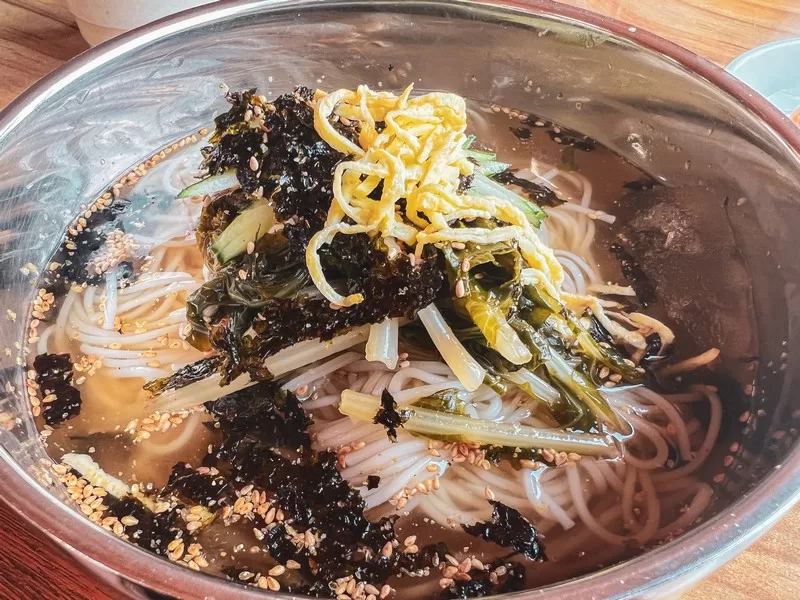
Yeolmu is a tender young radish green that’s made into yeolmu kimchi, a light, grassy, and slightly tangy side dish. It’s quick to ferment and in the summers you will find it served with noodles and ice. This one is a favorite among Koreans craving something fresh but still full of flavor in the summer. Try it if you spot it. It will definitely grow on you if you like a little tangy, sour punch to your cool summer soup.
Oi-naengguk (오이냉국)
Cold cucumber soup, the most approachable and simple of the six dishes here and one of our family favorites as cucumber fiends. Thin-sliced cucumber in a cold broth of soy sauce, sesame, and vinegar, sometimes with a small amount of chili for a gentle heat. It’s light enough to serve as a starter or side dish alongside heavier summer meals, and quick to make at home if you want to recreate it.
Oi-naengguk is generally vegetarian-friendly though you’ll want to check if the place you’re eating it at is using anchovy broth or not. It’s the dish on this list most likely to appear at a Korean family table on a hot weekday as a simple, cooling side, rather than a restaurant destination. If you encounter it, try it. It’s refreshing in the way a particularly good cucumber salad is refreshing, but cold and soupy.
Chogyetang (초계탕)
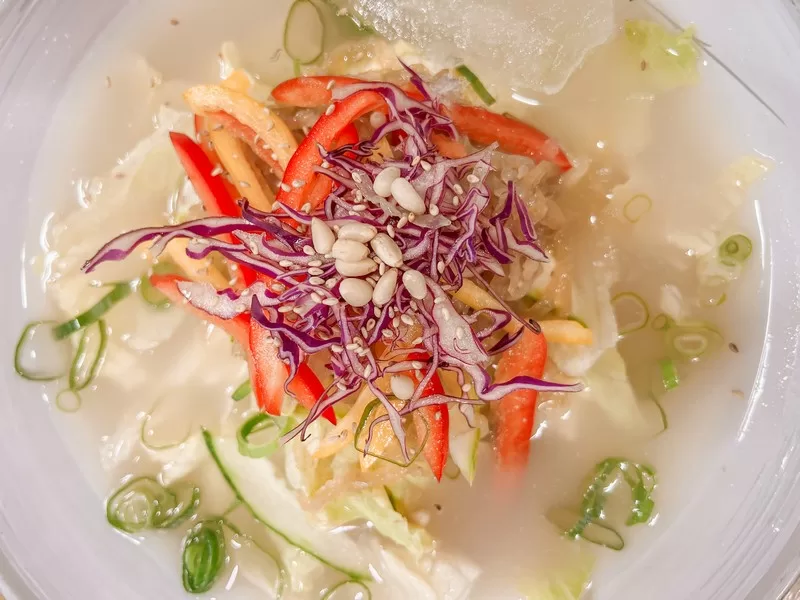
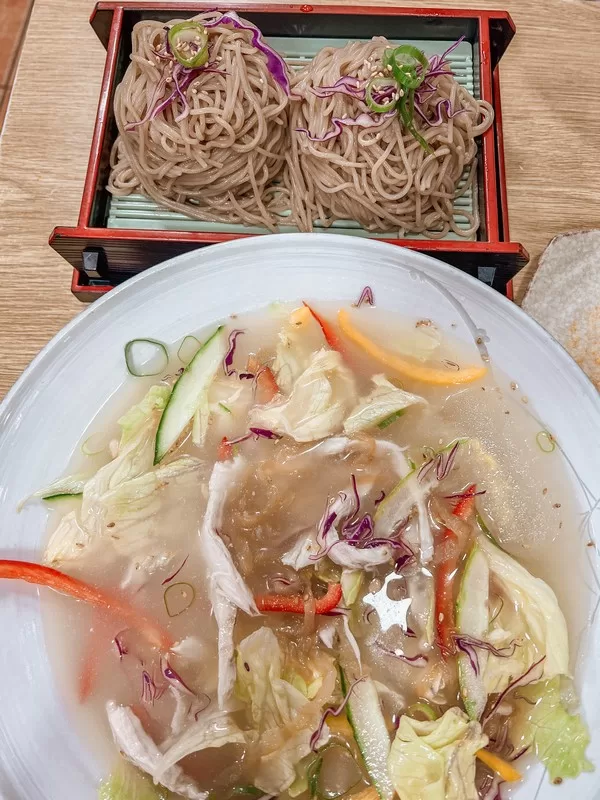
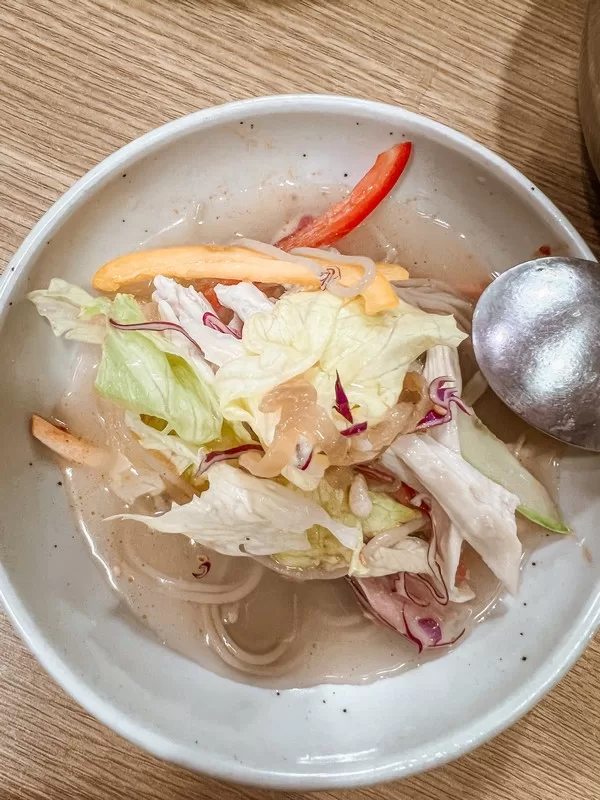
Cold poached chicken served in a cold, tangy broth made from vinegar and mustard, sometimes with glass noodles or buckwheat noodles added. This dish hails from Pyeongan-do in present day North Korea. The broth is the distinctive part: tart, cooling, and sharp from the mustard. It’s more substantial than oi-naengguk and noticeably different from the naengmyeons, which use beef broth bases.
The cold, acidic broth is supposed to be both cooling and invigorating, which sounds contradictory until you try it. It’s harder to find than naengmyeon but worth seeking out in summer months at Korean restaurants that specialize in traditional seasonal dishes. Our favorite spot is up the street from us down here on Jeju Island at Daedonggang Chogyetang. Definitely the place to eat down here.
Fun fact: Traditionally, shredded chicken is served in a chilled, clear broth made from chicken stock seasoned with vinegar, mustard, and occasionally sesame or perilla seeds for depth. In some recipes, as many as 25 herbs and vegetables are used to flavor the broth, giving it a delicate complexity that feels nourishing rather than heavy.
Makguksu (막국수)
Buckwheat noodles in cold broth or with a spicy mixed sauce, a regional specialty from Gangwon province in the northeast of Korea. The buckwheat in makguksu tends to be a higher percentage than in naengmyeon, giving the noodles a coarser, earthier texture and a more pronounced buckwheat flavor. More rustic than Pyeongyang naengmyeon, with less refinement and more character.
Makguksu comes in two main versions: water-based (mul makguksu), with a cold broth similar to naengmyeon, and mixed (bibim makguksu), tossed with a spicy gochujang-based sauce. The Chuncheon area of Gangwon is particularly famous for its makguksu, if you visit Gangwon for hiking or the coast, it’s worth making time for a bowl specifically there.
In Seoul, makguksu appears at some naengmyeon-focused restaurants and at specialty Gangwon regional cuisine spots.
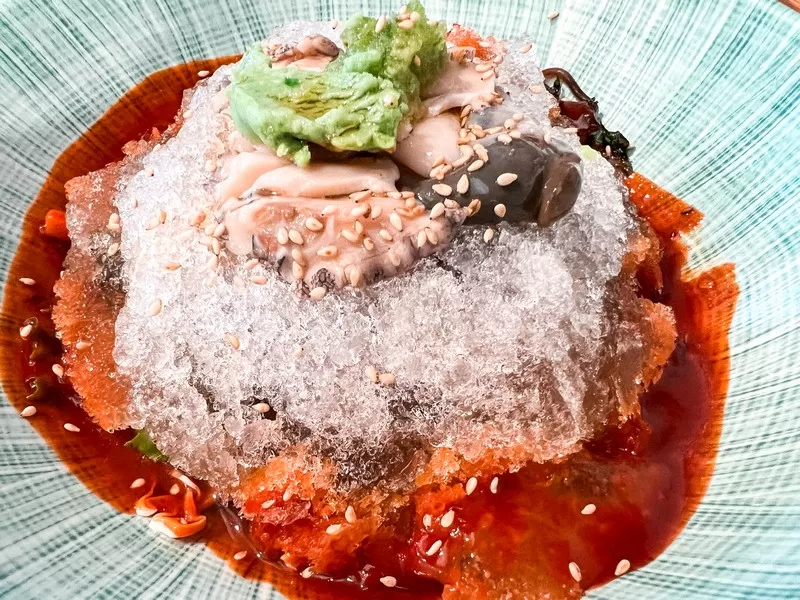
Mulhoe (물회)
Mulhoe is a cold Korean seafood dish, somewhere between a soup and a salad, served with ice in the bowl to keep it cold and cold chewy noodles running through it. There is a spicy broth that is bright and tart. The noodles are cold and chewy. Mulhoe is most associated with coastal regions, Jeju, the southern coast, and Wando in particular for abalone mulhoe (jeonbok mulhoe). If you’re near the coast in summer, look for it at seafood restaurants specializing in raw fish dishes (hoe).
FAQ
What are cold Korean soups called?
The general Korean term for cold noodle dishes is naengmyeon (냉면). Naengmyeon (냉면) refers specifically to cold buckwheat noodle dishes, primarily Pyeongyang naengmyeon and mul naengmyeon. Other cold dishes on this list (kongguksu, milmyeon, makguksu, mulhoe) are distinct dishes with their own names, not types of naengmyeon, though they’re often grouped together as ‘cold Korean noodle dishes’ in casual conversation.
What is the most popular cold Korean soup?
Naengmyeon in its two main forms, Pyeongyang naengmyeon (mild cold broth) and mul naengmyeon (tangy spiced broth), is the most widely eaten cold Korean dish in summer. Kongguksu is a close second.
Are cold Korean soups spicy?
Some and some not. Kongguksu, Pyeongyang naengmyeon, oi-naengguk, and chogyetang are not spicy. Mul naengmyeon and makguksu can be mild to medium spicy. Most restaurants allow you to adjust the spice level.
When is cold Korean soup season?
Summer. June through August is peak season, with May being the ramp-up period. Kongguksu specifically is a summer-only dish at many restaurants. Naengmyeon and oi-naengguk are available year-round at most restaurants but are specifically associated with summer eating.
What is iyeol chiyeol?
A traditional Korean belief that eating hot food in hot weather helps the body feel cooler by equalizing internal and external temperature. The concept explains why Koreans eat hot samgyetang on the hottest days of the year. The cold soups on this list represent the alternative approach.
Where can I eat cold Korean noodles in Seoul?
For Pyeongyang naengmyeon: Eul Mil Dae, a Seoul institution since the 1970s. For mul naengmyeon in a traditional market setting: Gwangjang Market.
The heat has arrived on the Korean peninsula, and it will get hotter before it gets better. Whether you reach for scalding samgyetang on the worst boknal day or a bowl of ice-cold naengmyeon at Eul Mil Dae, Korea has spent centuries figuring out how to get through summer, and most of it tastes better than you’d expect. When the heat hits, you’ll know what to order.
Did you like this post? Pin it!


9 Comments
ravenoustravellers
It took me a while to get used to these cold soups, something just didn’t sit right when I first moved to Korea – but now I enjoy them! Never tried the soy milk noodle soup but it looks delicious from your picture!
Paige Wunder{
It’s so interesting to hear about all of these cold soup options. The only cold soup I’ve ever had is peach soup or strawberry soup. I’m really weird about cold things, but I’m super intrigued by the Kongguksu, sounds so interesting.
Hallie
I’ve never had peach or strawberry soup! That sounds interesting.
Tara
Generally, I’m not a fan of any cold soups (not even gazpacho), but I’m liking the sound of th Mul Naengmyeon. I love buckwheat noodles too, so I may just be a lover of Pyeongyang Naengmyeon as well. Can’t wait to find out. Stay cool1
Hallie
Will you be coming to Korea? If you’re coming during the summer, definitely check them out!
Shelley @Travel-Stained
Would you believe I have never tried 콩국수!! It sounds delicious though, so I may have to seek it out. I’m with you on the cold soups though…I just did not get it until I lived through one of Korea’s hot, humid summers. But now, I crave 물냉면 all the time. I definitely prefer the vinegary style ones over the Pyeongyang ones, which just taste completely flavourless to me…
Hallie
I can’t believe you haven’t had Kongguksu. You’ll definitely have to try it this summer and see what you think.
Helena
I’m bringing two kids who have grown up in Western Washington to Korea in late August. They are unused to heat and humidity. (August was definitely not my first choice, but we had to work around my husband’s schedule.) We visited my family in Ohio last year and that was bad enough. (My sister said, “It’s like living in somebody’s mouth!”) I am scared. I suspect we will be trying to utilize the morning and evening hours as much as possible. Unfortunately they aren’t really nappers, so I guess we’ll just have to find somewhere shady and/or air conditioned to hole up during the early afternoon.
Hallie
I’m from Ohio! hahaha Seoul is pretty much the same as Ohio to be honest. If you were dripping and sweating there, that’s what you’ll be doing here. Definitely get out and about in the mornings and evenings but really the parks get good breezes most days. Maybe since I grew up in Ohio, it doesn’t affect me as much, but there are only a few days that I really mind the humidity here. There are plenty of museums and fun places with air-con to take advantage of though. For palaces and outdoor places, definitely go as early as possible just because they don’t offer a lot of shade most of them. Hope that helps.