Air Raid Sirens in South Korea: What They Mean and When They Happen
Last Updated on October 13, 2026
The first time you hear an air raid siren in South Korea, it’s disorienting. Public address systems blast a long, rising-and-falling tone, civil defense personnel appear on the street directing people toward shelters, and traffic stops dead in its tracks. If you don’t know what’s happening, it can definitely be alarming for a few minutes… until you look around and notice locals going about their business as usual, then you might have some questions.
It’s a drill. Specifically, it’s part of Korea’s nationwide civil defense exercise, and once you understand the pattern, it stops being unsettling and just becomes one of those things you adjust to living here, or visiting during the right window.
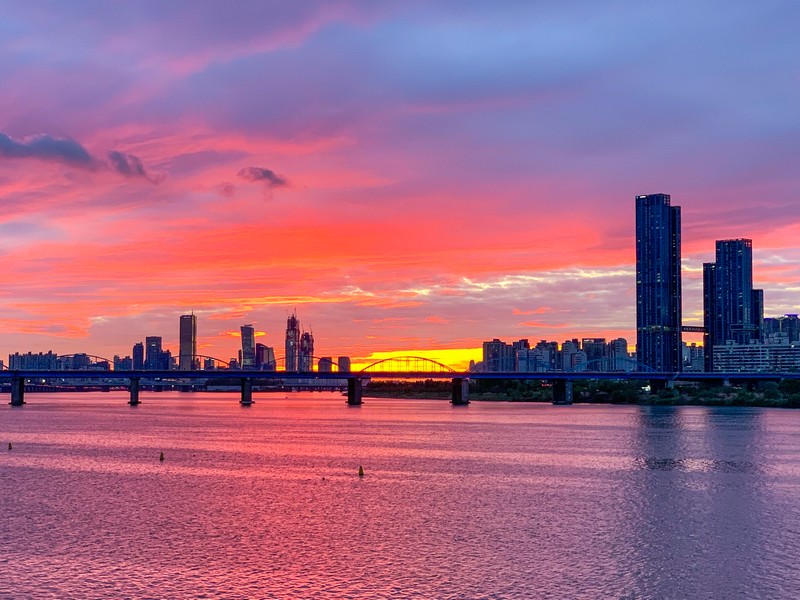
Air raid siren warnings happen regularly in Seoul, Korea. Here is what to know:
- Is It Dangerous to Live in or Visit South Korea?
- When Do Civil Defense Drills Happen in Korea?
- What Happens During a Drill
- My First Experience With a Drill
- Caught Outside During a Drill
- Why This Still Surprises New Arrivals
- FAQ
(This post contains affiliate links, which means I receive a certain percentage of a sale if you purchase after clicking at no cost to you. Thank you for your support.)
Is It Dangerous to Live in or Visit South Korea?
Not if you ask a Korean… though news Stateside might lead you to believe otherwise. When there are missiles or some aggressive act, on either side by the way, locals are pretty hard to scare. They go about their daily business like business as usual. What do we really know about North Korea? A lot and very little at the same time.
The general public, in both Korea and abroad, knows comparatively little about the actual state of affairs at any given moment, and that gap between headline anxiety and lived experience is significant.
The sirens exist so the country can practice evacuation and shelter procedures in the event of an actual emergency. That’s a sensible precaution for a country technically still at war (the Korean War ended in an armistice, not a peace treaty), not a sign that anything is imminently wrong.
When Do Civil Defense Drills Happen in Korea?
For my first decade in Korea, drills were monthly, however there has been a big adjustment in that schedule in recent years. The current pattern is roughly 3-4 nationwide drills per year, generally clustered around:
- May (spring drill, timing varies)
- August, often twice, coinciding with the annual Ulchi Freedom Shield joint US-South Korea military exercise (historically mid-to-late August, though exact dates shift year to year and are sometimes adjusted for weather or scheduling)
- October or November (a regional or nationwide drill, timing varies)
Drills consistently happen at 2:00pm and last about 15-20 minutes, following a three-stage pattern: an air raid alert siren, a standby warning a few minutes later allowing people to begin leaving shelters, and an all-clear signal marking the end.
Exact dates are typically announced through Korean-language media and government channels 1-2 weeks in advance, with English-language notice less consistent. If you want to check before a specific date, the Ministry of the Interior and Safety’s English news portal, or the US Embassy Seoul’s security alerts, are the most reliable sources for confirmed dates close to the event.
What Happens During a Drill
When the sirens sound, civil defense personnel, often identifiable by yellow sashes, move out onto the streets to direct pedestrians toward the nearest shelter, which can be found in more basements, subway stations, underground parking, or other designated underground spaces than many people realize. Korea has roughly 17,000 registered civil defense shelters nationwide, locatable through major map apps like Naver Map, KakaoMap, or T Map.
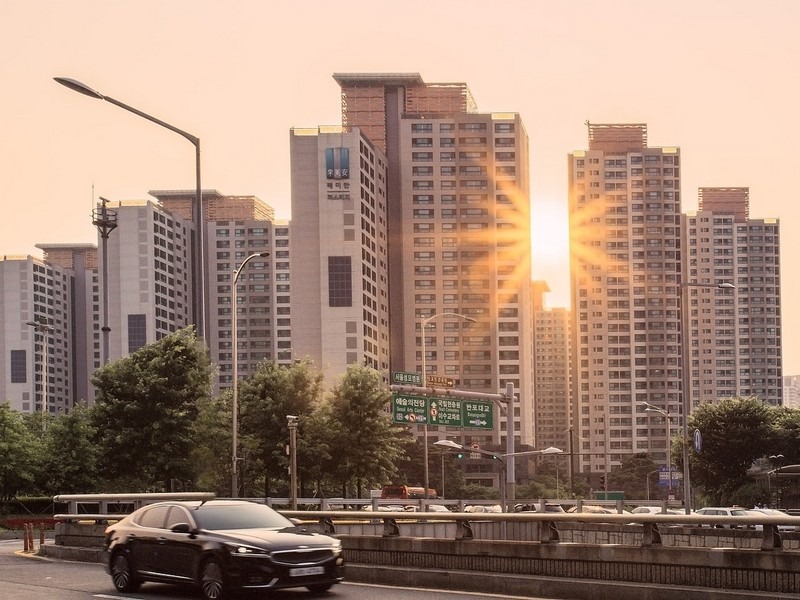
Traffic halts everywhere during the drill, even at green lights. Drivers are expected to pull over and stop, with newer guidance specifically emphasizing that lanes should stay clear for emergency vehicles like fire trucks and ambulances during the drill window. If you’re in a taxi when the siren sounds, expect the car to stop and the meter to keep running.
Pedestrians, including foreign visitors, aren’t legally required to enter a shelter, but cooperation with civil defense personnel is generally expected and appreciated. After 15-20 minutes, the all-clear sounds and everything, traffic, foot movement, daily life, resumes immediately.
For non-Korean speakers, the Emergency Ready App provides drill guidance and shelter information in English, Chinese (both traditional and simplified), Japanese, Vietnamese, and Thai.
My First Experience With a Drill
In my first year in Korea, I was living in Songpa, on the southeast side of Seoul. The first siren I heard sounded remarkably like the tornado sirens I grew up with in Ohio, which led to a brief, genuinely confused moment wondering whether tornadoes hit Korea too.
Then two fighter jets tore across the sky outside my bedroom window, low and fast. Having grown up near Wright-Patterson Air Force Base, fighter jets weren’t unusual to me, but there’s typically a legal restriction on how low and fast jets fly over residential areas to avoid breaking the sound barrier near homes. These jets weren’t following that restriction at all and of course that gave me a good faster-paced heart beating moment trying to deduce what was going on as the voices over loud speakers outside were saying something I couldn’t understand.
The last time I’d seen jets flying that low and fast, breaking the sound barrier over a residential area, was September 11th in the US, when fighter jets from Wright-Patt were clearing the skies for the President’s plane to land. With that as my only point of reference, and having arrived in Korea only a month earlier, I jumped straight to the worst possible conclusion.
Stepping outside, I found an empty, calm street, no one running, no visible panic. That led to a second, equally wrong conclusion: that everyone else already knew the evacuation plan and I’d simply missed the briefing. A round of calls to friends and coworkers cleared things up. It was a drill. A monthly one, at the time. Functionally similar to the tornado drills I’d grown up with, just with a different backstory.
Caught Outside During a Drill
The second time I experienced a drill in person, I wasn’t at work. I was sitting outside a cafe in Jamsil with two Korean friends. The sirens started, and almost immediately, civil defense personnel wearing yellow sashes appeared up and down the street, moving pedestrians off the sidewalk and into nearby buildings.
I’ve wondered since how those sashes work logistically. They’re clearly not worn daily; someone has to know to bring one out specifically for drill days. The system works, evidently, but the mechanics remain a little mysterious to an outside observer.
We were told to move indoors since no one was allowed on the sidewalk during the drill. Traffic stopped completely. Even at green lights, no cars moved. At the time, I didn’t fully understand why all traffic citywide halts rather than continuing to move toward designated safe areas, though the more recent guidance around keeping lanes open specifically for emergency vehicles suggests this has been refined since.
I couldn’t follow the Korean-language instructions at the time, so I simply followed the woman directing pedestrians and went inside. About fifteen minutes later, everything returned to normal, and the yellow-sashed volunteers disappeared back into the regular rhythm of the street.
Why This Still Surprises New Arrivals
Even with drills now less frequent than they once were, the reaction from people newly arrived in Korea, expats, exchange students, tourists who happen to be in the country on the right date, follows a remarkably consistent pattern. Social media fills with confused, sometimes alarmed posts every time a drill occurs. It’s a recurring, slightly amusing cycle: a wave of “is something happening?!” posts, followed by longer-term residents calmly explaining that it’s routine.
Koreans themselves are largely desensitized to the sirens at this point. Most don’t pause what they’re doing beyond following basic instructions if they happen to be outside. In a genuine emergency, it’s likely that most people would respond to television or phone alerts well before reacting to a siren alone, simply because the siren itself has become background noise associated with routine drills rather than acute danger.
It’s not unlike growing up with tornado sirens in Ohio: hearing one outside the expected schedule prompts a quick check of the sky and conditions before any real concern sets in, rather than immediate alarm.
FAQ
How often do air raid sirens happen in South Korea?
Civil defense drills currently happen approximately 3-4 times per year, typically in May, August (often twice, coinciding with the Ulchi Freedom Shield exercise), and October or November. This is a change from the previous monthly schedule.
What time do civil defense drills happen in Korea?
Drills consistently occur at 2:00pm and last about 15-20 minutes, moving through an air raid alert, a standby warning, and an all-clear signal.
What should I do if I hear an air raid siren in Korea?
If you’re outdoors, move toward the nearest shelter, basement, subway station, or underground space, when directed by civil defense personnel. If you’re driving, pull over and stop. Foreign nationals aren’t legally required to shelter, but cooperation is expected. The drill ends after 15-20 minutes with an all-clear signal.
Is it safe to travel to South Korea given these drills?
Yes. The drills are a routine civil defense exercise, not a response to any specific threat, and Koreans themselves treat them as unremarkable. If your travel dates happen to overlap with a drill, expect a brief 15-20 minute disruption to traffic and pedestrian movement, nothing more.
How do I find out the exact dates of upcoming drills?
Exact dates are typically announced through Korean government channels and media 1-2 weeks in advance. The Ministry of the Interior and Safety’s English-language news portal and the US Embassy Seoul’s security alerts are the most reliable sources for English-language notice close to the event.
Will a drill affect my flight or airport transfer?
Possibly, if your travel time overlaps with the 2:00pm drill window. Ground transport, including airport trains and taxis serving Incheon, can pause for the duration of the drill. If traveling during a known drill period (especially mid-to-late August), building in extra buffer time is a reasonable precaution.
The sirens still catch new arrivals off guard, and that’s unlikely to change regardless of how the schedule shifts. But knowing the pattern, infrequent, scheduled, brief, and entirely routine for the people who live here, turns a moment of genuine alarm into a minor, mildly interesting interruption to your day.
Did you like this post? Pin IT!

2 Comments
Martin Evans
Hi!
Great website!!! Really informative! With the air raid sirens is it just Seoul or do most cities also have this monthly occurrence??
Hallie
Thank you and my husband says it happens across the country. It used to be the same day at the same time everywhere across the country, but these days he can’t be sure if it is still done that way. But yes, it is a monthly occurrence everywhere. ^^