Ihwa Mural Village Seoul: What To See, Where To Go and How To Visit Respectfully
Last Updated on April 19, 2026
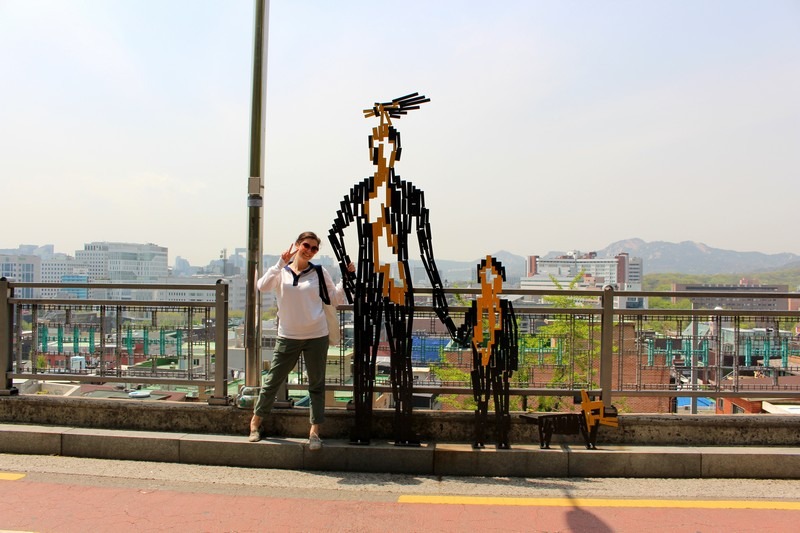
Mt. Naksan in Seoul is home to one of the most popular mountainside mural villages in Korea. Ihwa Mural Village (이화동벽화마을) is known as a moon village or “daldongne” due to being set on the hillside which means you should be prepared for a bit of a hike up to see this famous village and the views of surrounding Seoul from the village.
If you’re looking for a mural village in Seoul, this is the first one that will come up when you begin your search and there’s good reason for that. Learn more about this popular tourist destination in Seoul, Korea.
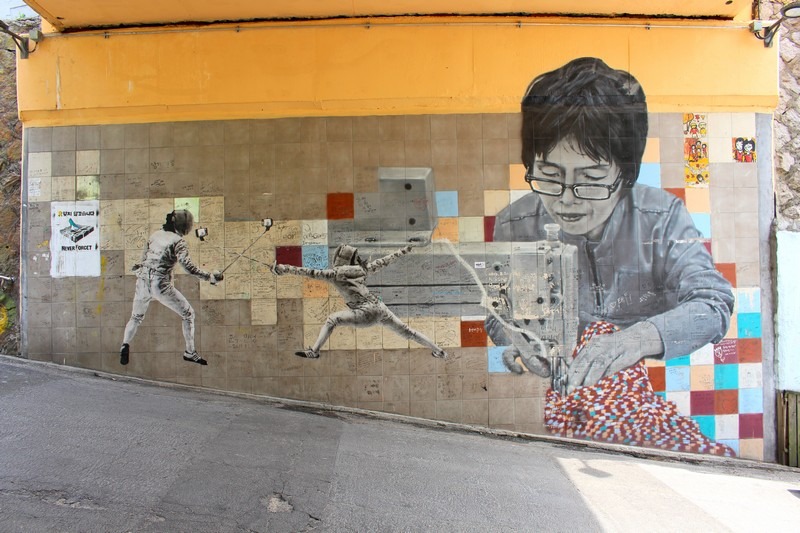
Get ready to see Ihwa Mural Village:
- How To Get There
- What To Know
- Hot To Visit Respectfully
- What To See in Ihwa Mural Village
- What To Do
- What To Eat
- Map of Ihwa Mural Village
- FAQ
(This post contains affiliate links, which means I receive a certain percentage of a sale if you purchase after clicking. Thank you for your support.)
How To Get There
Start at Hyehwa Station, Exit 2. There are signs along the route from the main road, but the general principle is simple: once you pass the restaurants and cafes near the station, you’re on a road that takes you up and over the hillside. Follow it and you won’t get lost. The murals make it obvious where to go.
What To Know
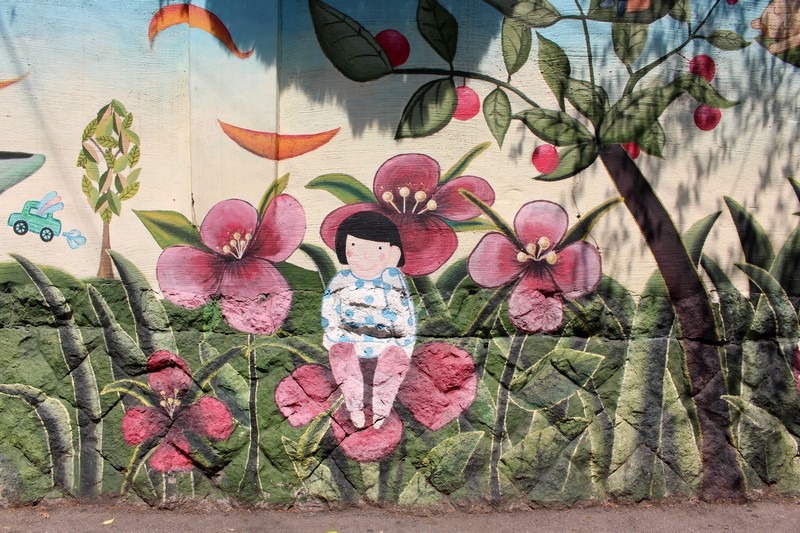
Like the Ant Mural Village in Hongje, or the Huinnyeoul Culture Village in Busan, Ihwa Mural Village was originally slated for demolition as a rundown area before the government stepped in. In 2006, under the “Art in City Project” run by the Ministry of Culture, Sports and Tourism, murals were commissioned across the neighborhood. Seventy artists created work on walls, fences, and rooftops, and the visitors followed.
The problem: nobody asked the residents, mostly elderly Korean citizens, whether they wanted this, or explained what the murals might bring. Sound familiar? It’s the same situation playing out in Bukchon Hanok Village, where residents similarly weren’t consulted before their neighborhood became one of Seoul’s most visited tourist destinations.
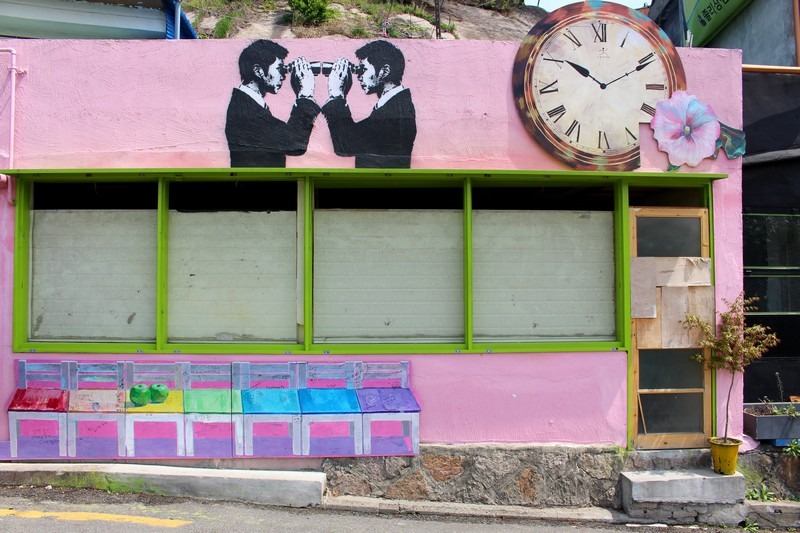
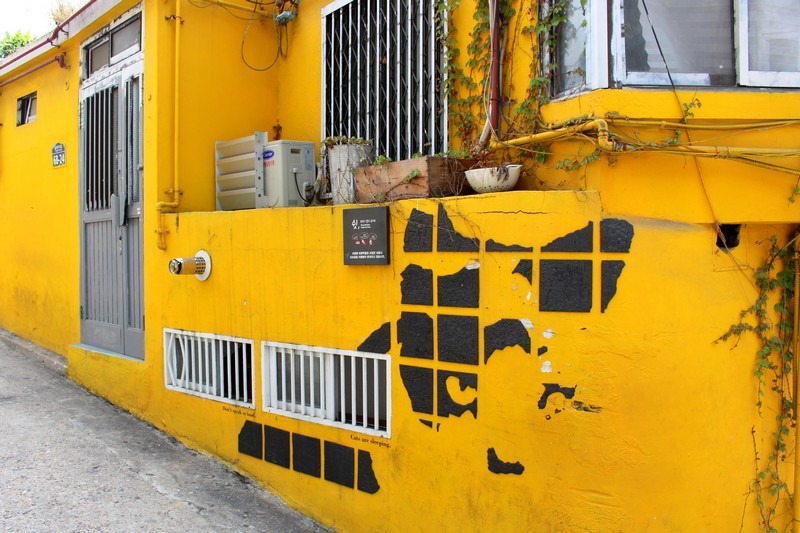
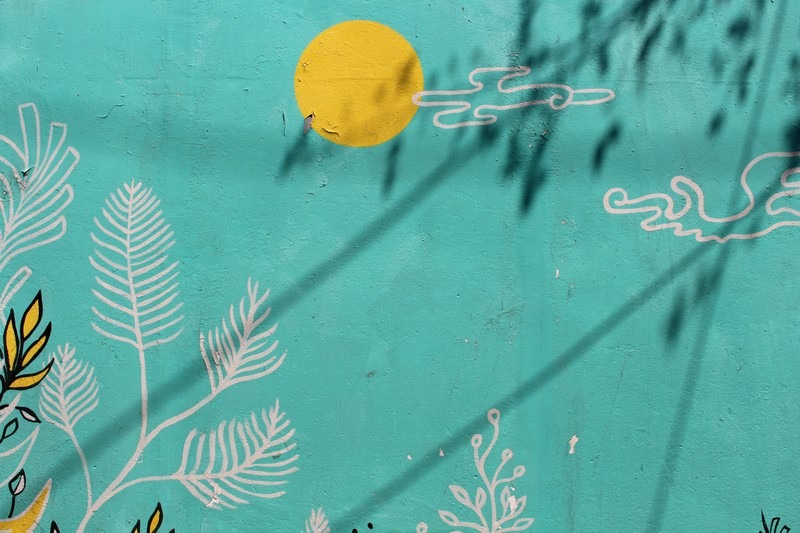
In April 2016, some residents had had enough. With foot traffic, noise, and strangers peering through doorways at all hours, they did what the local government wouldn’t do for them: they painted over some of the most popular murals themselves.
Was it the right thing to do? I’m not here to say. But I understand it completely. I know what it’s like to want to recognize the faces on your street, to feel ownership of the place you call home rather than an exhibit someone else put you in without asking. When that gets taken from you, and the government responsible for it does nothing, painting over the murals starts to make sense.
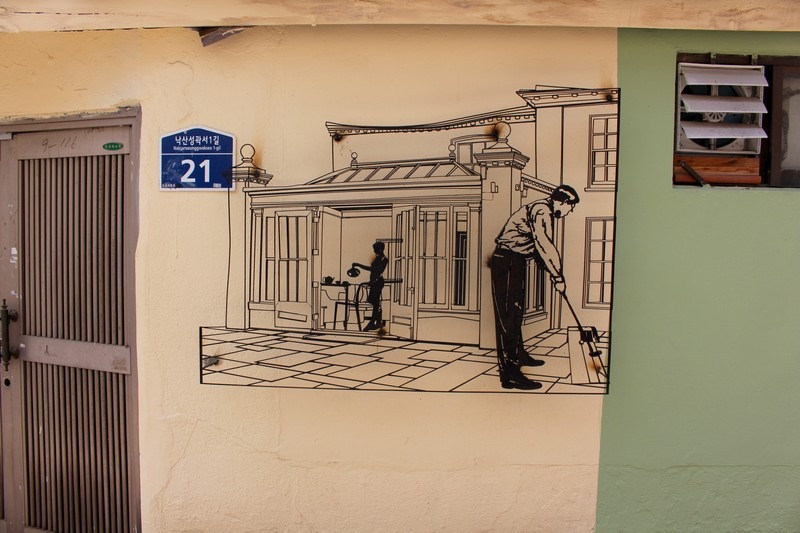
The current situation (as of 2026): The murals are largely intact. When the 2016 story broke internationally, many people assumed all the murals had been removed, that’s not the case. The two most-painted-over murals were on the steepest staircases (at points 6 and 9 on the route map), and those have not been repainted and may not be.
However, the rest of the route remains full of art, and some new work has been added. The famous koi fish staircase is gone in its original location, but a smaller version has been painted between points 7 and 8 on the map, knowing to look for it will save you disappointment.
How To Visit Respectfully
This is a residential neighborhood. The guidelines below aren’t arbitrary, they’re the difference between being a visitor and being an intrusion.
- Do not walk into doorways or gates unless there is an explicit sign welcoming you in. “Open” or “Come In” signs exist. If there’s no sign, don’t enter.
- Keep your noise to normal conversation level. People live here and deserve quiet.
- If a local ends up in your photograph and looks uncomfortable about it, ask first. They are not part of the exhibit.
- Greet locals when you see them. A simple acknowledgment goes a long way.
- Carry your trash out. If there’s no bin, keep it until you find one.
- Buy something locally like a coffee, a snack, anything from a local shop. Support the people whose neighborhood you’re walking through.
- Visit during reasonable hours during the daytime only. Not before sunrise or after dark.
With these in mind, locals who can be seen chatting in corner shops or shopkeepers with doors open will generally be welcoming to visitors. The neighborhood is genuinely beautiful to walk through.
The Seoul Itinerary Pack – 15 Seoul Itineraries
$15.00
What To See In Ihwa Mural Village
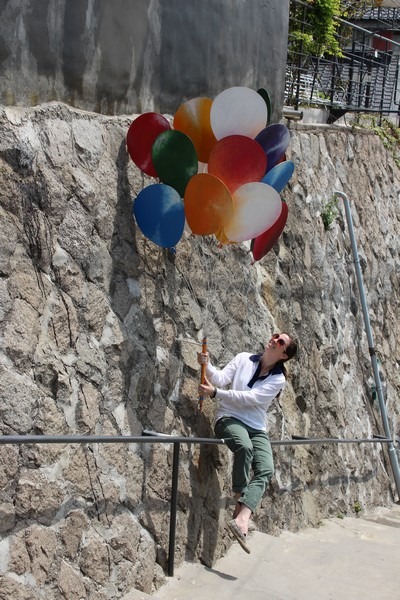
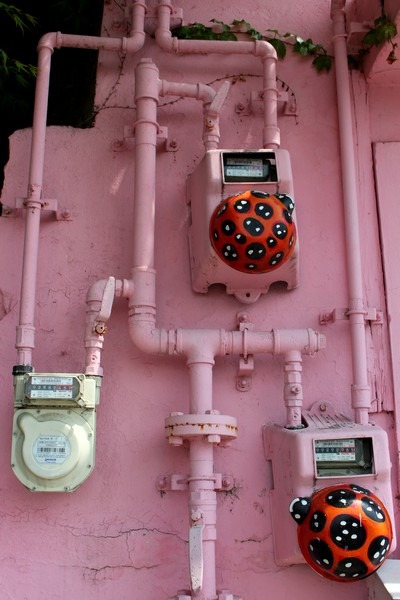
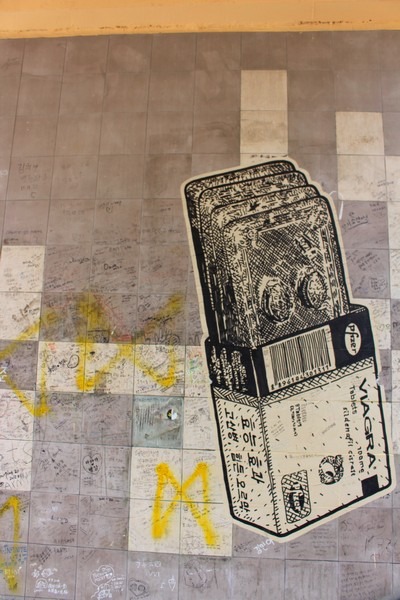
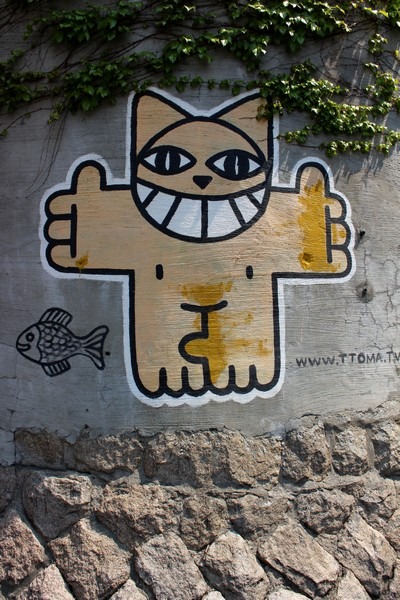
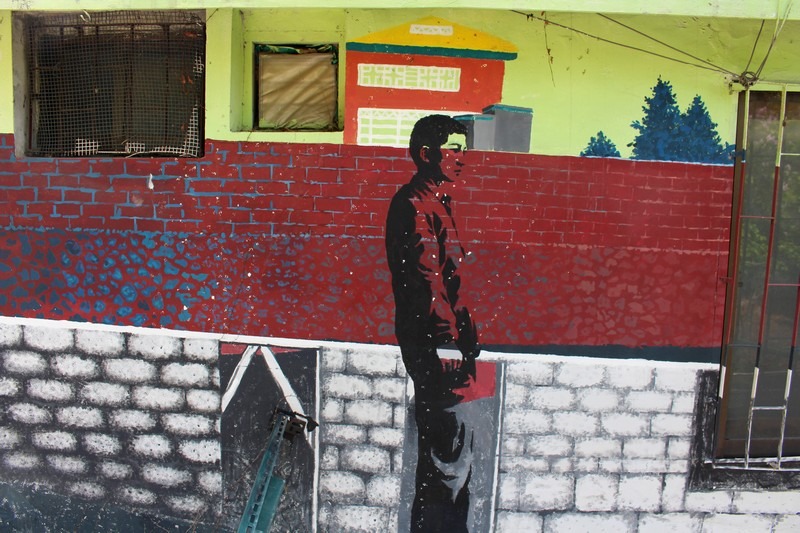
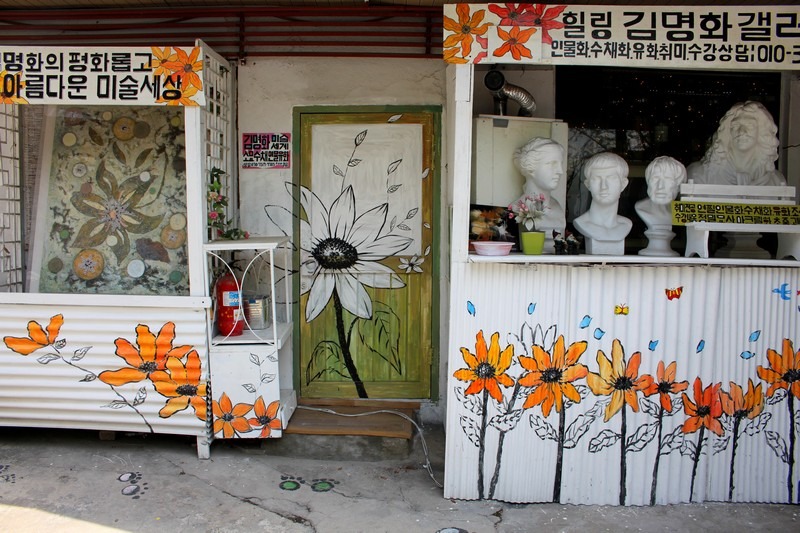
The murals: The primary reason most people come, and they’re worth the visit. The route winds past work in varying sizes, some intimate, some spanning entire building sides. Keep your eyes up and to the sides and look back behind you as well; some of the best pieces are easily missed if you’re looking only at the path ahead.
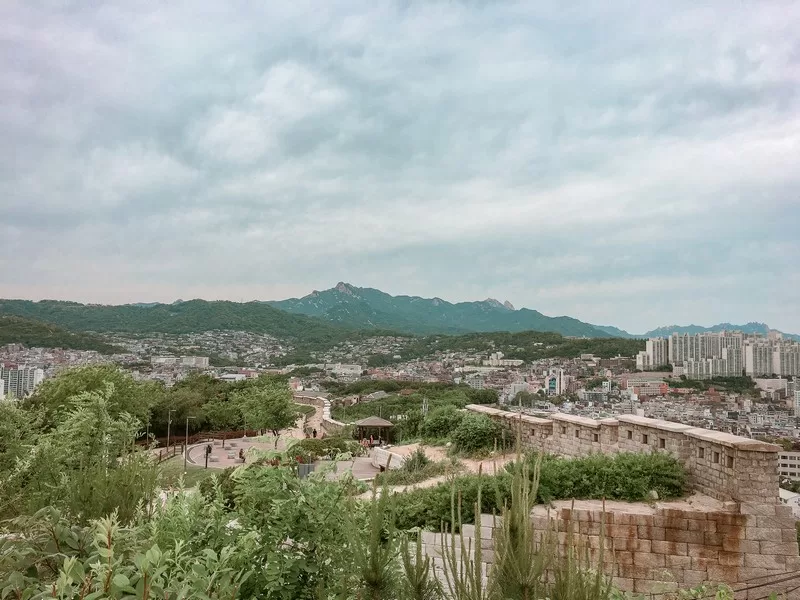
Naksan Park (낙산공원): You’ll walk through this park on your way to and from the village. It offers some of the best views of central Seoul available on foot, and a section of the Seoul Fortress Wall runs through it, read the complete Seoul Fortress Wall guide for more on the wall’s history and the full walking route.
If you have time, the brief detour along the wall at the top of the route leads to an overlook where you can see all the way to Dongdaemun Design Plaza and beyond. Allow about 30 minutes and you can do the detour and return to the mural route easily.
Marronnier Park (마로니에공원): This park is near Hyehwa Station before you really get going up into the hillside. There are often performances and events taking place here as well as touts letting you know what shows are playing in the numerous theaters nearby.
What To Do
Aside from the obvious of taking fun photos with the murals…
Jasalgi Memorial Hall (자살기 기념관)
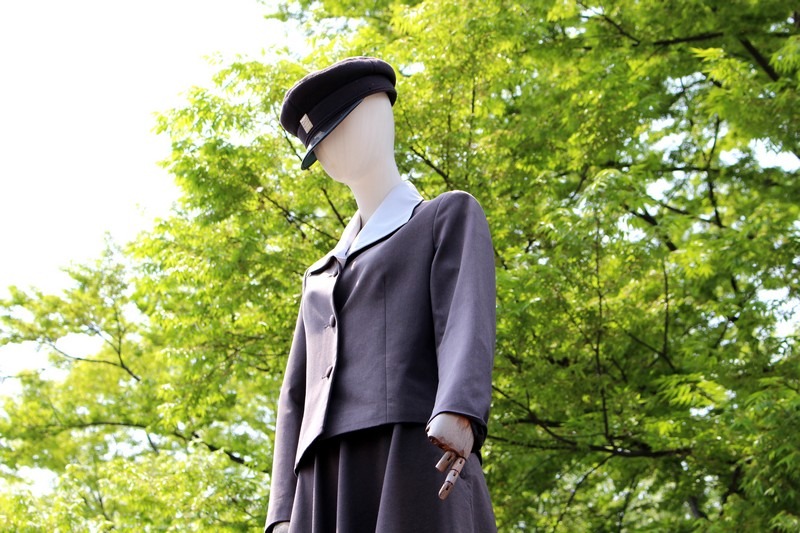
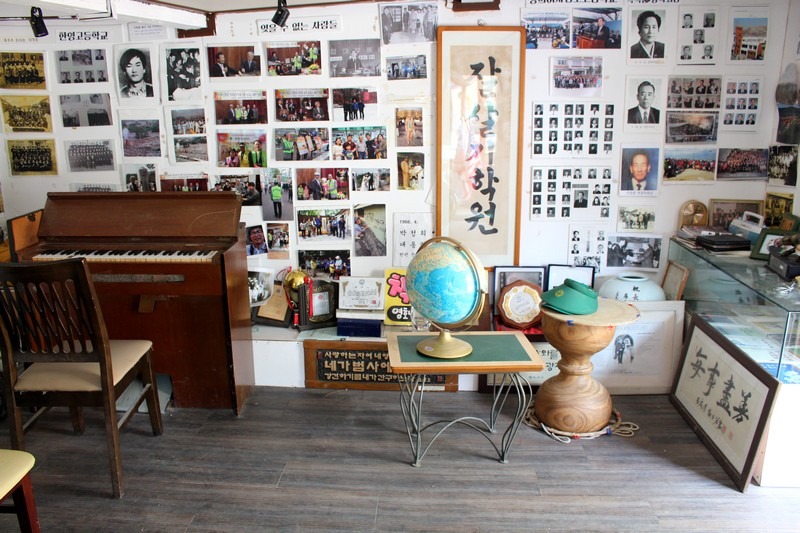
As a tribute to the “Live Well Academy” that once sat in this moon village which educated the underprivileged teenagers in the area from 1965 to 1987 and produced more than 3,600 graduates, there is now a sort of living museum in its place.
Rent retro uniforms and peruse the various school rooms and displays which are now backdrops for photos. This is super popular with Korean students on the weekends and on the weekdays eerily void of people so the mannequins and all of the old school paraphernalia is just a bit creepy.
- Address: 46 Naksan 4-gil, Jongno-gu, Seoul (서울특별시 종로구 낙산4길 46)
- Rental Fee: W5,000 for one hour, W8,000 for two hours

What To Eat
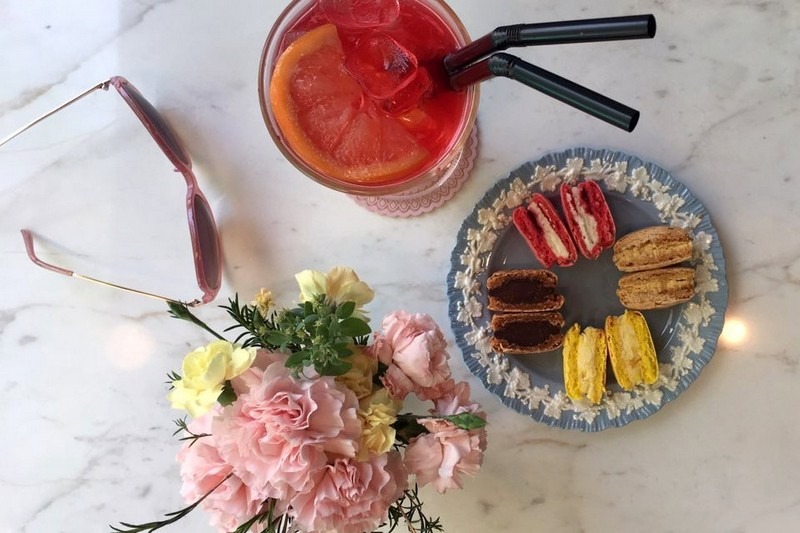
When you exit Hyehwa Station, you’ll find several streets of restaurants and cafes surrounding the theater district. There’s plenty to eat both before going up and after coming down. Bring a water bottle for the hike itself.
Hakrim Dabang (학림다방)
One of the oldest cafes in Seoul, open since 1956 and essentially unchanged since then. Stepping inside is genuinely like stepping back in time, the decor, the booths, the atmosphere are all from another era. Popular with K-drama fans because of appearances in My Love From The Star and The Heirs; the booths where the actors sat are particularly in demand. Arrive early in the afternoon to get a seat before it fills up.
- Address: 119 Daehak-ro Jongno-gu, Seoul (서울특별시 종로구 대학로 119)
Map of Ihwa Mural Village
To get around the area, there have been signs placed in strategic positions to make sure you don’t get too lost and turned around. They point you along this general track. However, some of the murals that we found weren’t on this track which is why you need to keep your eyes peeled and go where you want at times.
For example, just after point 7 on this route, we took a left up some steps and found some great cafes with views, the Seoul Fortress Wall and a balloon installation that was fun to take pictures with. After this, we did a u-turn and got back onto the track.
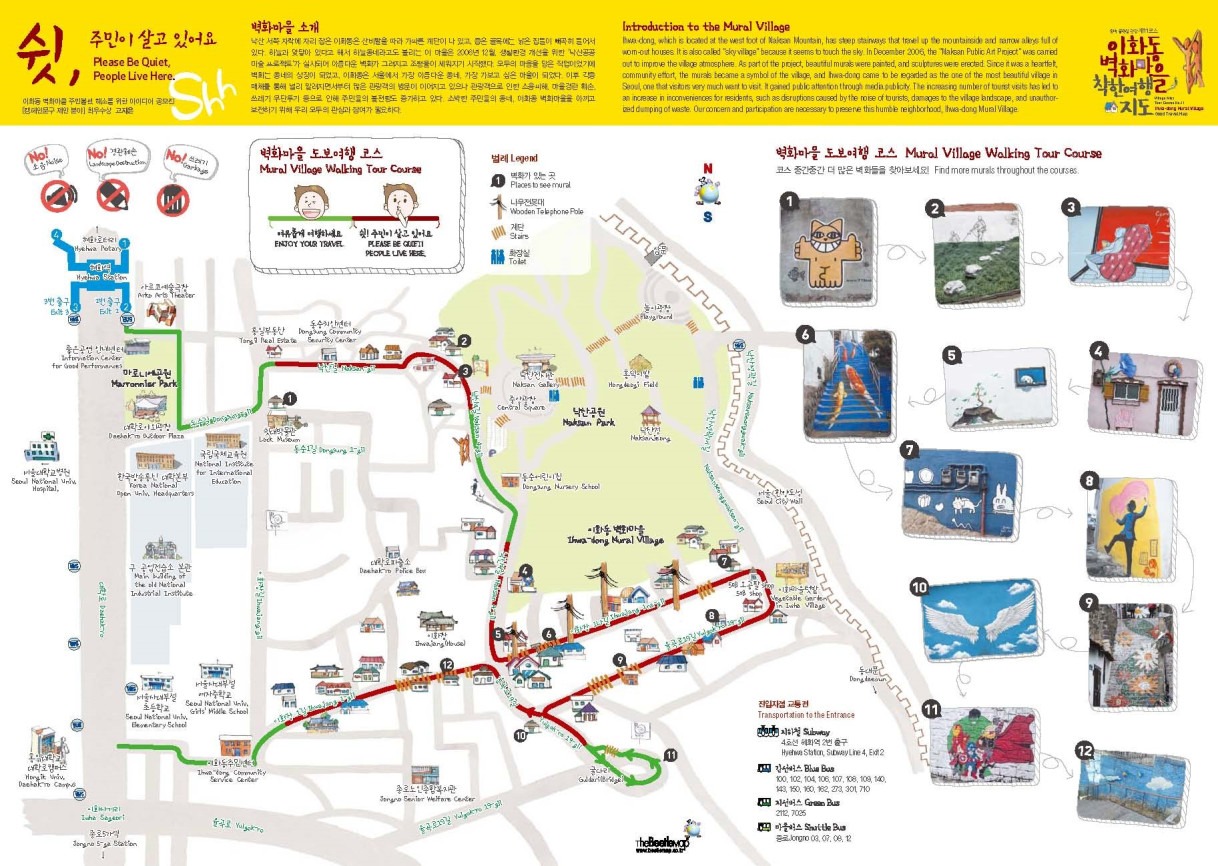
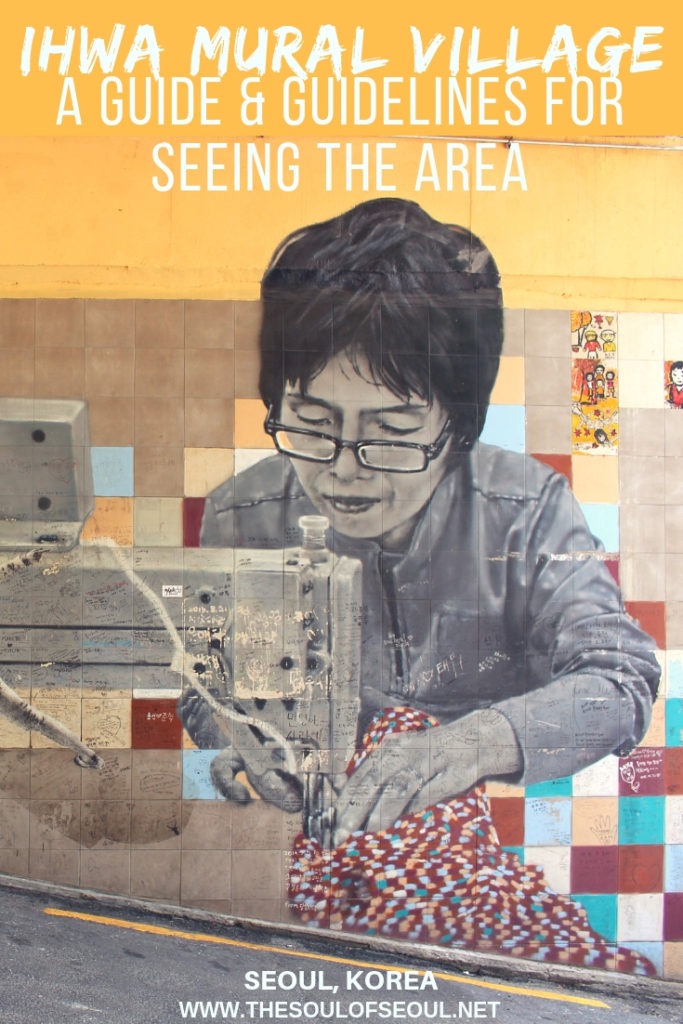
Also, at point 11, you might feel like you don’t want to make that “useless” loop around, but, you do! Just beneath the bridge is that awesome mural with the woman and her sewing machine. And then you can take the steps back up to get on the path again. This map also shows the two staircases that were painted over by the residents as a warning to loud tourists.
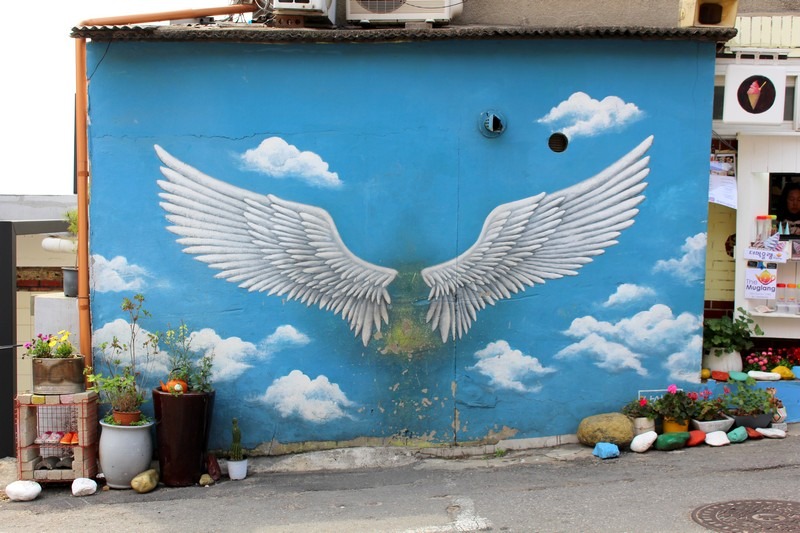
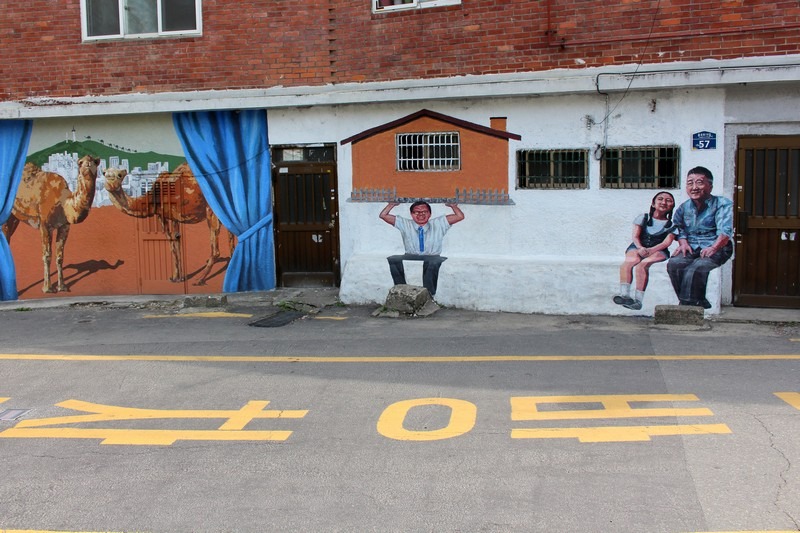
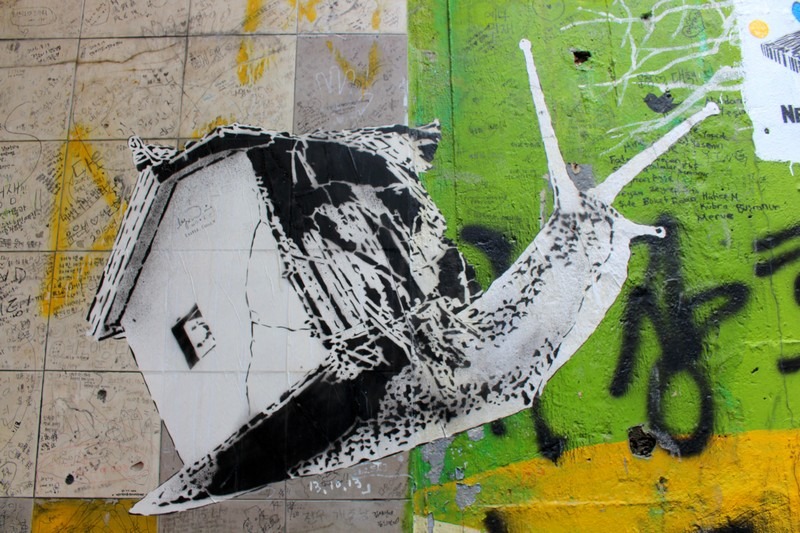
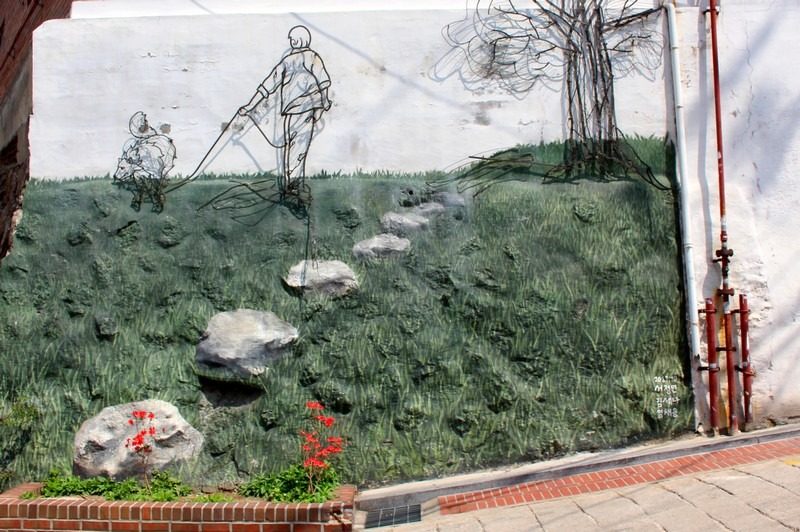
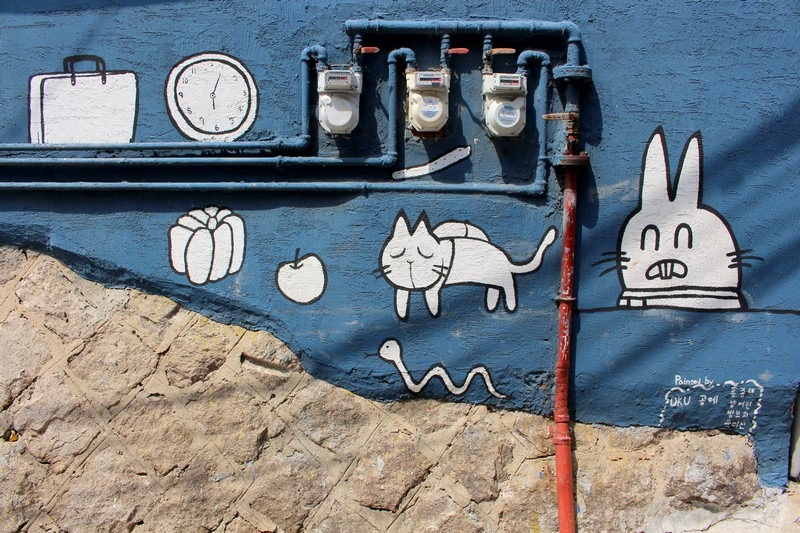
Points 6 and 9 on the map mark the staircases where the original murals were painted over in 2016. The art has not been replaced. The koi fish staircase that many visitors specifically look for is no longer at its original location, a smaller version has been painted between points 7 and 8, which is what you’ll find if you’re looking for it.
FAQ
Is Ihwa Mural Village free?
Yes, walking the village, seeing the murals, and visiting Naksan Park are all completely free.
How long does it take to visit Ihwa Mural Village?
One to two hours for the full route at a comfortable pace, including the off-route detours. Add time for the Seoul Fortress Wall detour at the top, and factor in a cafe stop at Hakrim Dabang if you plan to visit.
Are the famous koi fish murals still there?
The original koi fish staircase murals were painted over by residents in 2016 and have not been replaced. A smaller koi fish mural has been painted in a different location on the route though.
What happened to the Ihwa Mural Village murals in 2016?
In April 2016, some residents, frustrated by the noise and foot traffic brought by tourists and unable to get assistance from local government, painted over several of the most-visited murals themselves. The two most prominent ones, on the steepest staircases, have not been repainted. The rest of the mural village remains largely intact, and some new work has been added since.
Is Ihwa Mural Village worth visiting?
Yes, with the right expectations. It’s a neighborhood with real history, interesting murals, fortress wall access, good views, and a context that most tourist spots in Seoul don’t have. It rewards visitors who are curious about more than just taking photos. If you go expecting a curated art park, you may be disappointed. If you go expecting a hillside neighborhood where someone decided to put art, and where that decision had complicated consequences, it’s a genuinely interesting visit.
What is the best time to visit Ihwa Mural Village?
Weekday mornings are the quietest, with fewer tourists and a more local atmosphere. Weekends are busier, which suits the school uniform rental experience but makes the neighborhood feel more crowded. Avoid early morning before residents are up, and don’t visit after dark.
The Ihwa Mural Village is still a vibrant and beautiful place to spend an afternoon cafe hopping, seeing outdoor art, and learning the history of a neighborhood that didn’t entirely choose its new identity. Just remember that the people you see on the way up and down the hill live there, and the visit goes better for everyone when you move through it like a guest rather than a tourist.
If you enjoy street art and mural villages, there are others to have on your radar. In Busan, Gamcheon Culture Village is the most-visited mural neighborhood in the country. Mullae-dong in Seoul is relatively unknown but has a really interesting mix of artists and iron-workers that makes it feel different from Ihwa. And if you want something more unusual, Yongma Land, an abandoned amusement park in Seoul, has its own particular aesthetic worth seeking out if access is currently open.
Did you like this post? Pin It!
8 Comments
Pongpol Wathakul
Thank you for sharing 🙂
Sarah Kim, Tales From a Fork
I’ve been to a village like this but not this one. I can’t believe some of the villagers got annoyed and painted over the murals. I understand the annoyance but Im’ sure there’s the good side– that this brings them a lot of money. Oh well– to each his own. Thanks for sharing.
Shelley @Travel-Stained
Fantastic post, with tons of amazing information and ideas for what to eat and do. I’ve never visited a single mural village in Korea, and it’s clearly something I need to do. But what I really love is the renting of the old school uniforms and walking around. Way cooler than the whole hanbok fad in my opinion. My parents are in town right now….I wonder if they’d play dress-up? Haha. I guess they don’t have itty bitty uniforms do they? We could dress up Ava and Naia…
ravenoustravellers
pinned! need to get here before our time runs out in Korea, especially now the weather is picking up. So many awesome murals and street art, so colourful. I like how you included the guidelines in this post, it can be so frustrating to see people being disrespectful around somebody’s home and neighbourhood!
Travel with Karla
OMG! You’re my hero! I’ve been searching for a place on where to rent a Korean uniform! I will definitely do it. I’m really excited typing this comment. LOL. Thanks for the detailed guide in Ihwa Mural Village.
Hallie
No problem Karla. I’m sure you’ll have a blast going and doing that too. ^^
Paige W
What an incredible neighborhood. I LOVE street art and I love that this neighborhood is just full of it. Great tips. I’ve noticed that some neighborhood sights have a lot of people misbehaving. Great reminder that people live here and definitely not to just go walking into places.
thetravelpockets
You can rent old school Korean uniforms? That is so odd yet sounds like so much fun playing dress up 🙂 I love murals, but totally understand why some of the residents were getting fed up with the noise and foot traffic.