Korea Power Adapter Guide: What Plug Type, Voltage, and Converter You Actually Need
Last Updated on March 25, 2026
I’ve had visitors arrive in Korea and realize on their first night that nothing they brought will plug into the wall. It’s one of those things that feels obvious in hindsight and completely invisible when you’re packing. So let’s make sure it doesn’t happen to you.
The short answer: South Korea uses Type C and Type F plugs at 220 volts. If you’re coming from the US or Canada, you’ll need an adapter (and possibly a voltage converter). If you’re coming from Europe, Australia, or most of Asia, you’re largely fine. Everything else below will help you work out exactly what your situation is.
Answers to the most common questions about power adapters and travel to Korea:
- What Plug Type Does South Korea Use?
- What Is The Standard Voltage in Korea?
- What Is A Power Adapter?
- Can I Buy a Power Adapter in Korea?
- How to Recharge USB Devices in Korea
- Recommended Power Adapters for South Korea
- Don’t Forget a Power Bank
(This post contains affiliate links, which means I receive a certain percentage of a sale if you purchase after clicking at no cost to you. Thank you for your support.)
Quick Answers
- What plug type does Korea use? Type C and Type F (two round pins)
- What voltage does Korea use? 220V, 60Hz
- Do I need a converter? Only if your device is single voltage (most modern electronics aren’t)
- Can I buy an adapter in Korea? Yes, but buy one before you leave to be safe.
The Seoul Itinerary Pack – 15 Seoul Itineraries
$15.00
What Plug Type Does South Korea Use
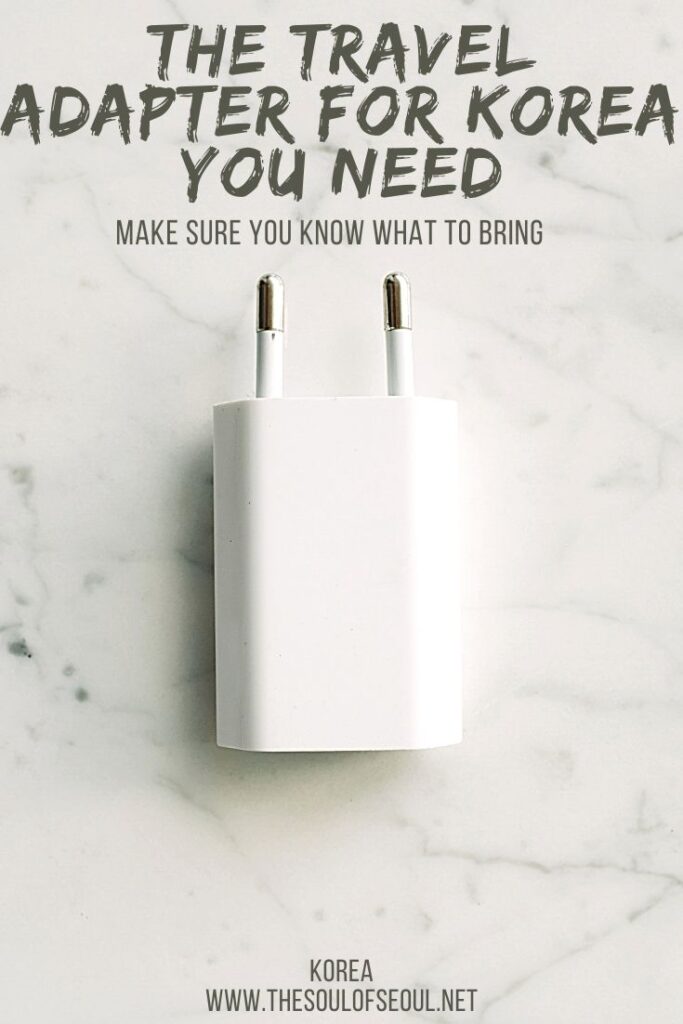
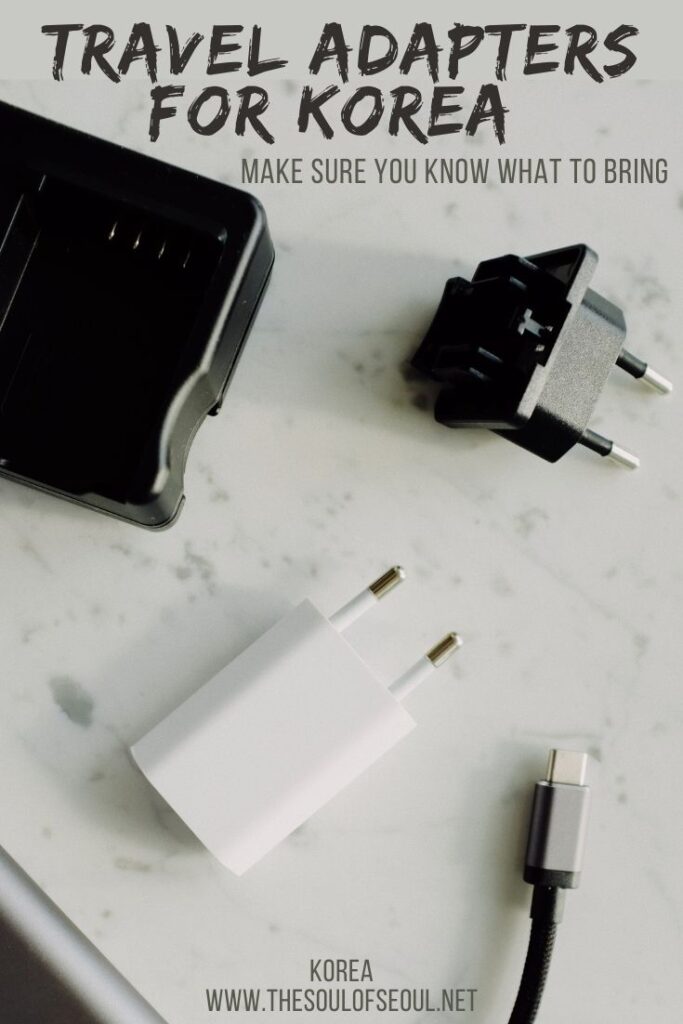
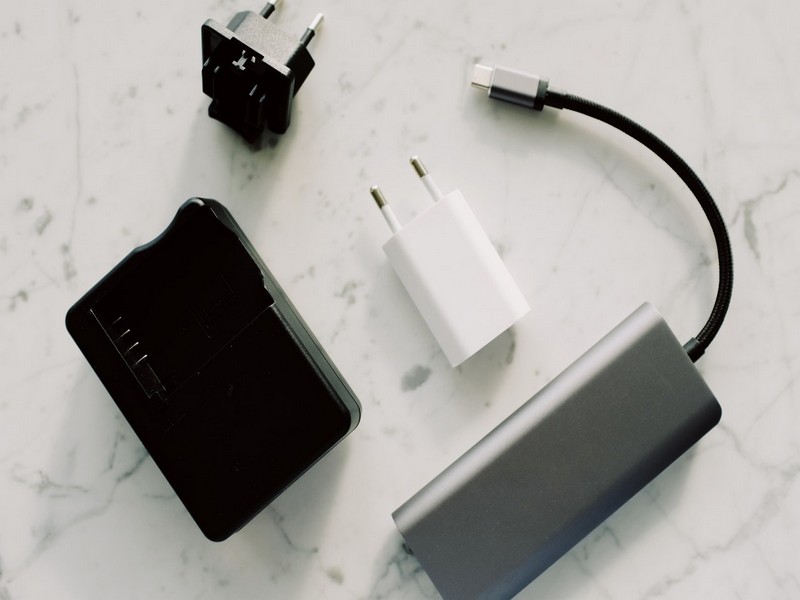
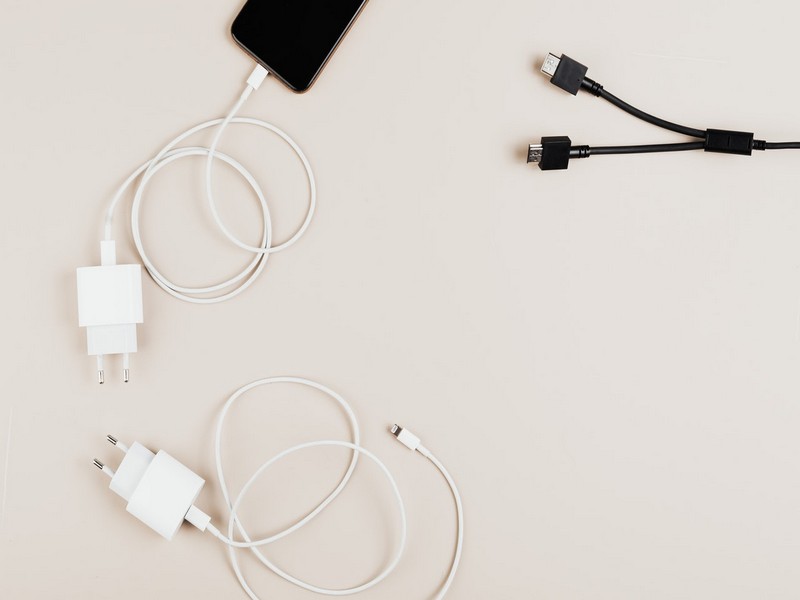
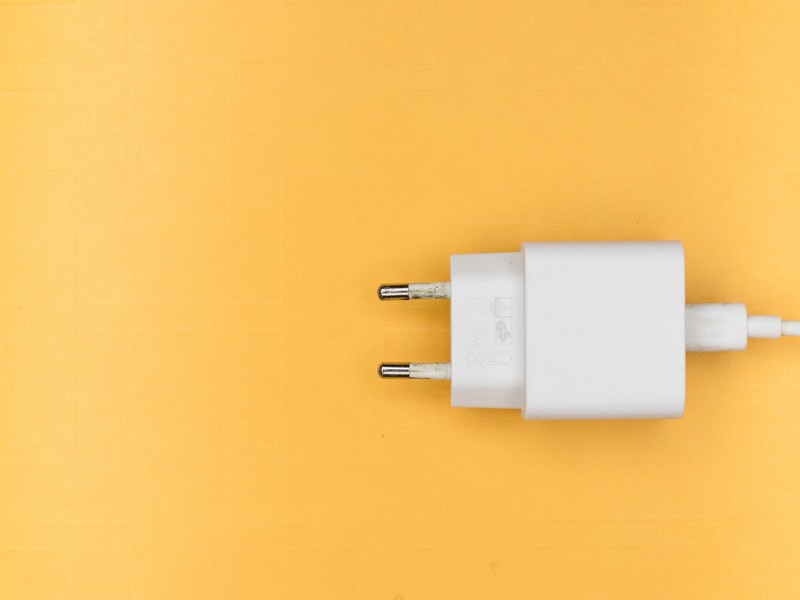
South Korea has two plug types, the Type C (Europlug) and Type F (German Schuko). These kind of plugs have two round pins that are set 19mm apart. The pins fit into two 4.0mm to 4.8mm round holes. These are the same plugs used in most of Europe so if you’re coming from there, you’re good to go.
If you’re traveling from the United States, Canada, Japan, or anywhere that uses flat two-pin or three-pin plugs, nothing you own will physically fit into a Korean outlet without an adapter. This isn’t about voltage yet, your plug simply won’t fit the hole.
If you’re coming from the UK, you’ll also need an adapter since UK plugs (Type G, th three rectangular pin version) don’t fit Korean sockets either, despite both countries using 220-240V.
What Is The Standard Voltage in Korea?
The standard voltage in South Korea is 220 volts and 60Hz. Here’s what that means for your devices:
You do NOT need a voltage converter if:
- Your device says “INPUT: 100-240V” on the label or power brick. This covers most laptops, phone chargers, cameras, and tablets made in the last decade. Check the small print on the plug itself or the cable brick.
- You’re coming from Europe, Australia, or most of Asia (which also run on 220-240V)
You do need a voltage converter if:
- Your device only says “INPUT: 110V” or “INPUT: 120V”. This applies to some older hair dryers, electric shavers, or certain appliances.
- You’re bringing any single-voltage appliance from the US or Canada.
A quick rule of thumb: anything with a screen or a battery like phones, laptops, or cameras is almost always dual voltage. Anything that generates heat (hair dryers, straighteners, electric kettles) is the thing to check carefully.
One thing worth knowing about frequency: Korea runs at 60Hz, the same as North America. Europe runs at 50Hz. In practice, this rarely matters for modern electronics, but if you have something sensitive to frequency differences (certain motors or clocks), check the label.
What Is a Power Adapter?
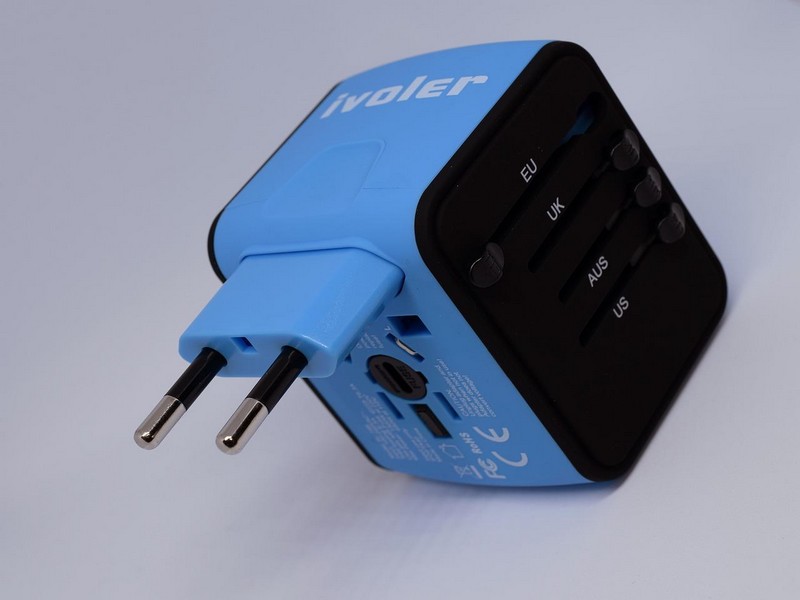
A power adapter, also called a plug adapter or travel adapter, changes the shape of your plug so it fits into a foreign socket. That’s all it does. It does not change the voltage.
If you’re coming from the US and your phone charger has flat pins, you need an adapter to make it physically fit into the Korean round-pin socket. Since your phone charger is almost certainly dual voltage, you don’t also need a converter, just the adapter.
If you have a single-voltage appliance (say, an American hair dryer running at 110V only), you need both an adapter (for the plug shape) and a converter (to step the 220V Korea current down to 110V). Skipping the converter and just using the adapter risks damaging your device or, in older appliances, creating a fire hazard.
The simplest solution: buy a combined adapter and converter before you leave. Most of the options recommended below handle both.
Can I Buy a Power Adapter In Korea?
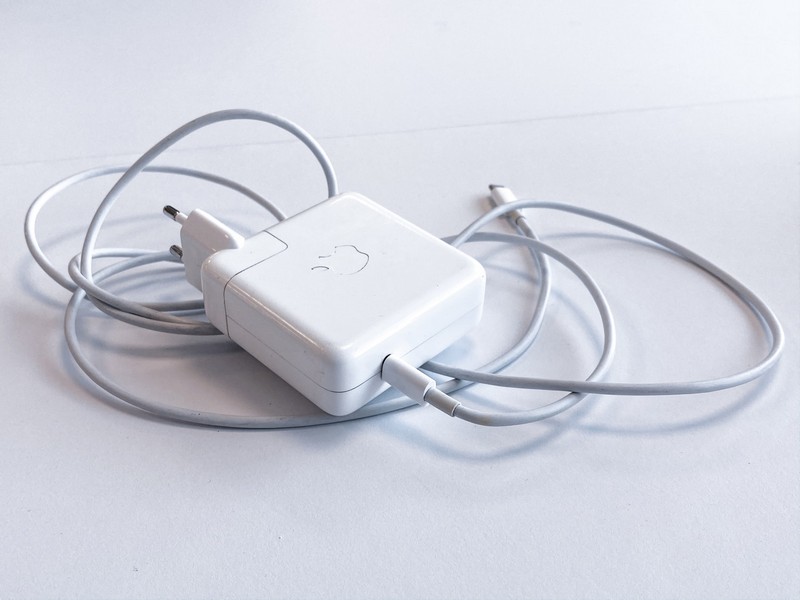
Yes, you can find them at electronics shops (Daiso even sometimes carries basic ones), larger convenience stores in touristy areas, and department stores. If you land at Incheon Airport, there are shops in the arrivals hall.
That said, I always recommend buying before you travel. You’ll arrive tired, possibly jet-lagged, and hunting for a specific piece of hardware in an unfamiliar city is nobody’s idea of a good start to a trip. Get it sorted at home, toss it in your bag, and forget about it.
How to Recharge USB Devices in Korea
If everything you need to charge connects via USB (think phone, wireless earbuds, portable speakers) your situation is simple. A USB travel adapter with a Type C or Type F plug will work fine in Korea. Most USB charging standards (including USB-C Power Delivery) are voltage-agnostic, so you just need the plug shape to match the socket.
If you’re bringing a multi-port USB wall charger from home, check whether it has fixed US-style prongs or interchangeable heads. If it’s fixed, you’ll need a plug adapter on top of it. If it has swappable heads, you may already have a Korean-compatible one in the box.
Recommended Power Adapters for South Korea
All of the options below work in South Korea and in most other countries, so buying one of these means you’re sorted for future travel too. They’re compact, lightweight, and live permanently in my travel bag.
A note on what to look for: the most useful adapters for Korea travelers include multiple USB ports (so you’re not hunting for extra outlets in your hotel room), a USB-C port for modern devices, and ideally an AC outlet for anything that doesn’t charge via USB.
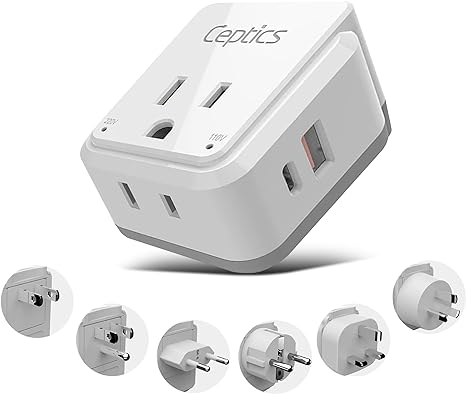
 Ceptics World Power Plug Adapter Set
The one I’d recommend if you have multiple devices to charge (and who doesn’t these days?). It handles two US-style outlets plus a USB and USB-C port simultaneously, which is useful if you’re traveling with a phone, camera, and laptop. Compact enough to not feel like a burden in your bag.
Buy on Amazon: Ceptics World Power Plug Adapter
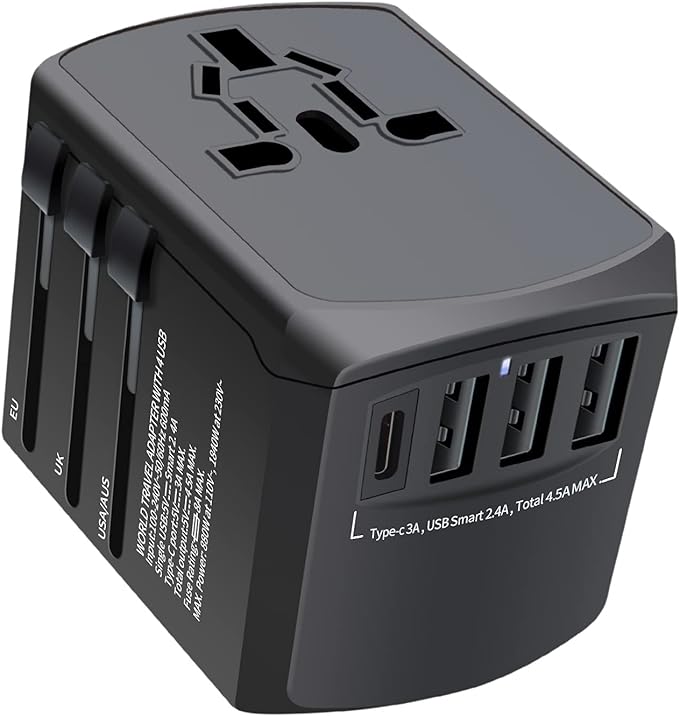
NEWVANGA International Power Adapter
A solid all-rounder with Type A, C, G, and I plugs built in (covers 150+ countries), four USB ports, and one AC outlet. Good value for the price, and the four USB ports mean it doubles as a charging hub in hotels with limited sockets.
Buy on Amazon: NEWVANGA International Power Adapter
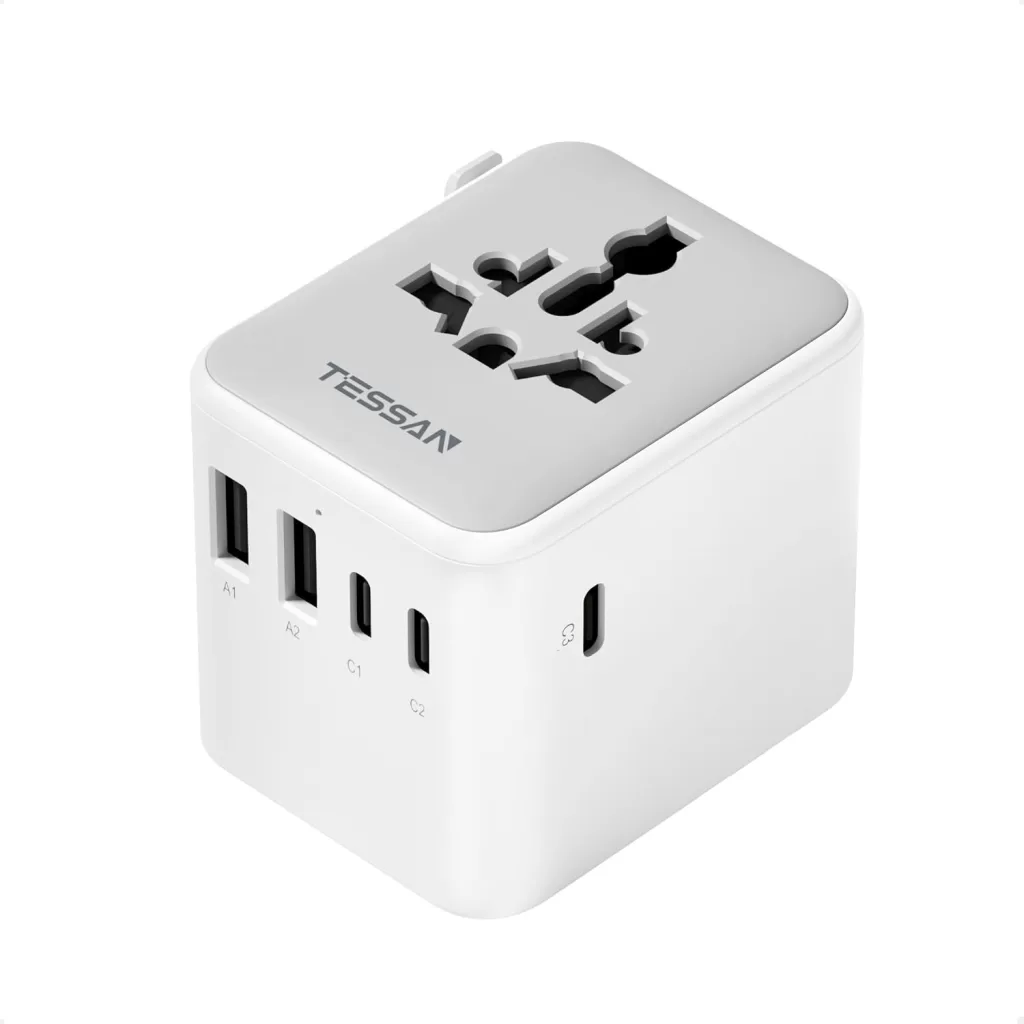
TESSAN Universal Travel Adapter
If you’re traveling with a partner or just have a lot to charge, this handles six devices at once: one AC outlet, three USB-C ports, and two USB-A ports, all in a package smaller than a deck of cards.
Buy on Amazon: TESSAN Universal Travel Adapter
Don’t Forget a Power Bank
This might be the more important purchase for most travelers. Korea has Wifi almost everywhere, cafes buses, subway stations, parks, which means your phone will be working harder than usual navigating, translating, photographing, and messaging. Batteries drain faster than you expect on a full travel day.
Almost every Korean I know carries a power bank daily. It’s just part of how people move around here. A good one doesn’t need to be expensive or heavy, something in the 10,000~20,000mAh range is enough to fully charge most phones twice.

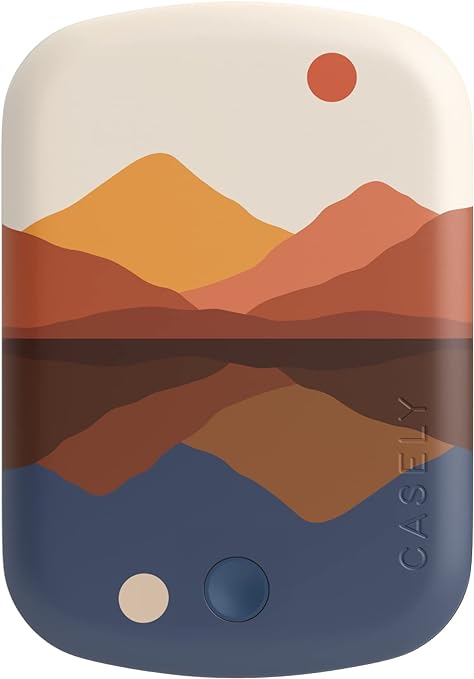
There are a lot of great options for power banks out there and they come in everything from cute to cool or super simple and straightforward silver or black. Browse power banks on Amazon.
The quick version: Korea uses Type C and F round-pin plugs at 220V. Most modern devices are dual voltage and just need an adapter. Buy one before you go, toss in a power bank, and you’re sorted. One less thing to think about when you land.
Did you like this post? Pin It!